
How long does eviction take in fl: A Landlord's Timeline
- Sarah Porter

- Feb 3
- 14 min read
Updated: Feb 14
For landlords in Florida, one question always looms large: "How long does an eviction really take?" Every day a tenant isn't paying rent, you're losing money. It’s that simple.
In a perfect world, with an uncontested eviction, you could have your property back in as little as 2-3 weeks. But let's be realistic—experience shows the average timeline is closer to 3 to 6 weeks, from the moment you serve that first notice until the sheriff hands you back the keys.
The Florida Eviction Timeline Explained for Landlords
Think of the eviction process like a road trip with a very specific, legally required route. You know the destination—reclaiming your property—but you have to hit every mandatory stop along the way. Stray from the path, and you're right back at the starting line, costing you even more time and money.
The journey kicks off the second you confirm a lease violation, which, nine times out of ten, is a failure to pay rent. From there, a series of steps dictated by Florida law must be followed to the letter.
Key Stages of an Uncontested Eviction
An eviction isn't a single action; it's a sequence of events, each with its own legally defined timeline. Here’s a quick rundown of the major milestones:
Serving the Notice: This is your official first move. You provide the tenant with a written notice, like a 3-Day Notice to Pay or Quit. The clock starts now. You can get a deeper understanding of this critical first step by reading our guide on the Notice to Vacate.
Filing the Lawsuit: If the tenant doesn't pay up or move out, your next stop is the county courthouse to file a formal eviction complaint.
Tenant's Response Time: Once served, the tenant gets five business days to file a response with the court.
Getting a Judgment: If they don't respond (which is common), you can ask the judge for a default judgment.
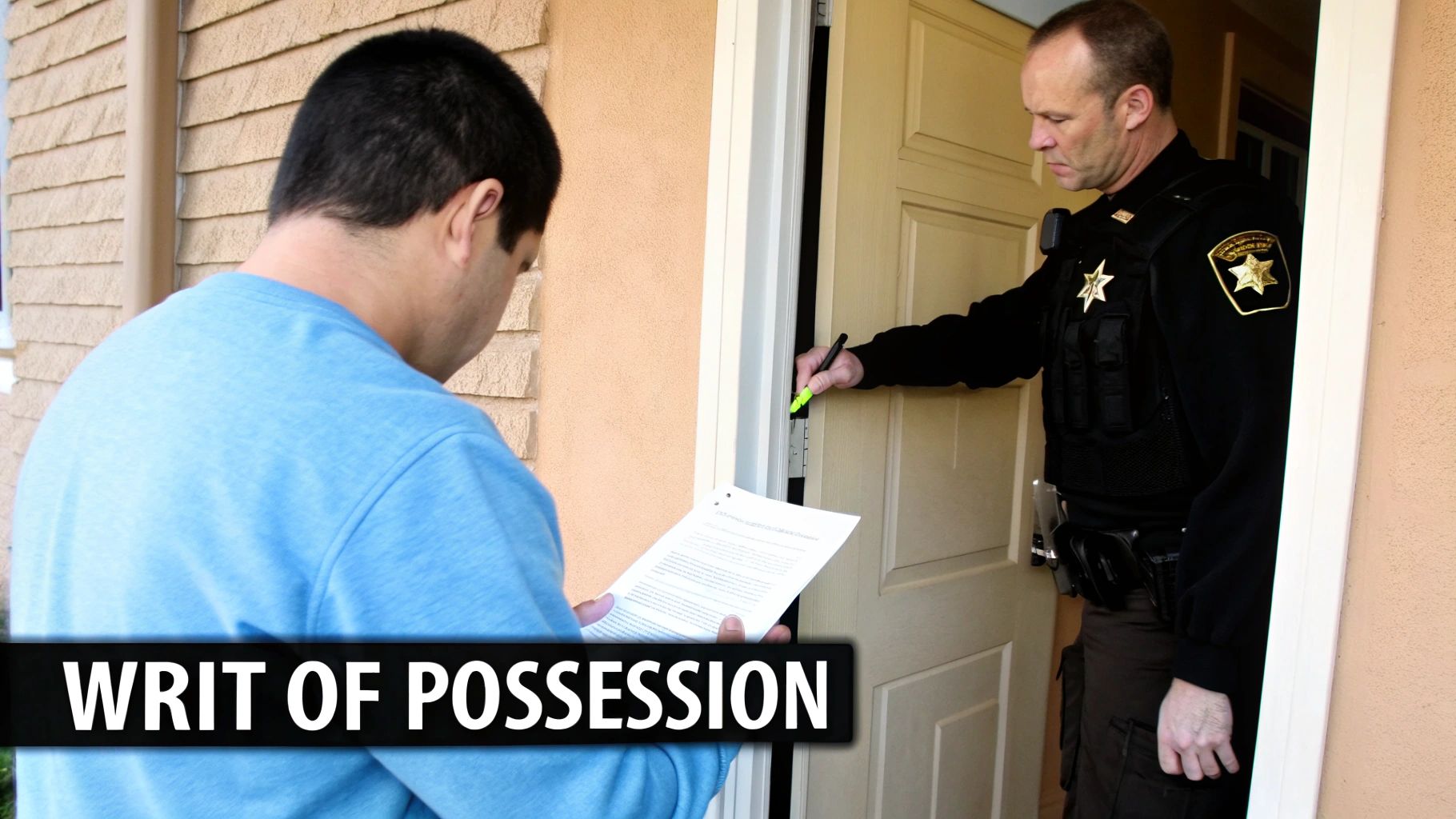
The Writ of Possession: This is the final piece of paper. The court issues a Writ of Possession, which goes to the Sheriff's office. The Sheriff then posts a 24-hour notice on the tenant's door, giving them one last chance to leave.
This timeline chart really helps visualize how things can play out, showing the best, average, and worst-case scenarios for a straightforward, uncontested eviction.
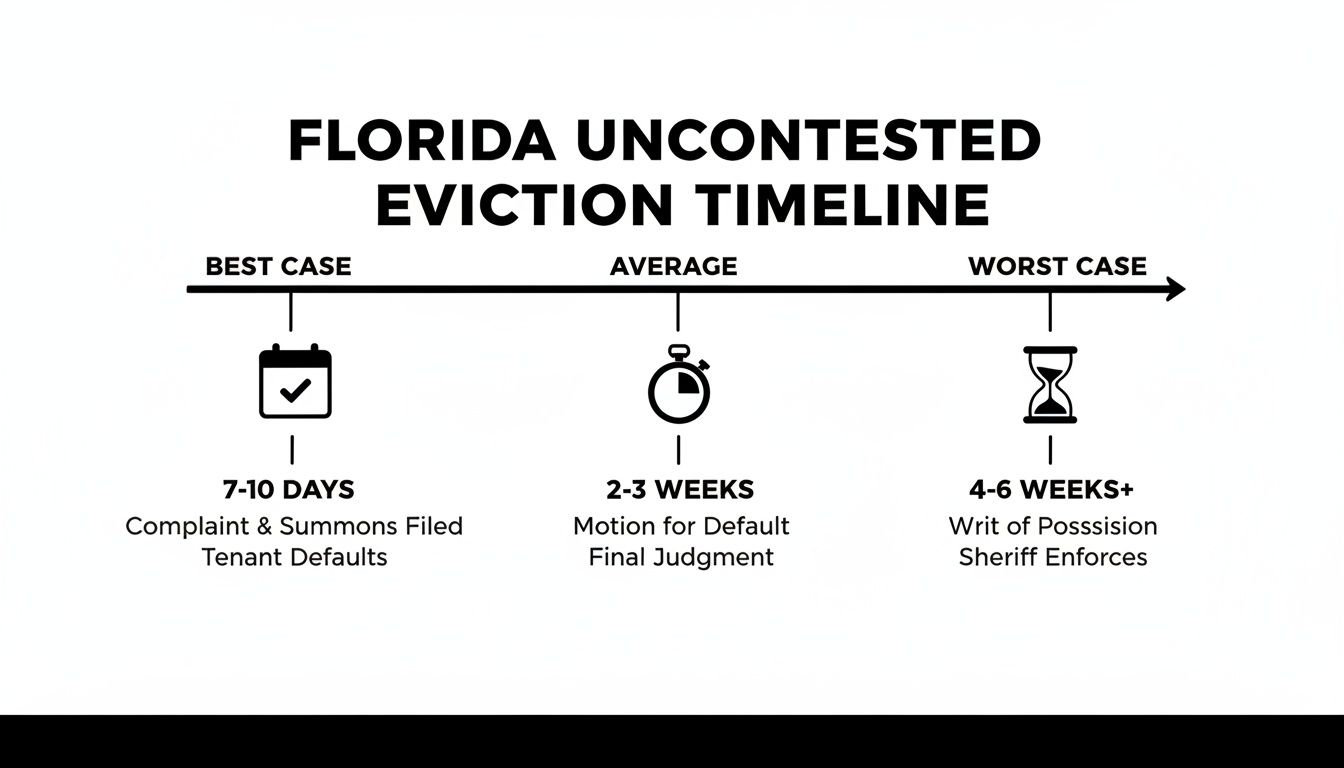
As you can see, while a super-fast 15-day process is technically possible, you should probably budget your time and finances for something closer to a month.
To put it into a table, here's how those stages and timelines typically break down.
Florida Uncontested Eviction Timeline At a Glance
This table provides a quick, easy-to-read summary of each phase in a standard Florida eviction, along with the typical time it takes and the relevant law.
Eviction Stage | Typical Duration | Governing Statute |
|---|---|---|
Notice Period | 3 business days (nonpayment) or 7 days (violation) | § 83.56 |
Filing & Service | 2-5 business days | § 83.59 |
Tenant Response | 5 business days | § 83.60(2) |
Default Judgment | 2-5 business days | Varies by Court |
Writ of Possession | 1-3 business days (issuance) + 24 hours (execution) | § 83.62 |
Total Estimated Time | ~15 to 45 days | N/A |
Keep in mind, these are estimates. The actual timeline can shift based on your county's specific court procedures and the Sheriff's workload.
Overall, Florida is known for being a relatively fast state for evictions. In major markets like Miami-Dade or Broward, an uncontested case moving smoothly often wraps up in that 3 to 6-week window. For property owners who know the system inside and out, this efficiency is a major advantage. Experienced landlords and property managers who execute every step precisely can often keep the process on the shorter end of that spectrum.
Understanding the Different Types of Florida Evictions

In Florida, not all evictions are the same. The reason you need to remove a tenant is the single most important factor determining your next steps and, ultimately, how long the whole process will take. Think of it this way: you can't just tell a tenant "get out." You have to follow a specific legal path, and that path is determined by the tenant's specific action—or inaction.
Florida law outlines three main grounds for eviction. Each has its own unique starting line and requires a different legal notice. Getting this first step absolutely perfect is critical. One small mistake on that initial notice can get your entire case thrown out of court, forcing you to start all over again and costing you weeks of lost rent and time.
Nonpayment of Rent
This is, by far, the most frequent reason landlords find themselves starting the eviction process. It’s simple: the rent is due, and the tenant hasn’t paid.
When this happens, your first and only move is to serve a formal 3-Day Notice to Pay or Quit. This isn't just a friendly reminder; it's a legal document that gives the tenant exactly three business days (weekends and holidays don't count) to either pay the rent in full or move out. The notice must be flawless, stating the precise amount of past-due rent and where they can pay it. A common trip-up is including late fees that aren't defined as "additional rent" in the lease—a simple error that can make your notice legally defective.
Lease Violations
Sometimes, the problem isn't the rent—it's the tenant's behavior. Maybe they've snuck in a pet against the rules, caused significant damage, or are creating a constant disturbance for neighbors. Florida law splits these violations into two categories.
7-Day Notice to Cure: This is for problems that can be fixed. Think of an unauthorized pet or a messy yard. This notice gives the tenant seven days to correct the violation. If they get rid of the pet or clean up the property, the lease continues, and the eviction process stops.
7-Day Unconditional Quit Notice: This is for the serious stuff—the violations that can't be undone. We’re talking about things like intentional property destruction or engaging in illegal activities on the premises. This notice gives the tenant seven days to vacate, with no second chances.
Serving the wrong notice here is a classic landlord mistake. You must match the notice to the severity of the violation as defined by Florida law. Using a "Notice to Cure" for something that warrants an "Unconditional Quit" (or vice-versa) is a surefire way to derail your eviction.
Holdover Tenancies
A "holdover" is a tenant who simply stays put after their lease has officially ended. They don't have a new lease, and you haven't given them permission to stay. In these cases, you don't need a "reason" like nonpayment or a violation; the expired lease is the reason.
The notice you must provide depends on how rent was paid. For a standard month-to-month tenancy, you need to give a 15-Day Notice to Vacate before the end of the monthly rental period. If it was a week-to-week arrangement, a 7-Day Notice is all that's required.
Comparing Florida Eviction Notice Requirements
To keep things straight, it helps to see the different notice requirements side-by-side. Each eviction scenario has a specific legal tool you must use to get started.
Reason for Eviction | Required Notice Type | Statutory Notice Period |
|---|---|---|
Tenant has not paid rent | 3-Day Notice to Pay or Quit | 3 business days to pay or move |
Curable lease violation (e.g., unauthorized pet) | 7-Day Notice with Opportunity to Cure | 7 calendar days to fix the issue |
Non-curable lease violation (e.g., property destruction) | 7-Day Unconditional Quit Notice | 7 calendar days to move out (no chance to fix) |
Tenant stays after month-to-month lease ends | 15-Day Notice to Vacate | 15 calendar days before the end of the monthly period |
Tenant stays after week-to-week lease ends | 7-Day Notice to Vacate | 7 calendar days before the end of the weekly period |
Choosing the correct path from the start is everything. Evictions for nonpayment, which account for over 70% of all filings in Florida, tend to move quicker, often averaging around 25 days. However, cases involving lease violations can easily stretch to 35 days or more because of the longer notice periods and the higher likelihood of the tenant disputing the claim. You can find more detailed timelines in Innago's comprehensive Florida Eviction Process guide.
Kicking Off the Lawsuit: From Notice to Courthouse
Alright, so the notice period has come and gone. You’ve given your tenant the legally required time to either pay up or move out, but they’ve done neither. This is the point where the eviction process shifts gears, moving from a formal request into a full-blown legal action. It's time to head to the courthouse.
The first official step is filing an Eviction Complaint with the clerk of court in the county where your property sits. This is the legal document that lays out your case and formally asks the court to grant you possession. Along with the Complaint, the clerk will issue a Summons, which is the official court notification to the tenant that they are being sued.
Now, you can't just hand these documents to the tenant yourself. The law is very clear on this. The Complaint and Summons must be "served" by a neutral third party—either a certified process server or the county Sheriff's department. This is called service of process, and getting it right is absolutely critical. A tiny mistake here can derail your entire case, forcing you to start over.
The Tenant’s 5-Day Countdown
Once the papers are successfully served, a new clock starts ticking. The tenant has exactly five business days—not counting weekends or legal holidays—to file a formal, written response with the court.
This five-day window is a major fork in the road, and what the tenant does (or doesn't do) will dictate how quickly your case proceeds. They have a few options:
Do Nothing: Honestly, this is what happens most of the time in straightforward evictions.
File an Answer: They might submit a legal document denying your claims or arguing they have a valid reason for their actions (or inaction).
File a Motion to Dismiss: This is a more technical move where they might claim your paperwork is legally defective or that you served the initial notice incorrectly.
Deposit Rent into the Court Registry: For nonpayment cases, this is a big one. The tenant can deposit the full amount of rent you're claiming into a special court account. This allows them to fight the eviction without you being able to get an immediate default judgment.
The tenant's choice here is what separates a quick, uncontested eviction from a long, drawn-out legal battle.
Getting the Judge's Ruling: The Judgment
If those five days pass and the tenant hasn't filed a response or deposited the rent, your path is pretty clear. You can immediately ask the court for a Motion for Default Judgment. You're essentially telling the judge, "The tenant had their chance to respond and they didn't, so I win by default."
In most uncontested cases, the judge will sign a Default Judgment for Possession fairly quickly, often without even needing a hearing. This is the official court order that says you have the legal right to the property. It's the green light you need for the final step.
But if the tenant does respond, your case is now considered "contested." This is where the brakes get pumped. The court will likely schedule a hearing or mediation, which can add weeks, or even months, to the timeline. This is precisely why having all your ducks in a row from day one is so important.
Whether you win by default or after a hearing, the end goal is the same: the court issues a Final Judgment. This document is your ticket to the last phase of the process—finally taking back physical control of your property.
How to Avoid Common Delays in the Eviction Timeline

While a smooth eviction can wrap up in just a few weeks, simple mistakes can easily drag the process out for months. Understanding where the common roadblocks are is the key to navigating around them. These delays aren't just frustrating—they cost you real money in lost rent and legal fees.
Believe it or not, the single biggest cause of delay happens before you even step foot in a courthouse: defective notices. A 3-Day Notice with a tiny error, like miscalculating the due date or adding late fees not strictly defined as "rent" in your lease, can get your entire case thrown out. If that happens, you’re back to square one, re-serving notices and losing weeks of precious time.
Improperly serving that notice is another classic mistake. You have to follow Florida's rules to the letter, whether you're hand-delivering it, sending it via certified mail, or posting it on the door. If you can't prove exactly how and when you delivered it, you're handing the tenant a golden ticket to dismiss the case.
Navigating Paperwork and Tenant Responses
Once the case goes to court, the paperwork maze begins. It's surprisingly easy to make a clerical error, like filling out the Complaint and Summons incorrectly or forgetting to attach a copy of the lease. The court clerk might reject your filing on the spot, or worse, a judge could dismiss it later. Either way, you're forced to refile and pay the court fees all over again.
The tenant’s response—or lack thereof—is the next major fork in the road. If the tenant files an Answer to your complaint, your case becomes "contested." This is a game-changer. It immediately triggers the need for a court hearing, mediation, or both, adding significant time to the calendar.
The best way to handle this is to build an ironclad case from the very beginning. Flawless paperwork and a crystal-clear record of the violation make it much harder for a tenant to mount a credible defense. For more on handling issues before they get to this point, check out our landlord's guide to handling late rent payments.
Top Landlord Mistakes That Prolong Evictions
To keep your eviction moving forward, you absolutely must avoid these common missteps:
Accepting Partial Rent: This is a big one. If you take even one dollar from the tenant after serving a notice, a court can rule that you've voided the eviction. You cannot accept any payment without a specific, written agreement.
"Self-Help" Evictions: Don't even think about it. Changing the locks, shutting off the power, or tossing the tenant's belongings onto the curb are illegal. Not only will it stop your court case cold, but it will also open you up to a lawsuit from the tenant.
Failing to Follow the Lease: Remember, your lease is a binding contract. If it outlines specific notice periods or communication methods, you must follow those terms in addition to Florida law.
The bottom line is simple but strict: The legal eviction process is the only path. Any shortcut or deviation, no matter how small, gives the tenant an opening to challenge you. That challenge almost always means a longer, more expensive process for you.
The Final Step: From Writ of Possession to Getting Your Property Back
Getting that Final Judgment from the judge feels like a huge victory, but you're not quite at the finish line yet. The judge's order grants you the legal right to your property, but it doesn't actually get the tenant out. For that, you need the court's enforcement tool: the Writ of Possession.
Think of the Writ of Possession as a direct order from the court to the local Sheriff. It essentially tells law enforcement, "Put this landlord back in charge of their property." Once the judge signs off on the eviction, your attorney gets the court clerk to issue the Writ, which is then sent over to the Sheriff's office to be scheduled and carried out.
Don't expect this to happen instantly. The timing really comes down to how swamped the Sheriff's department is, but you can generally expect them to move on it within a few business days.
The Sheriff Posts the 24-Hour Notice
Once the Writ is in their hands, a deputy will head out to the property and post a notice on the front door. This isn't a suggestion; it's a stark, official warning. The tenant has exactly 24 hours to pack up and leave on their own. The countdown begins the second that paper goes up.
This 24-hour window is a critical waiting period. I can't stress this enough: do not go into the property, change the locks, or have any interaction with the tenant. Taking matters into your own hands is considered an illegal "self-help" eviction, and it can land you in serious legal hot water, potentially undoing everything you've worked for. Only the Sheriff can legally remove the tenant.
The 24-hour notice is the tenant's last chance to move out gracefully with their belongings. Once that clock runs out, the Sheriff will be back, and the tenant's right to be on the property is officially over.
After those 24 hours have passed, a deputy will return. It's crucial that you or your representative are there to meet them. The deputy will then ensure the tenant—if they're still present—vacates the premises and will formally give you back possession. Only then can you legally change the locks and secure your property.
What to Do with Property the Tenant Leaves Behind
It’s pretty common for tenants to leave personal items behind in the rush to move out. You might be tempted to just haul everything to the curb, but Florida law has very specific rules you need to follow.
If the abandoned belongings are clearly worth less than $500, you are generally free to dispose of them. However, if you estimate the value is $500 or more, you have to jump through a few legal hoops. This involves sending a detailed, formal written notice to the tenant and storing their items in a safe place.
Skipping these steps is a big risk. A tenant could later sue you for the value of their property, creating a whole new legal headache. Handling this final detail correctly ensures the eviction is truly over and protects you from any future claims.
How Professional Management Streamlines the Eviction Process
Trying to handle a Florida eviction on your own is a tough road. It’s a legal minefield where one small mistake—a miscalculated date on a notice, an incorrectly filed form—can get your case thrown out, forcing you to start all over again. These are the kinds of costly, frustrating delays that landlords dread.
This is exactly where bringing in a professional property manager makes a world of difference. When you work with a firm like Keshman Property Management, you're not just hiring help; you're bringing on a team of specialists who live and breathe this stuff. We take the entire burden off your shoulders. From drafting and serving the initial notice with perfect accuracy to filing with the correct county court and coordinating the final lockout with the Sheriff, we manage every detail.
The Expert Advantage in Complex Situations
A good property manager’s expertise goes far beyond just the eviction itself. We are also well-versed in navigating tricky related issues, like the specific tenant safety and liability guidance for property managers that can arise. This deep knowledge of Florida statutes and local court quirks is what protects you and your asset.
It’s all about being proactive. Our process starts way before an eviction is even on the horizon, with meticulous tenant screening and strong, attorney-reviewed leases designed to prevent problems from ever taking root.
A professional manager's primary goal isn't just to evict tenants faster, but to create an environment where evictions are rarely necessary in the first place.
Ultimately, this comprehensive approach saves you a massive amount of time, money, and stress. By ensuring every step is handled with precision and in full legal compliance, we make sure your investment is protected. If you're curious about the specifics, you can learn more about what to expect when you hire a property management company in our detailed guide.
A Few Common Questions About Florida Evictions
Even with a solid plan, the eviction process can throw some curveballs. Let's tackle some of the most common "what if" scenarios that Florida landlords run into, so you can handle them like a pro.
Can I Just Turn Off the Utilities to Get a Tenant Out?
In a word: no. This is one of the biggest mistakes a landlord can make.
In Florida, this is called a "self-help" eviction, and it's illegal. Under Florida Statute § 83.67, doing things like shutting off the power, changing the locks, or tossing a tenant's stuff on the curb can backfire spectacularly. You could end up owing the tenant damages equal to three times the monthly rent. The only legal way to remove a tenant is through the courts.
What Happens if the Tenant Tries to Pay Rent After I've Sued Them?
This is a tricky but common situation. If you accept the full amount of rent they owe, plus all the court costs you've paid, the case is over. The eviction has to be dismissed.
But what if they only offer a partial payment? Be very careful here. Accepting a partial payment without a specific, written agreement can be interpreted by the court as you waiving your right to evict. That one mistake could force you to start the entire process from square one.
Think of it like a fork in the road. When a tenant offers money after you've filed, accepting the full amount ends the journey. Accepting anything less without a legally sound agreement sends you right back to the beginning.
How Quickly Does the Sheriff Act Once the Writ of Possession Is Issued?
Once the judge signs the Writ of Possession, it goes from the clerk's office to the Sheriff. From there, things move pretty fast.
A deputy will typically post a 24-hour notice on the tenant's door within one to three business days. Once that 24-hour clock runs out, they'll come back to the property to ensure the tenant is out and to supervise you changing the locks.
Do I Need to Show Up in Court if the Eviction Is Uncontested?
Usually, no. If a tenant doesn't respond to the lawsuit or deposit the owed rent with the court within the required five days, it's considered an uncontested eviction.
In these cases, your attorney can simply file for a default judgment. The judge can often sign the order without ever needing you to step foot in the courtroom, which is a big reason why uncontested cases move so much faster.
Navigating Florida's eviction laws demands a steady hand and deep expertise. At Keshman Property Management, we manage every legal detail to protect your investment and reclaim your property as swiftly as the law allows. Learn how our expert team can safeguard your rental business.


Comments