
Handle a late rent: Practical Guide for Landlords
- Sarah Porter

- Feb 14
- 19 min read
Rent is due, but it hasn't appeared in your account. That moment can be a real nail-biter for any landlord. Before you jump to conclusions or pick up the phone, your first move should always be a quick internal check. A calm, methodical approach in these first 24 hours can often resolve the issue without any friction and starts a paper trail, just in case.
Your First 24 Hours After Rent Is Late

The day after rent is due sets the tone for everything that follows. How you react matters. By following a clear, systematic process, you protect your rights as a property owner without escalating a simple oversight into a major conflict.
First, Double-Check Your Records
It’s easy to assume the worst, but don't. Before you do anything else, take five minutes to make absolutely sure the payment hasn't arrived. Mistakes happen—on both sides.
Online Payment Portal: Log in and check for any transactions that are still "pending" or "processing." Sometimes an ACH transfer can take an extra business day to show up.
Bank Statements: Scan your recent deposits to confirm no direct transfer has hit your account.
Mail or Drop Box: If you still accept physical checks, make sure one isn't sitting in the mailbox or got stuck in a pile of mail.
This simple verification step can save you from an awkward "oops, my mistake" conversation. It shows your tenant you're diligent and fair, which goes a long way in maintaining a good professional relationship.
To keep everything straight, a well-maintained rent ledger is your best friend. It’s the definitive source of truth for all payments.
Make Professional, Documented Contact
Okay, you've confirmed it—the rent is officially late. Now it's time to reach out. The goal here isn't a confrontation; it's a simple, professional inquiry that opens the door for communication and, importantly, creates a record.
Pro Tip: Keep your first message friendly and frame it as a simple reminder, not an accusation. You'll be surprised how often a tenant just forgot to hit "submit" or had a minor bank issue. This approach gets the rent paid without creating unnecessary tension.
A quick text or a short email is perfect for this. Something straightforward and non-threatening works best.
Simple Email/Text You Can Use: "Hi [Tenant Name], just a friendly reminder that rent for [Property Address], due on [Due Date], hasn't come through on my end yet. Can you please check on it and let me know the status? Thanks, [Your Name]."
This little message does two crucial things: it gently nudges the tenant to pay and becomes the first official piece of documentation in your file. That paper trail is gold if you need to take further action down the road.
If you’re feeling anxious, you're not alone. A recent survey revealed that 36% of U.S. landlords have seen a rise in late payments over the past year. By staying calm and sticking to a process, you can manage the situation professionally and confidently.
Know Your Lease and Local Landlord-Tenant Laws
Once you've made that initial, friendly check-in with your tenant, your next step isn't another text message. It's time to go to your primary sources: the lease agreement and your local landlord-tenant laws.
These documents are the foundation for every action you take from this point forward. Acting without knowing exactly what they say is like trying to navigate a new city without a map—you'll probably get lost, and in this case, you could end up in legal trouble. Before you even think about charging a late fee or sending a formal notice, you absolutely must be clear on what you're legally allowed to do. I’ve seen countless landlords stumble here, and it can invalidate the entire process, forcing you to start from scratch.
The Lease Is Your Rulebook
Think of your lease agreement as the official rulebook for your relationship with the tenant. It's the contract you both signed and agreed to follow. When rent is late, this is the very first place you should look to confirm the specifics.
Pull it out and find the clauses that cover:
Rent Due Date: Confirms the exact day rent must be paid (e.g., the 1st of the month).
Grace Period: Does the tenant have a few extra days to pay without a penalty? A 3 to 5 day grace period is common, but it has to be written in the lease to mean anything.
Late Fee Policy: This should spell out the exact fee—whether it’s a flat $50 or 5% of the rent—and, just as importantly, when that fee kicks in.
Payment Methods: Details the accepted ways to pay, which can be important if a tenant tries to use a method you don't accept.
If your lease is vague on these points, you’re on shaky ground. For landlords looking to tighten up their agreements, our team at Keshman Property Management offers a solid rental lease agreement template that covers these crucial details.
Local Laws Always Win
Now for the part that trips up even experienced property owners: your local laws can override whatever is in your lease. It doesn't matter if your lease specifies a 10% late fee; if your state law caps it at 5%, then 5% is the most you can legally charge. The law always has the final say.
Landlord-tenant regulations can vary wildly between states, and sometimes even between cities or counties. What's perfectly legal in one town might get you sued in the next.
A classic mistake is grabbing a generic lease from the internet and assuming it's good to go. These often contain clauses, especially for late fees and eviction, that are completely unenforceable in your jurisdiction. That one mistake can get an entire eviction case thrown out of court.
This is why a quick search for your state and city’s "landlord-tenant laws" or "late rent statutes" is non-negotiable. Stick to official government websites (.gov) for the most reliable information. For a better sense of how these clauses are typically structured, it can also be helpful to look at a few different rental lease agreement examples to see what's common.
Common Legal Stipulations for Late Rent by State Type
The legal landscape often tilts in favor of either the tenant or the landlord, depending on the state. This table gives you a general idea of what to expect, but remember, you must always check your specific local laws.
Legal Requirement | Common Practice in Tenant-Friendly States | Common Practice in Landlord-Friendly States | Keshman Pro Tip |
|---|---|---|---|
Grace Periods | A statutory grace period (3-5 days) is often required by law before a late fee can be charged. | A grace period may not be legally required, but landlords often include one as a courtesy. | Even if not required, offering a 3-day grace period in your lease is a smart move. It builds goodwill and prevents disputes over minor payment delays. |
Late Fee Limits | Late fees are strictly capped, often at a small percentage of the rent (e.g., 4-5%) or a low flat fee. | Caps are higher or may not exist at all, giving landlords more discretion as long as the fee is "reasonable." | Be specific in your lease. Instead of a vague term, write "a late fee of $50 or 5% of the monthly rent, whichever is less." This clarity protects you and complies with most laws. |
Notice Requirements | Longer notice periods (5-14 days) are common. Delivery rules are very strict (e.g., certified mail required). | Shorter notice periods (3 days) are typical. Delivery rules might be more flexible. | Don't just tape a notice to the door. I always recommend using a method with proof of delivery, like certified mail, even if it's not required. It's your best evidence in court. |
Knowing these rules isn't just about bureaucracy; it’s about protecting your property and your business. Once you’ve confirmed what your lease dictates and what the law allows, you can move forward with confidence, knowing every step you take is firm, fair, and legally sound.
How to Properly Issue a Pay or Quit Notice
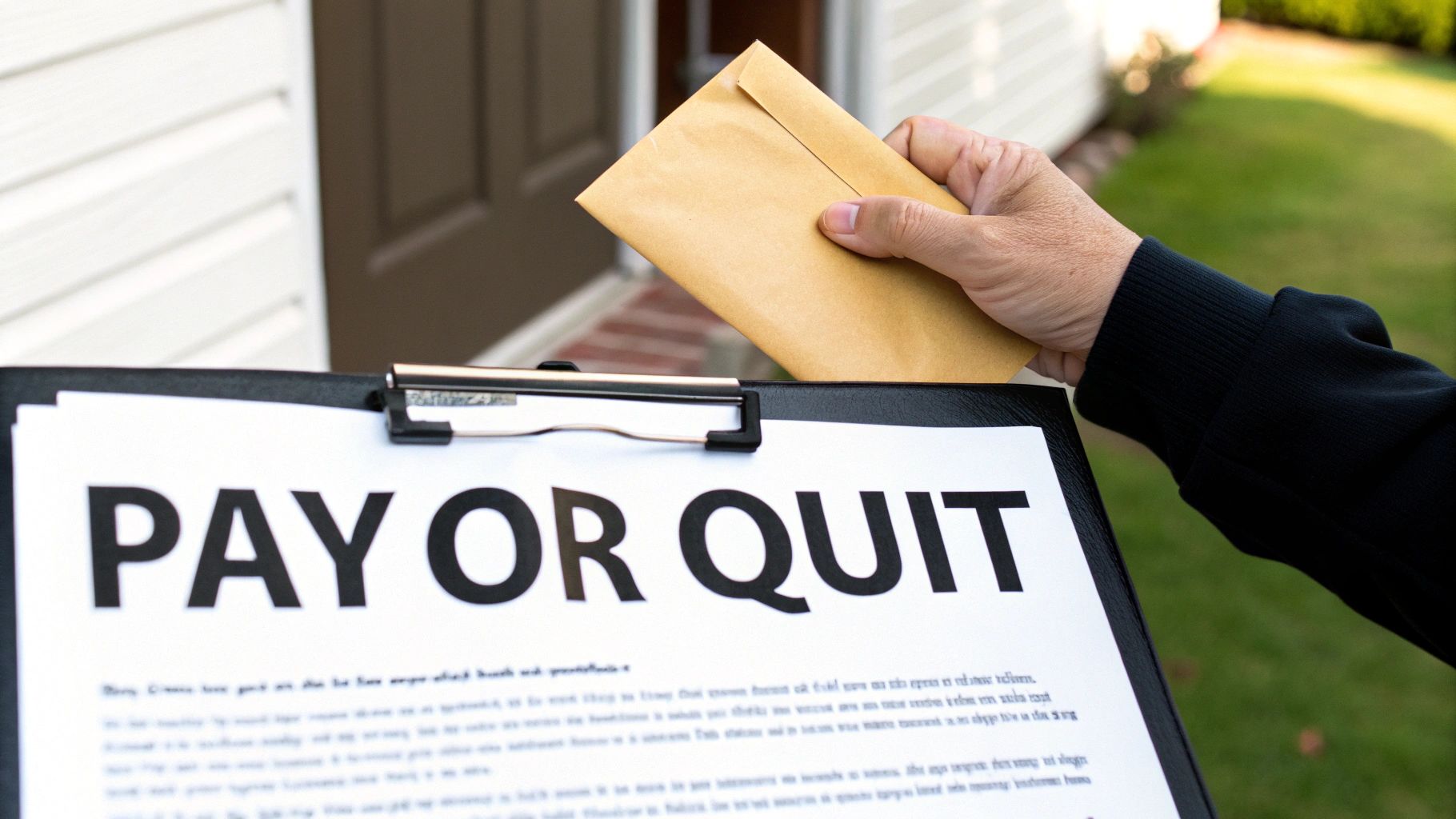
When your friendly reminders have gone unanswered and the grace period is a memory, it's time to shift from informal nudges to a formal legal action. This is where the "Pay or Quit" notice comes in.
This isn't just a strongly worded letter; it's a critical legal document. It officially notifies the tenant that they've violated their lease and starts the countdown for them to either pay up or face eviction proceedings.
Getting this notice right is absolutely crucial. A simple mistake—like a wrong date or an unclear amount owed—can get the entire notice thrown out in court, forcing you to start from square one. This document is the foundation of your legal standing if you end up having to evict.
Crafting a Legally Sound Notice
A Pay or Quit notice has to be precise. Think of it as a final, legally binding invoice that clearly outlines the serious consequences of non-payment. Ambiguity is your worst enemy here.
To be valid, every notice must contain a few key pieces of information:
Tenant's Full Name: Be sure to list every adult tenant who is named on the lease agreement.
Property Address: Include the complete, correct address of the rental unit.
Exact Amount Owed: This is a big one. You need to itemize the base rent and any late fees separately. For example, state "$1,500 in rent plus a $75 late fee for a total of $1,575." Don't just put a total.
Payment Deadline: Give the exact date by which the tenant has to pay the full amount. This timeframe is dictated by state law and could be 3, 5, or even 14 days.
Consequences of Non-Payment: State clearly that if the full amount isn't paid by the deadline, you will start the eviction process.
Your Signature and the Date: The notice needs to be dated and signed by you or your authorized agent.
If you leave out any of this information, a tenant could have grounds to challenge the notice. It’s always better to be overly detailed than to risk a technicality that sinks your case.
I once saw a landlord’s eviction case dismissed because their Pay or Quit notice just said "past-due rent" without specifying the exact dollar amount. The judge ruled it was too vague, and the landlord had to serve a new notice, losing over a month in the process. Details matter immensely.
Proper Delivery Methods That Stand Up in Court
How you deliver the notice is just as important as what's written on it. Your goal is to have undeniable proof that the tenant received it. Simply taping it to the front door is a common mistake and often won't hold up in court.
Most jurisdictions have a few approved methods, and using more than one is always a smart move. Always double-check your local landlord-tenant laws, but these methods are generally the most accepted:
Personal Service: Handing the notice directly to the tenant is the gold standard. If you do this, it’s wise to bring a witness or ask the tenant to sign a simple form confirming they received it.
Certified Mail with Return Receipt: This gives you a paper trail from the U.S. Postal Service that proves the notice was sent and delivered to the tenant’s address. It's one of the strongest forms of proof you can have.
Posting and Mailing: In some states, if you can't deliver the notice in person, you're allowed to post it in a conspicuous place (like the front door) and also mail a copy via first-class mail. Using both methods together is often what makes "posting" legally valid.
It's helpful to understand the full scope of documents involved in this process. For a deeper look into another key form, you might find our guide on what a Notice to Vacate is and why it's essential for landlords useful. By meticulously following these steps for the Pay or Quit notice, you ensure you're acting professionally, protecting your legal rights, and setting the stage for a clear resolution—one way or another.
Negotiating a Payment Plan That Actually Works
That formal "Pay or Quit" notice often feels like the last stop before court, but it doesn't always have to be. Sometimes, a tenant who's behind on rent isn't trying to pull a fast one—they’re just slammed with a real-life problem, like a sudden medical bill or a temporary layoff.
In these cases, jumping straight to eviction can be a classic lose-lose. You end up with a vacant unit, eating the costs of cleaning, repairs, marketing, and lost rent. Meanwhile, the tenant gets an eviction on their record, which can make it incredibly difficult for them to find another home. Offering a structured payment plan can be a smart business move that saves everyone a ton of money and stress. It keeps your property occupied and income flowing, all while giving a good tenant the breathing room they need to get back on track.
But let's be clear: this is a strategic tool, not a get-out-of-jail-free card for every late payment. You have to be discerning.
When to Even Consider a Payment Plan
Deciding whether to negotiate is a gut check, plain and simple. It comes down to the tenant's history and how they're handling the current situation. I've found that a payment plan is a really solid option when you're dealing with someone who has a proven track record of being responsible.
Here are the green flags I look for:
A strong payment history: If they’ve paid like clockwork for a year and this is their first major stumble, that tells you something. It points to a temporary problem, not a chronic one.
Proactive communication: A tenant who calls you before rent is due to explain what's going on is showing maturity. They aren't dodging you or hoping you won't notice.
A verifiable hardship: There's a huge difference between a documented layoff or a car repair bill and vague, unbelievable excuses. Real problems usually come with some kind of paper trail.
On the flip side, if you're dealing with someone who's constantly late, ignores your calls, or spins wild tales, it's often smarter to stick to the eviction process.
How to Structure an Agreement That Protects You
If you decide to offer a plan, get it in writing. A verbal promise is worth the paper it's written on—nothing. You need a formal, signed document that lays everything out clearly and protects your investment.
This doesn't need to be some 10-page legal monstrosity. A simple addendum to the existing lease works perfectly. The key is to make it crystal clear.
Your written agreement absolutely must include these three things:
The Total Amount Due: State the exact balance owed. Make sure to itemize the past-due rent and any late fees you've legally applied. No fuzzy math.
The Payment Schedule: Break it down into manageable chunks. Spell out the exact amounts and due dates. For example, "An extra $250 will be paid with the regular monthly rent on October 1st, November 1st, and December 1st."
The Default Clause: This is non-negotiable and, frankly, the most important part of the entire document. The agreement must state that if the tenant misses any payment under this new plan—even by a day—the entire agreement is voided. At that point, you have the immediate right to file for eviction based on the original notice you sent.
Think of the default clause as your safety net. It ensures that by offering a little grace, you don't accidentally waive your right to evict. The tenant's signature on this document is their acknowledgment that one misstep means the eviction process moves forward immediately, no more notices needed.
The Bigger Picture on Late Payments
Offering a payment plan is just smart, proactive management, especially when you look at the numbers. While on-time rent payments for independent rentals recently hit 83.2%, that figure hides a troubling trend: a 25-month pattern of year-over-year declines.
The gap between people who pay on time and those who eventually pay in full is getting wider. The average number of tenants paying late has jumped from 8.8% to 11.7% in just one year. This tells us that flexible, yet firm, solutions are more important than ever. You can dig into the latest landlord rental performance data on Chandan.com to see the trends for yourself.
By putting a formal payment plan in place, you’re creating a documented, legally sound path forward. You give a good tenant a fair chance to catch up, but you keep your eviction process on standby, ready to go if they can't hold up their end of the bargain. It’s a balanced approach that respects their situation without risking your bottom line.
Understanding the Eviction Process
When you’ve sent reminders, served formal notices, and even offered a payment plan to no avail, you’re left with the last resort: eviction. Let’s be clear, this is the final option on the table. No landlord enjoys it, but sometimes it’s the only way to protect your investment and stop the financial bleeding.
The eviction process is a formal legal action. It’s not about changing the locks or physically removing a tenant yourself—those are illegal “self-help” evictions that will land you in a world of legal trouble. Instead, it’s a court-supervised procedure that demands you follow every single rule to the letter.
Initiating a Formal Lawsuit
Once your “Pay or Quit” notice expires and the tenant has neither paid up nor moved out, your next move is to file a lawsuit. Depending on your state, this is often called an “unlawful detainer” or “summary process” action.
You'll file a formal complaint with the local court that lays out exactly why you’re evicting the tenant—in this case, for failing to pay rent. This is the step that officially starts the legal clock and puts the dispute in the hands of the court.
From here on out, your documentation is everything. Every text, every email, every certified letter you sent is now potential evidence. Your meticulous records are what will build an airtight case.
Serving the Summons and Complaint
After filing the lawsuit, you can't just assume the tenant knows what’s happening. You are legally required to “serve” them with the official court documents, which consist of the summons and the complaint.
The summons is the court's formal notification to the tenant that a lawsuit has been filed against them. The complaint details your reasons for the eviction. You absolutely cannot get this step wrong; the rules are incredibly strict.
Go with a pro. The best way to ensure service is done correctly and will hold up in court is to hire a professional process server or the local sheriff's department.
Get proof of service. The server will file a document with the court confirming the tenant received the paperwork. This is a non-negotiable step.
The tenant then has a short window of time, often just a few days, to file a formal response. If they don’t, you might win by default.
The Court Hearing and Judgment
If the tenant files a response, a court date will be set. This hearing is your chance to present your case to a judge. You'll need to bring your entire file: the signed lease agreement, your rent ledger showing the missed payments, copies of the “Pay or Quit” notice and any other correspondence, and the proof of service.
The judge will hear both sides and then make a ruling. If you’ve followed the law precisely and have clear, organized documentation, the court will likely grant you a judgment for possession of the property. This is the official court order declaring you have the legal right to reclaim your unit.
Crucial Takeaway: The legal eviction process can be painstakingly slow and surprisingly expensive. Landlords should brace for timelines ranging from a few weeks to several months, depending on the jurisdiction and whether the tenant contests the action. Attorney fees and court costs can add up fast.
The flowchart below shows the key steps you should take before an eviction becomes necessary, with a focus on negotiation.
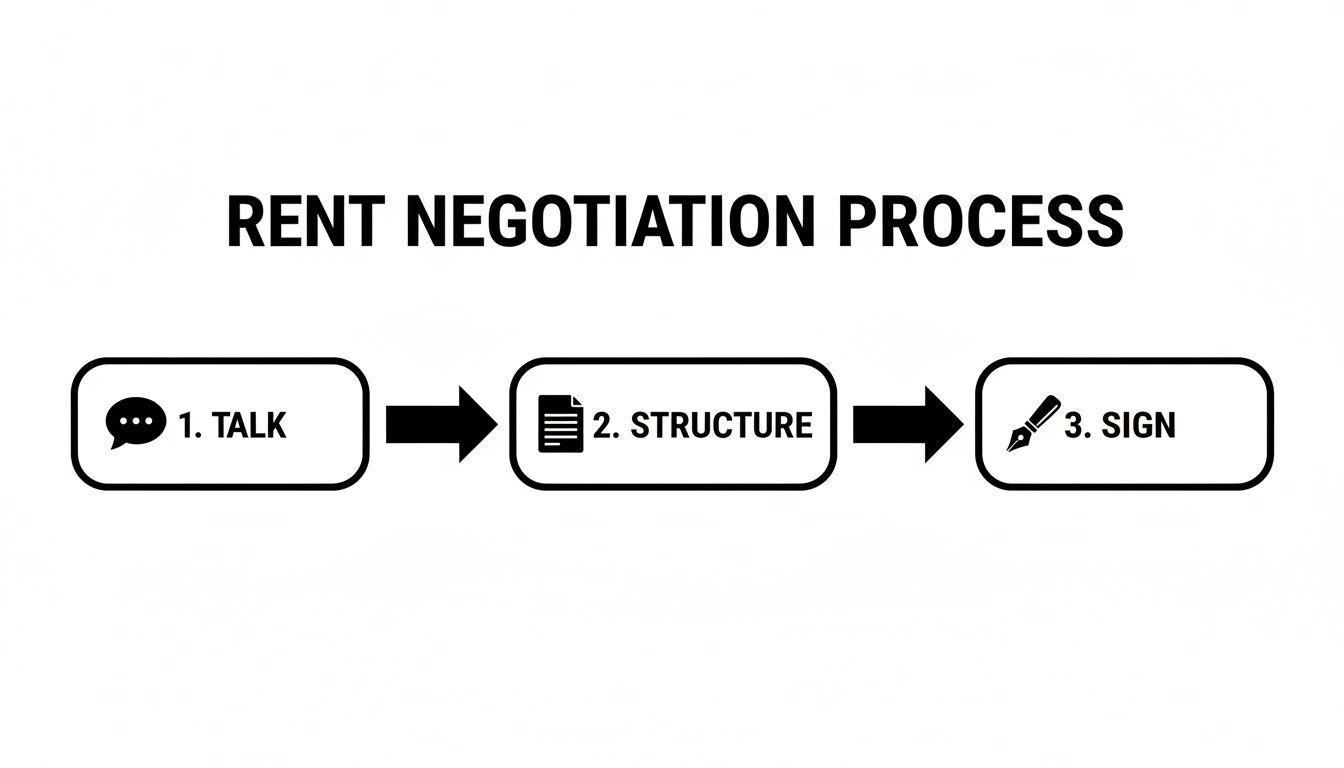
This process highlights communication and documentation—two things that are essential whether you're working out a payment plan or preparing for a court date.
Reclaiming Possession of the Property
Here’s a critical point: even with a judgment in your favor, you still cannot remove the tenant yourself. The court will issue a “writ of possession,” an order that authorizes law enforcement—usually a sheriff or marshal—to physically remove the tenant and their belongings if they haven't left by a certain date.
This is the final, official step that hands the property back to you. The entire ordeal is challenging, which is why it’s so important to understand the pressures tenants are facing. Right now, rent debt is a massive issue across the U.S., leading to late payment surges that put millions at risk. For landlords, this translates to heightened financial risks and unpredictable cash flow. You can explore more data on the national rent debt situation from the National Equity Atlas.
Given the legal complexities and high stakes, getting advice from an attorney experienced in landlord-tenant law is almost always the smartest decision you can make.
Proactively Preventing Late Rent Payments

While it's crucial to know how to handle late rent when it happens, the best-case scenario is avoiding it altogether. A proactive approach is always better than a reactive one. Taking the right steps upfront saves you an incredible amount of stress, protects your cash flow, and sets the foundation for a smooth tenancy.
This isn't about crossing your fingers and hoping for good tenants. It's about building a professional system from day one that encourages on-time payments by making it the path of least resistance.
Start with Ironclad Tenant Screening
Honestly, the most effective way to dodge late payments is to select tenants who have a rock-solid history of paying on time. It sounds simple, but you'd be surprised how many landlords get burned by cutting corners here. A thorough screening process is your first and most important line of defense.
Don't just give the application a quick once-over. A truly comprehensive check should always include:
Credit Check: Look beyond the score. You're looking for a pattern of responsible payments, a manageable debt-to-income ratio, and zero collections accounts—especially from former landlords.
Income Verification: You need to confirm their income is stable and enough to comfortably cover rent. The industry rule of thumb is an income of at least three times the monthly rent.
Previous Landlord References: This is non-negotiable. Actually call their last two landlords and ask direct questions: Did they pay on time? Did they take care of the property? Did they give proper notice?
Remember, a tenant who was consistently late with their last landlord is almost guaranteed to repeat that pattern with you. Investing the time to be diligent here pays dividends every single month.
Make Paying Rent Ridiculously Easy
In a world where you can order almost anything with a single click, asking tenants to mail a paper check is just inviting delays. The more hoops they have to jump through to pay you, the more likely you are to hear excuses. Modernizing your payment process is a game-changer.
The goal is to make paying rent as easy and automatic as paying a Netflix subscription. When it's convenient and simple, tenants are far more likely to pay on time without even thinking about it.
For landlords who want to minimize headaches, learning how to collect rent from tenants effectively from the start is key. The gold standard today is an online payment portal that allows tenants to set up automatic, recurring ACH transfers. This "set it and forget it" method is the best way to ensure rent hits your account on the first of the month, every month.
Set Crystal-Clear Expectations from Day One
Think of your lease agreement as the official rulebook for your business relationship. This is your chance to clearly lay out every single payment policy, leaving zero room for confusion or "I didn't know" excuses later on. Ambiguity is the enemy of on-time payments.
When you sit down with a new tenant for the lease signing, don't just slide the document across the table. Walk them through the critical payment clauses.
Policy Area | Key Details to Emphasize |
|---|---|
Due Date | Point out that rent is due on the 1st of the month, not just sometime during the first week. |
Grace Period | Explain how the 3-5 day grace period works, clarifying that rent is technically late on the 2nd, but the penalty isn't applied yet. |
Late Fees | Show them the exact fee amount and the specific date it will be strictly enforced if the payment hasn't been received. |
Payment Methods | Go over the accepted payment methods and explain why you don't accept others, like cash or personal checks after one has bounced. |
This simple conversation does wonders. It immediately establishes a professional tone and shows you're an organized landlord who takes the lease terms seriously. This makes tenants far less likely to test the boundaries.
Your Questions About Late Rent, Answered
When a tenant doesn't pay on time, it can be a stressful and confusing situation. You're likely juggling a lot of questions about what to do next. Let's walk through some of the most common scenarios and how to handle them.
What’s the Very First Thing I Should Do?
Before you do anything else, check your own records. Don't immediately assume the tenant is at fault. I've seen it happen plenty of times—an electronic payment is just taking an extra day to process, or a check was dropped off and simply overlooked. Look through your bank statements and online portals first.
Once you’re positive the payment hasn't arrived, a simple, friendly reminder is your best first move. A quick text or email saying, "Hi [Tenant Name], just a friendly reminder that rent was due yesterday. Please let me know if you've already sent it," is usually enough. It keeps things professional and also starts your documentation trail, just in case.
Can I Slap on a Late Fee Right Away?
Not so fast. You can’t charge a late fee the day after rent is due. There are a couple of crucial things you have to check first.
Your Lease Agreement: The right to charge a late fee has to be spelled out clearly in the lease your tenant signed. If it's not in there, you have no legal ground to charge one.
The Grace Period: Almost every state, and most leases, mandate a grace period. This is typically 3 to 5 days after the due date when the tenant can pay without any penalty. You can only apply the fee after that window has closed.
Also, make sure the fee itself is a reasonable amount and complies with any local or state laws that cap late charges.
Should I Accept a Partial Rent Payment?
This is where things get tricky, and the right answer really depends on your state's laws. Accepting a partial payment can sometimes hit the reset button on an eviction.
Imagine you've already served a "Pay or Quit" notice for the full amount. If you then accept a smaller payment, some courts will consider the original notice void. Why? Because you've essentially created a new, informal agreement by accepting the money.
Before you take any partial payment from a tenant who owes you rent, I strongly recommend talking to a landlord-tenant attorney. They'll know the specific rules for your area and can help you create a "partial payment agreement" that lets you accept the money without giving up your right to evict for the remaining balance.
What if My Tenant Is on Section 8?
When you're dealing with a tenant whose rent is subsidized, you have to be careful. Their rent is usually split into two parts: the tenant's portion and the government's portion.
If the tenant's portion is late, you follow your normal process. You can send them notices and charge late fees just like you would for any other tenant, as long as it's outlined in your lease.
However, if the government's payment is late (this can happen during a government shutdown, for example), you can't hold the tenant responsible. You cannot evict them for the government's share of the rent, nor can you legally demand they cover that amount.
Can I Just Use the Security Deposit for the Rent?
This is a common question, and the answer is almost always no—at least not while the tenant is still living in the property. A security deposit is meant to cover damages and unpaid debts after the tenant moves out.
Think of it this way: if you use the deposit to cover this month's rent, what happens when they move out and you discover they've damaged the kitchen? You'll have no funds left to cover the repairs. Using the deposit for current rent can cause major legal headaches and leave you financially exposed down the line.
When Is It Time to Call a Lawyer?
You can definitely handle the early stages—the reminders, the formal notices, and maybe even setting up a payment plan. But there are a few red flags that mean it's time to get an attorney involved.
You should hire legal counsel if:
The tenant decides to fight the eviction in court.
You receive a notice that the tenant has filed for bankruptcy.
You’re a new landlord and just aren’t comfortable with the eviction laws.
You find out the tenant has hired their own lawyer.
A good attorney is your best defense against a costly mistake. One small procedural error—like serving a notice incorrectly—can get your entire case thrown out, forcing you to start from scratch while losing months of rent. It's an investment that pays for itself.
Navigating late rent is easily one of the most frustrating parts of being a landlord. At Keshman Property Management, we handle these challenging situations with the professionalism and expertise that comes from experience, ensuring your investment is protected. Learn more about our property management services and let us take the pressure off your shoulders.


Comments