
A Landlord's Guide to Handling Late Rent Payments
- Sarah Porter

- Jan 10
- 13 min read
Updated: Jan 11
Late rent is more than just an inconvenience—it’s a direct hit to your cash flow and the financial stability of your investment. The best way to handle late payments is to prevent them from ever happening. This isn't about chasing tenants for money; it's about building a system where paying on time is the easiest, most obvious choice they can make.

Building a System to Prevent Late Rent Payments
Instead of constantly putting out fires, successful landlords and property managers create a framework that makes late payments rare. A proactive approach saves you a ton of time and stress while keeping your income predictable. It all starts long before you even hand over the keys.
Building a solid system means getting your foundational documents right from the start. For instance, understanding the notarization requirements for lease agreements ensures your lease is legally sound from day one. This small step solidifies your authority and makes every clause, including your payment policies, fully enforceable.
The Lease as Your First Line of Defense
Think of your lease agreement as the rulebook for your property. It’s the most critical document you have, setting clear, non-negotiable expectations for the entire tenancy. A vague lease is an open invitation for misunderstandings and disputes down the road.
Your lease needs to be crystal clear on the financials. Spell everything out:
The exact rent amount and due date. Don't just say "rent is due monthly." State, "Rent in the amount of $XXXX is due on the 1st day of each month."
The grace period, if you offer one. Clearly define how many days the tenant has after the due date before the payment is officially late.
The specific late fee. Whether it's a flat fee or a percentage, the exact penalty must be clearly written. No surprises.
Acceptable payment methods. List every way a tenant can pay, from online portals and direct deposits to personal checks.
This level of detail leaves no room for interpretation. If a payment is ever late, you have a signed document to point back to.
Key Takeaway: A meticulously crafted lease isn't about being restrictive; it's about providing absolute clarity. When tenants know exactly what is expected, they are far more likely to comply.
The Critical Role of Tenant Screening
You can have the most ironclad lease on the planet, but it won’t do you much good if you rent to someone who can't or won't pay on time. Your best defense against late rent payments is a rigorous tenant screening process. This is about more than just pulling a credit score.
A comprehensive screening process digs deeper. You need to verify their income to make sure the rent is truly affordable—a good rule of thumb is a gross monthly income of at least 3x the rent. Always check references with previous landlords and run a full background check.
A quick call to a past landlord can tell you more than a credit report ever will. Did they pay on time? Did they communicate issues? Past behavior is the best predictor of future performance. Once they're in, keeping detailed records of every payment is crucial. A well-maintained rent ledger is your best friend here. You can learn more about how to do that by checking out our guide on https://www.mypropertymanaged.com/post/what-is-a-rent-ledger-a-practical-guide-for-property-managers for proper documentation.
Laying Down the Law: Your Late Fee and Grace Period Policy
Think of your lease agreement as the official playbook for your rental property. One of the most critical sections in that playbook is your policy on late fees and grace periods. This isn't about being punitive; it's about establishing clear, professional expectations that protect your business and keep cash flow predictable. A "firm but fair" approach is your best bet—it encourages tenants to pay on time and gives everyone a clear roadmap when payments are delayed.
Before you write a single word, you have to do your homework. Late fee laws can be wildly different from one state—or even one city—to another. Seriously, don't skip this step. Some places might cap fees at a certain percentage of the rent, like 5%, while others might require you to offer a mandatory five-day grace period before you can charge a dime. Getting this wrong can land you in serious legal hot water.
How to Set a Fair Late Fee
Once you're clear on the local regulations, it's time to set a fee that actually works. The whole point is to create a real deterrent, not to gouge someone. A measly $10 fee on a $2,000 rent payment is just a nuisance. On the other hand, an excessively high fee can send a tenant who's already struggling into a financial tailspin, making it even harder for you to get what you're owed.
A widely accepted industry standard is to charge a flat fee of 5% of the total monthly rent. It’s a simple, predictable model that most people find reasonable.
Let's look at a couple of examples:
For a $1,500 monthly rent, a 5% late fee comes out to $75.
For a $2,200 monthly rent, that fee would be $110.
This percentage-based approach scales with the rent, so it's always fair and significant enough to make someone think twice before paying late.
Your policy should be a clear line in the sand, not a trap. The goal is to get paid on time, not to profit from late rent payments.
The Art of the Grace Period
A grace period is that little bit of breathing room you give a tenant after the 1st of the month before a late fee kicks in. While it might not be legally required where you are, offering a grace period of 3 to 5 days is a smart move and a common courtesy. It’s a practical buffer that accounts for things like bank holidays, slow mail, or just a simple oversight.
This small gesture shows you're a reasonable person to rent from, which can do wonders for your long-term relationship with a tenant. And let's be realistic: dealing with late rent is just part of the job. Data from millions of leases shows that in any given year, about one in five households gets hit with at least one late fee. This makes having a crystal-clear policy absolutely essential. You can discover more about renter payment trends from the CFPB to see the bigger picture.
Finally, make sure all of this is spelled out in black and white in your lease agreement. Use simple, unambiguous language. State the rent due date, the exact length of the grace period, and the specific late fee amount or percentage. When a tenant signs that lease, they're officially agreeing to your terms, which prevents any "I didn't know" arguments down the road.
Your Communication Plan When a Payment Is Late
The moment rent is officially late, your response needs to be swift, professional, and consistent. Having a clear, methodical communication plan does more than just help you collect what's owed; it builds a critical paper trail you’ll need if things escalate. The goal here is to be firm and fast while keeping a solutions-focused tone that encourages the tenant to talk to you.
You have to act quickly. The very first day after rent is due, a friendly, automated reminder via email or text should go out. This isn't an accusation—it's a gentle nudge. More often than not, a simple reminder is all that’s needed to fix an honest mistake.
If another day or two go by without payment or any word from the tenant, it's time to pick up the phone. A direct call is much harder to ignore than an email. When you talk, stay calm and stick to the facts: rent is overdue, and a late fee has been applied according to their lease. Ask them directly when you can expect payment. As soon as you hang up, log the date, time, and what was said.
Escalating Your Communication Efforts
When those initial, friendlier attempts don’t work, your communication has to get more formal. This is where you shift from reminders to official notices. These documents do two things at once: they spell out the serious consequences of not paying and create the legal paperwork required for what might come next.
This whole process—from research to enforcement—is about having a solid policy in place before you ever need it.
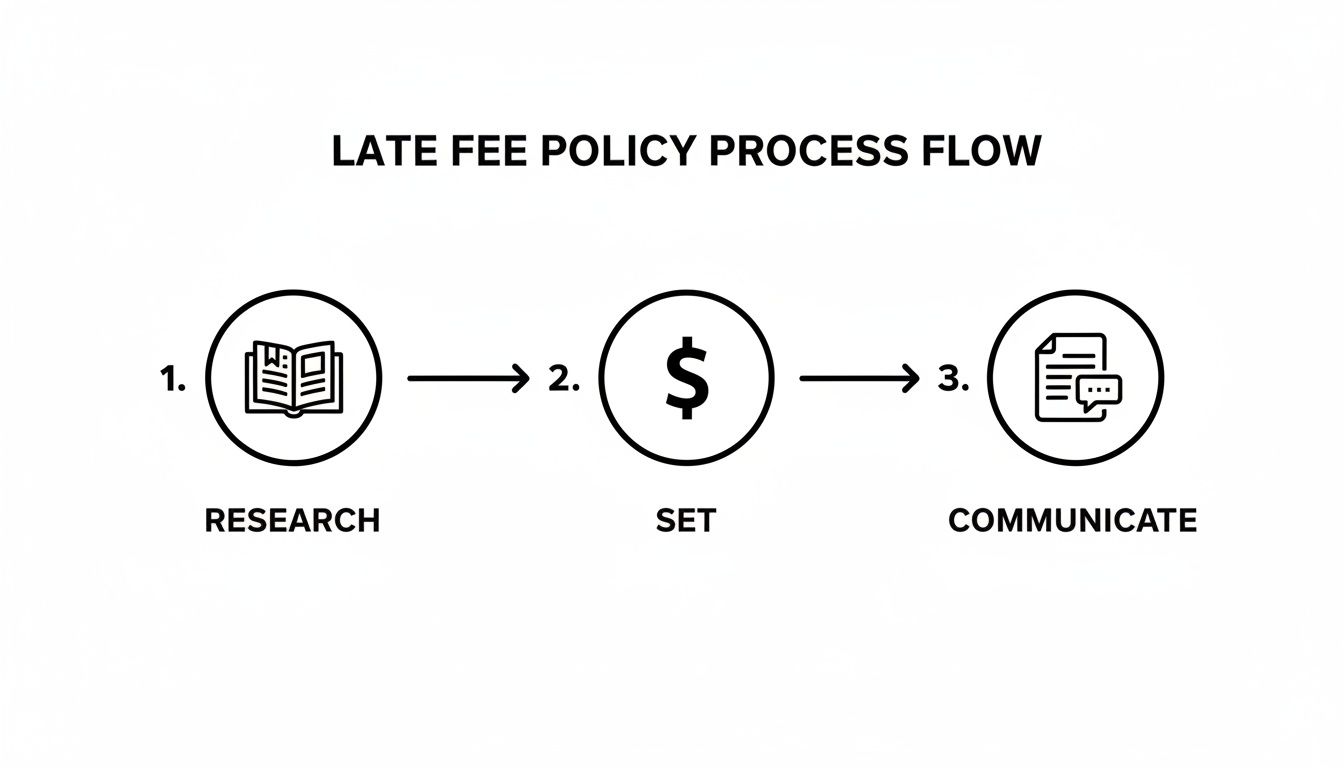
As you can see, a good policy starts with understanding local laws, setting clear fees, and communicating everything upfront. When a payment is missed, the plan kicks in, often starting with a formal notice. This is usually structured as a demand letter, which is the first official step in many legal disputes. If you’re not familiar with them, it’s worth learning more about What Is a Demand Letter to see why they're so important.
A clear timeline helps keep you on track and ensures every tenant is treated the same way. Here’s a sample schedule you can adapt:
Late Rent Communication Timeline
Day | Action | Communication Method | Goal |
|---|---|---|---|
Rent Due +1 Day | Send a friendly, automated reminder. | Email and/or Text | Gently remind the tenant of the missed payment in case it was an oversight. |
Rent Due +3 Days | Make a direct phone call. | Phone Call | Personally connect, state the facts, and get a verbal commitment for payment. |
Rent Due +5 Days | Send a formal "Notice to Pay or Quit." | Certified Mail & Email | Officially demand payment and start the legal clock, creating a paper trail. |
Per Notice | Follow up before the notice expires. | Phone Call or Email | One last attempt to resolve the issue before escalating to eviction proceedings. |
This timeline provides a balanced approach, starting with a soft touch and gradually increasing formality. Consistency is your best friend here.
The Power of Meticulous Documentation
I can't stress this enough: document every single interaction you have about late rent payments. Log every email, save every text, and note every phone call. This isn't just about being organized—it’s your most powerful tool if you end up in court.
Pro Tip: Keep a simple communication log for each tenant. Just jot down the date, time, how you contacted them, and a quick summary of the conversation. This detailed record proves you acted professionally and made every reasonable effort to solve the problem before filing for eviction.
Using Modern Tools to Improve On-Time Payments
Let's be honest: chasing down rent is one of the worst parts of being a landlord. The good news is that technology can make late payments the exception, not the rule. Moving away from manual collection to an automated system doesn't just save you headaches—it makes paying on time the path of least resistance for your tenants.
The single most effective tool I’ve seen is the automated payment reminder. Life gets busy, and sometimes the first of the month just sneaks up on people. A simple, friendly text or email a few days before rent is due is a gentle nudge, not a nagging demand. It’s a small touch that prevents honest slip-ups and keeps your invoice at the top of their mind, all without you lifting a finger.
Incentivizing On-Time Payments
While reminders are great for preventing accidental lateness, incentives can motivate even the most forgetful tenant. One of the most powerful strategies is to report on-time rent payments to credit bureaus. Think about it: this is a huge perk for your tenants. It allows them to build a positive credit history simply by doing what they're supposed to do—something paying by check could never offer.
This flips the script entirely. Instead of just avoiding a late fee, they're actively earning a reward that benefits their financial future. You get reliable cash flow, and they get a tangible benefit. For landlords looking to set this up, various rental collection services streamline payments and can handle the credit reporting for you.
And the data backs this up. A recent survey showed that 44% of tenants confirmed reminders helped them pay on time. Even more telling, over 70% of landlords who offer rewards are using credit reporting as their go-to incentive. This approach can lead to an average 13% increase in on-time payments, a number that makes a real difference to your bottom line. You can read the full survey findings on landlord and tenant payment tools to dig deeper into the stats.
By integrating technology, you are not just collecting rent; you are building a more efficient and professional management system. These tools reduce friction, improve communication, and make late rent payments less common.
Key Technologies to Consider
If you’re ready to get serious, a good property management software will bundle all of this together. When you’re shopping around, make sure the platform includes these core features:
Automated Reminders: The ability to schedule emails and texts before the due date is non-negotiable.
Online Payment Portals: Give tenants easy options to pay instantly, whether it's an ACH transfer or a credit card.
Credit Bureau Reporting: Look for platforms that integrate with major credit bureaus to report positive payment history.
Recurring Payments (Autopay): The ultimate "set it and forget it" solution. This is a must-have for consistent, on-time payments.
Adopting these tools is a direct investment in your property's financial stability. It cuts down on the administrative grind of dealing with late rent payments and, just as importantly, builds a better, more professional relationship with your tenants by making their lives easier.
When to Offer a Payment Plan or Serve a Legal Notice
Sometimes, a great tenant with a perfect payment history hits a rough patch. Life happens—an unexpected job loss, a medical bill, or some other legitimate hardship can throw anyone's budget into chaos.
In these situations, going straight for the legal jugular can burn a bridge with a good tenant and isn't always the smartest way to get paid. This is where you have to make a judgment call: do you work with them, or do you start the formal eviction process?
When a tenant reaches out before you have to chase them down, explaining their situation, a payment plan can be a real win-win. It gives them a realistic way to catch up and ensures you get your money without the hassle and expense of finding a new tenant. This isn’t about being a pushover; it's a sound business decision.
Structuring an Effective Payment Agreement
A handshake and a promise won't cut it. If you agree to a payment plan, you absolutely must put it in writing and have both parties sign it. This document acts as a temporary addendum to the lease and clears up any confusion.
Make sure your written agreement spells everything out:
The Total Amount Owed: List the exact figure, including the overdue rent and any late fees that apply under the lease.
A Clear Payment Schedule: Be specific. Don't just say "pay extra when you can." Instead, write something like, "Tenant will pay an additional $200 along with their regular rent on the 1st of the month for the next four months."
Consequences for Default: This is crucial. The agreement must state that if they miss a single payment, the entire plan is void. At that point, the full remaining balance is due immediately, and you can begin eviction proceedings.
This formal document protects everyone. The tenant gets a clear roadmap to get back on track, and you have the legal leverage you need if they don't hold up their end of the deal.
A well-structured payment plan is a strategic tool. It shows compassion for a good tenant facing a temporary setback while firmly protecting your financial interests and legal rights.
When to Serve a Pay or Quit Notice
Now, let's talk about the other side of the coin. If the tenant is dodging your calls, refusing to communicate, or already has a track record of late payments, it’s time to stop being flexible.
The minute your grace period expires and you're met with radio silence, you need to serve a formal Pay or Quit Notice. This is the first official step in the eviction process. It's a legal document that tells the tenant they have a set number of days (usually 3 to 5, depending on your state's laws) to either pay the full amount owed or move out.
Serving this notice is non-negotiable if you want to protect your rights. It shows the tenant you're serious and creates the legal paper trail required to take them to court. Don't wait on this. Hesitating only prolongs the time you aren't getting paid and can weaken your case later.
For a complete breakdown of the legal steps, our guide on how to evict a tenant legally walks you through the entire process. Ultimately, the choice between a payment plan and a Pay or Quit Notice comes down to evaluating the tenant’s history, their current attitude, and their willingness to communicate.
Protecting Your Investment from Chronic Late Rent
When a tenant goes from paying late once in a while to making it a habit, your whole approach needs to change. Good communication and a bit of flexibility are great, but a tenant who is always late is a direct hit to your bottom line. At this point, you have to shift your focus to protecting your investment, and that sometimes means starting the eviction process.
Let's be clear: this isn't a decision you make lightly. It’s the absolute last resort after you’ve tried everything else—reminders, phone calls, payment plans, and formal notices. This is the moment you stop being a flexible landlord and start acting as a business owner enforcing a contract.
Your Documentation Is Your Shield
In an eviction, your records are everything. Every text, every email, every notice you've sent—from the initial screening to the final Pay or Quit Notice—becomes critical evidence. Meticulous documentation is what turns a messy, stressful situation into a clear-cut legal case.
This is exactly why having a system in place is so important. I've seen landlords scramble because they don't have a paper trail, and they can't prove they followed the law. The numbers show why this is more critical than ever. In September 2025, for example, the on-time payment rate for independent rentals was just 83.1%, with late rent payments steadily increasing over the previous year. You can discover more about independent landlord rental performance to see the full picture.
Key Takeaway: Consistent documentation isn't just a "best practice"—it's the bedrock of your legal defense. A judge won't just take your word for it; they need to see the proof.
Ultimately, a proactive system is your best defense against long-term headaches. It all starts with a rock-solid lease, is supported by clear and consistent communication, and is backed up by decisive, legal action when all else fails. Following the steps in this guide helps you build that system, cutting down on delinquencies and protecting your investment from the financial drain of chronic late rent.
Frequently Asked Questions About Late Rent
Dealing with late rent can feel like a legal and logistical puzzle. Knowing the right answers is key to protecting yourself and running your properties smoothly. Let's break down a few of the most common questions that come across my desk.
One I hear all the time is, "Can I charge a daily late fee?" The short answer is: it depends entirely on where your property is. Some states give you the green light for a small daily fee (as long as it doesn't go over a certain limit), but others ban them completely. Before you even think about adding this to your lease, you absolutely must check your local landlord-tenant laws.
What if a Tenant's Payment Fails?
When a check bounces or an online payment gets rejected, you need to act as if the rent was never paid at all. The first thing you do is notify the tenant in writing—immediately. Your lease agreement should already have a clause for NSF (non-sufficient funds) fees, and now is the time to apply it.
This is the moment the rent officially becomes late, and the clock starts ticking.
Insist on getting the payment in a secure form, like a cashier's check or money order.
Kick off your standard late fee and communication process right away.
Should I Accept a Partial Rent Payment?
This is a tricky one, and honestly, it’s a judgment call. But you need to understand the risks involved. In many places, accepting even one dollar of a partial payment can stop an eviction process dead in its tracks.
A Word of Caution: If you do decide to accept a partial payment, you have to protect yourself. Get the tenant to sign a simple written agreement. This document should clearly state the remaining balance, the new due date, and a clause confirming that by accepting this payment, you are not giving up your right to evict if they fail to pay the rest. This isn't optional; it's essential for protecting your legal position.
At Keshman Property Management, we navigate these tough situations every day, drawing on over 20 years of hands-on experience. We're here to safeguard your investment while keeping tenant relations professional and fair. Learn more about how we can simplify your life as a landlord by visiting us at Keshman Property Management.


Comments