
how to find property managers: A practical guide to choosing the right partner

Updated: Dec 7, 2025
Before you even think about searching for a property manager, you need a game plan. Diving in without one is a surefire way to end up with a partner who doesn't fit, causing headaches you were trying to avoid in the first place.
Let's start by figuring out exactly what you need. This isn't just about finding someone to collect rent; it's about building a partnership that makes your investment work for you.
Defining Your Ideal Property Management Partnership

The best place to start is with an honest look at your own goals and how you like to operate. Think of it like creating a super-detailed job description. If you only have a vague idea of what you want, you'll get a flood of generic applicants who aren't right for your specific properties.
The more specific you are upfront, the easier it becomes to spot the right fit and weed out the wrong ones. This little bit of homework will save you a ton of time later.
Clarify Your Investment Goals and Involvement Level
First things first: what's your investment strategy? Are you playing the long game, focused on appreciation, or is maximizing monthly cash flow your top priority? A manager who understands your financial goals will make decisions—from setting rent to approving repairs—that align with your vision.
Next, you need to decide how involved you want to be. This is a huge factor in finding someone you can work with day-to-day.
The Hands-Off Investor: You want to set it and forget it. You need a full-service manager who can handle everything from late-night emergency calls to tenant screening without needing your input on every little thing.
The Collaborative Owner: You want to be in the loop. You’re happy to let them manage the details, but you want the final say on big-ticket repairs or new tenants. You’ll need a manager who is a great communicator and provides transparent, regular reports.
Getting this right is critical. A manager who thrives on autonomy will feel stifled by an owner wanting constant updates, and an owner who wants to be hands-off will be frustrated by a manager who needs approval for everything.
Outline Specific Property and Tenant Needs
Every property is different. A vintage single-family home requires a completely different kind of upkeep than a brand-new condo. Make a checklist of the specific tasks and policies you need your manager to oversee.
Think about your tenants, too. Are you renting to students, families, or young professionals? Your ideal manager should have experience with your specific tenant demographic and the challenges that come with it.
Key Takeaway: A well-defined management plan is your most powerful screening tool. It lets you quickly disqualify managers whose services don't match your property's specific demands or your financial goals, ensuring you only spend time on qualified candidates.
The global property management market is expected to hit USD 50.87 billion by 2032, fueled by growing demand and better technology. This boom means you have more choices, but it also makes it crucial to find a manager who uses modern, efficient systems. You can see the latest property management market research to get a sense of where the industry is heading.
With these details figured out, you're no longer just looking for a property manager—you're looking for your property manager. You've created a clear scorecard to measure every candidate against. For a deeper look at the day-to-day duties, our guide on what to expect from a property management company is a great next step.
Where to Find Qualified Property Management Candidates

Finding a great property manager isn't a passive exercise. You can't just type "property manager near me" into Google and hope for the best. The real pros are busy managing properties, not just their online marketing. They're deeply connected within local real estate circles.
Your mission is to get past the generic search results and tap into these networks. The goal here is to build a shortlist of 3-5 highly promising candidates to interview. This focused approach saves a ton of time and dramatically improves your odds of finding a partner who genuinely gets your local market and investment strategy.
Start With Professional Networks and Associations
The quickest way to find dedicated professionals is to look where they gather. Industry organizations are full of experts who are serious about their careers and typically adhere to a strict code of ethics.
National Association of Residential Property Managers (NARPM): This is the top tier. NARPM members are usually more experienced, often hold advanced certifications, and are committed to staying current with industry best practices. Their online directory is an excellent place to start your search.
Local Real Estate Investor Associations (REIAs): Nothing beats on-the-ground intelligence. Go to a local REIA meeting, and you'll not only meet managers but also get honest, unfiltered feedback from other investors about who they trust with their properties.
Joining these groups helps you sidestep the fly-by-night operators and connect directly with companies that have a real, documented commitment to their profession.
Tap Into Your Existing Real Estate Circle
Don't overlook the goldmine you're already sitting on: your current professional contacts. The people you already work with and trust—your real estate agent, mortgage broker, go-to contractor, even your accountant—interact with property managers constantly.
They have a front-row seat to who communicates effectively, who handles maintenance issues without drama, and who keeps properties running smoothly. A warm referral from someone you trust is often the best lead you'll ever get. Just ask them, "Who's the sharpest property manager you've dealt with lately?"
Pro Tip: When you get a referral, dig a little deeper. Don't just take the name and number. Ask why they're recommending them. Was it their lightning-fast turnaround on a vacant unit? Their skill in negotiating with vendors? Or their crystal-clear financial reports?
Getting specific details helps you find managers with a proven history of professional competence and reliability.
Use Vetted Online Directories and Platforms
While a wide-open internet search can feel like drinking from a firehose, certain specialized online directories can provide a more curated list. Platforms like AllPropertyManagement.com or Buildium's property manager directory let you filter by location and specific services, and they often include client reviews.
Finding the right sources is crucial in such a large and growing industry. The property management market is projected to grow from $21.17 billion in 2024 to $23.21 billion in 2025, with over 335,000 active businesses in the U.S. alone. To find your ideal partner in this crowded field, you need a strategy. You can review more data on the property management industry to see just how professionalized the landscape has become.
Modern recruiting techniques on how to source candidates can be surprisingly effective here, too.
Top Sources for Finding Property Managers
Deciding where to focus your energy can be tough. This table breaks down the most effective channels to help you prioritize your search.
Source | Pros | Cons | Best For |
|---|---|---|---|
Referrals | Highly trusted, pre-vetted candidates with a proven track record. | Limited to your existing network's experience. | Investors who have an established local team (agent, contractor, etc.). |
NARPM Directory | Members are certified, educated, and adhere to a code of ethics. | Can be more expensive; might not have extensive options in smaller markets. | Landlords prioritizing professionalism, experience, and industry credentials. |
Local REIAs | Direct access to managers and candid feedback from other investors. | Requires time to attend meetings and network; quality of advice can vary. | Hands-on investors who want to build local connections and get real-world insights. |
Online Directories | Convenient, easy to filter, and offers a broad range of options with reviews. | Reviews can be manipulated; requires more vetting to filter out low-quality options. | New investors or those in a new market who need to build a candidate list from scratch. |
Ultimately, a balanced approach works best. Combine a strong referral with a couple of highly-rated candidates from professional directories to create a well-rounded and high-quality pool of managers to interview.
Screening and Vetting Your Shortlist of Managers
You've done the legwork and narrowed the field down to a solid shortlist of 3-5 potential property managers. Now, the real work begins. It’s time to shift gears from searching to scrutinizing, and frankly, this is the most important part of the entire process. This is where you separate the slick marketers from the seasoned operators who will actually protect and grow your investment.
Think of it like hiring a critical business partner, because that's exactly what they are. You'd never bring someone into your business without a thorough background check, and the stakes are even higher here. I've seen too many investors get burned by taking shortcuts at this stage, leading to everything from mismanaged funds to legal nightmares.
Verify Licenses and Professional Credentials
First things first, let's cover the non-negotiables. A quick check of their legal and professional qualifications can tell you a lot. In nearly every state, property managers need a real estate broker's license or a specific property management license to operate legally. You can—and absolutely should—verify this on your state's real estate commission website. It only takes a few minutes.
Beyond the legal minimums, I always look for professional certifications. They aren't required, but they show a real commitment to their craft.
Residential Management Professional (RMP®): Awarded by NARPM, this tells you a manager has hit specific benchmarks for education and experience.
Master Property Manager (MPM®): This is the next level up from NARPM, signaling significant experience and a leadership role in the industry.
A manager who invests their own time and money into these credentials is demonstrating a dedication to high ethical standards and ongoing education. That’s a huge green flag.
Dive Deep into Online Reviews
Next up, put on your detective hat and head online. Look up each company on Google, Yelp, and the Better Business Bureau, but don’t just stop at the star rating. You’re looking for patterns.
Read the five-star raves and the one-star rants. Do the glowing reviews sound authentic and specific, or are they suspiciously generic? More importantly, dig into the complaints. Are multiple tenants complaining about ignored maintenance requests? Are owners consistently frustrated with confusing financial statements or poor communication? These are clues.
Key Insight: Pay very close attention to how the company responds to negative reviews. A professional, calm, and solution-focused reply shows accountability. Defensive, aggressive, or—worst of all—silent responses are a major red flag for how they'll handle problems when they're managing your property.
Treat this part of the process seriously. To get in the right mindset, you might want to look at a comprehensive guide to the pre-employment screening process and apply that same level of diligence here.
Conduct Thorough Reference Checks
Online reviews give you a snapshot, but talking to actual people gives you the full story. The most valuable insights you'll get will come directly from current clients and, if you can manage it, former tenants.
Ask each property manager on your shortlist for a list of references, including contact info for at least two or three current owners they work with. When you get them on the phone, don’t just ask if they’re “happy.” Get specific.
Questions for Property Owner References:
How long have they been managing your properties?
On a scale of 1-10, how would you rate their communication? Can you give me an example?
Have you been satisfied with the quality of tenants they've placed? What's their screening like?
Walk me through how they handle a typical maintenance request from your perspective.
Are your financial statements easy to understand, accurate, and always on time?
If you want to go the extra mile, try to find an "off-list" reference. You can sometimes find a property they manage through public records or by just driving around, then reach out to the owner directly. Their perspective will be completely unfiltered.
Finally, don't forget the tenant's experience. A good manager should be confident enough to provide contact info for a tenant in one of their properties. Ask the tenant about their experience with repairs, communication, and the move-in process. Remember, happy tenants are far more likely to renew their lease, which means less vacancy and more money in your pocket.
The Interview: Digging Deeper Than the Sales Pitch
You've done the legwork, vetted the résumés, and now you’re sitting across from your top candidates. This is where the real evaluation begins. The interview isn't just a formality; it's your chance to slice through the polished sales pitch and see how they actually operate.
Forget the generic questions. They get you generic, rehearsed answers. We're going to stress-test their systems, uncover their management philosophy, and find out if they're a true partner for your investment.
How They Handle People (and Problems)
The way a manager deals with tenants is a direct reflection of how they'll protect your asset. If they're too soft, you'll be chasing late rent and dealing with property damage. Too aggressive, and you'll be stuck in a revolving door of vacancies and a bad reputation. You're looking for someone who is consistently firm but fair.
Start with their tenant screening. Don't settle for a simple "yes, we screen tenants." Get into the nitty-gritty.
What's your absolute minimum credit score?
What's your standard for income-to-rent ratio? Is it 3x the monthly rent, or something else?
How do you actually verify their history? Do you pick up the phone and call previous landlords?
What's an automatic deal-breaker on a background check?
Once you've covered that, pivot to rent collection. You need to hear a clear, well-oiled process. Ask them, "Walk me through your exact process, starting from day one, when a tenant is late on rent." A pro will describe a system of automated reminders, clear late fee policies, and a firm timeline for when things escalate to a formal notice.
Their Game Plan for Maintenance and Repairs
Let's be honest: maintenance is where things most often go wrong. It’s the biggest point of friction between owners, tenants, and managers. A proactive, buttoned-up approach here is non-negotiable. It protects your investment and keeps good tenants from leaving.
First, ask about their vendor network. Do they have an in-house crew or rely on third-party contractors? Both have their pros and cons, but you need to know their model inside and out.
Key Maintenance Questions to Ask:
How do you vet your vendors? Are they fully licensed and insured?
Do you add a markup to vendor invoices? If so, what's the percentage?
What’s your spending limit on repairs before you need my approval?
Describe your process for a 2 a.m. emergency call, like a burst pipe.
That last question is incredibly telling. A great manager won't hesitate. They'll describe a 24/7 system with a clear chain of command for troubleshooting, dispatching help, and keeping both you and the tenant in the loop.
A manager who can clearly explain their maintenance workflow is showing you their operational strength. If their answers are vague, it’s a red flag that they’re reactive, not proactive—a habit that leads to bigger bills and unhappy tenants down the road.
Vetting Their Financial and Tech Smarts
Modern property management runs on technology. The market is exploding, projected to hit over $22.4 billion by 2029, largely because digital tools have become essential. In fact, research shows 80% of tenants now prefer to pay their rent online. A manager's tech stack isn't a "nice-to-have"; it's a critical part of their service. You can review the full property management market forecast to see just how important this is becoming.
Your questions should be laser-focused on how they use that tech to give you financial clarity.
Questions About Financials and Technology:
What property management software are you running? Look for names like AppFolio, Buildium, or RentManager. Familiarity with major platforms is a very good sign.
Can I see a sample monthly owner statement? This is a must. The report should be detailed, clean, and easy for a non-accountant to understand.
How are security deposits and owner funds handled? The only right answer is that they're held in separate, legally required trust accounts.
What's your communication rhythm with owners? Do you get weekly updates during a vacancy? What's their promised response time for calls and emails?
A top-tier manager will provide an online owner portal where you can log in anytime to see financial reports, track maintenance, and access documents. This kind of transparency is the new industry standard and a hallmark of a professional operation. For even more ideas, check out our guide on the top 8 questions to ask a property manager in 2025.
By asking these pointed questions, you shift the interview from a simple chat into a rigorous operational audit. You’ll walk away knowing not just what they do, but how they do it—giving you the confidence you need to choose the right partner for your investment.
Breaking Down Management Fees and Contract Terms
Once the interviews are done, you’ll start getting management agreements from your top picks. This is the moment the initial excitement bumps up against the reality of the fine print. Don't gloss over this part—a property management agreement is a serious legal document, and a simple oversight here can cost you thousands in hidden fees or lost control down the road.
Let's pull back the curtain on the fee structures and contract clauses you’re about to see. Getting a handle on these terms is the only way to compare apples to apples and make sure you’re signing a fair deal that actually protects your investment.
Understanding the Money: A Look at Fee Structures
Property management fees aren't as simple as a single percentage. That monthly management fee is the headline number, but it's often just the beginning. I've seen plenty of owners get lured in by a low percentage, only to be hit with a dozen other charges that add up fast.
Here’s a quick overview of what you'll typically find when it comes to property management fees.
Fee Type | Common Structure | Industry Standard Range | What It Covers |
|---|---|---|---|
Monthly Management | Percentage of rent collected or a flat fee | 8% – 12% of monthly rent | Day-to-day operations: rent collection, tenant communication, owner reports. |
Leasing Fee | One-time fee per new tenant | 50% – 100% of first month's rent | Marketing, showings, applicant screening, and drafting the lease agreement. |
Lease Renewal Fee | Flat fee or small percentage | $100 – $300 or small % of rent | Admin work to prepare and execute a lease renewal with an existing tenant. |
Maintenance Markup | Percentage added to vendor invoices | 5% – 15% (often 10%) | The manager's time coordinating and overseeing maintenance and repairs. |
Vacancy Fee | Monthly flat fee | $50 – $100+ | Some companies charge a fee to continue marketing while the property is empty. |
Eviction Fee | Flat fee plus legal costs | $200 – $500 + court fees | The administrative work of serving notices and managing the eviction process. |
While this table covers the basics, the devil is always in the details. A company charging 8% with a 10% maintenance markup and a full month's leasing fee might actually cost you more over the year than a company charging a flat 10% with fewer add-ons. You really have to do the math.
For a deeper dive into the numbers, you can explore our complete guide on the nuances of property management fee structures.
The Fine Print: Key Contract Clauses to Scrutinize
Beyond the fees, the legal language of the contract is what truly defines your relationship. This is where you need to put on your detective hat. Vague or one-sided clauses can lock you into a bad partnership with no easy escape.
Here’s what I always look for first:
Termination Clause: This is non-negotiable. What’s your exit strategy if things go south? Look for a clause that lets you terminate with reasonable notice, usually 30 to 60 days. Be very wary of long lock-in periods or massive early termination penalties.
Owner Reserves: Most managers require you to keep a reserve fund—think $300 to $500 per unit—so they can cover small repairs without bugging you every time. The contract must be crystal clear about this amount and how it gets replenished.
Manager's Authority: The agreement has to spell out how much the manager can spend on a repair without getting your approval first. A common limit is somewhere between $250 and $500. This gives them enough freedom to fix a leaky faucet quickly but ensures you’re looped in on bigger expenses.
A Major Red Flag: Watch out for any clause that gives the manager the exclusive right to sell the property. This is a huge overreach. You’re hiring them to manage your rental, not to force you into using them as your sales agent if you decide to sell.
And remember, a modern management company needs modern tools. It’s not just a nice-to-have anymore; it's what good tenants demand.
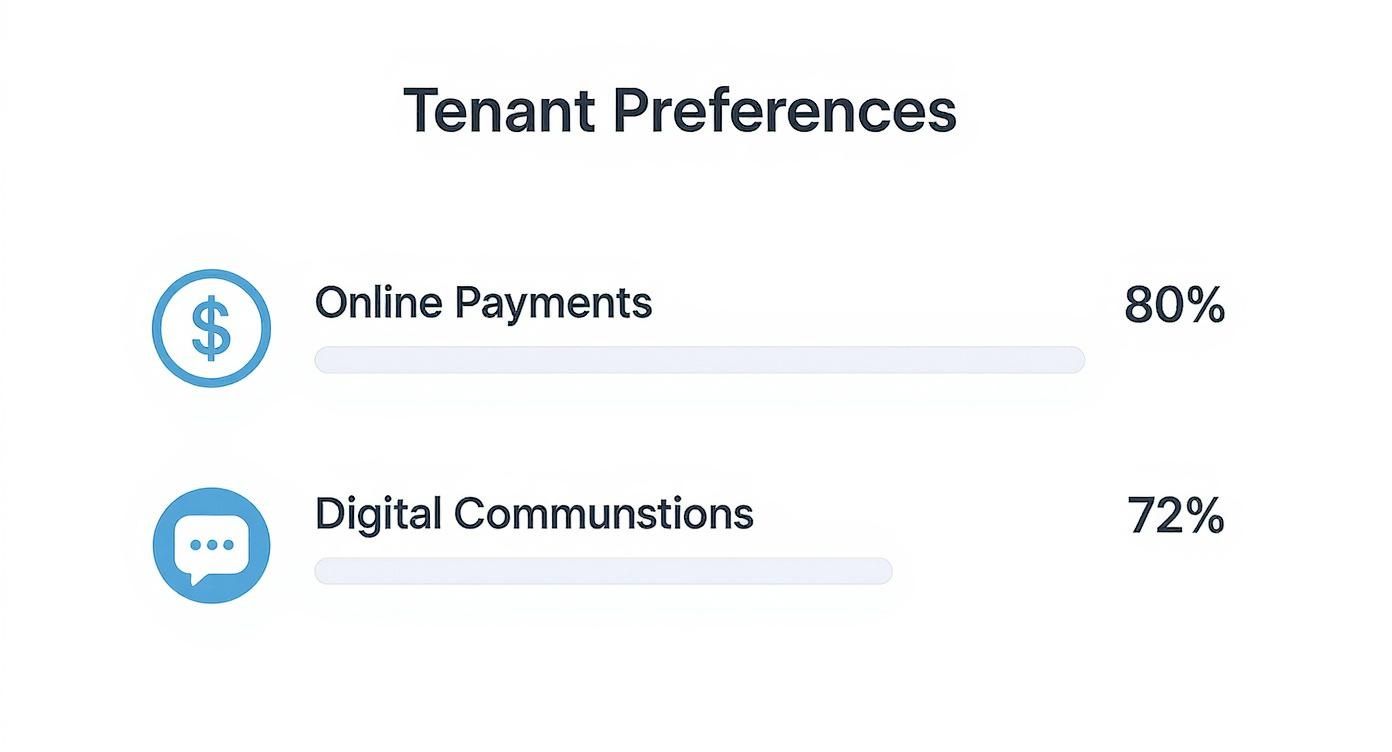
The numbers don't lie. If a manager isn't set up for online payments and digital communication, they're already behind the curve and could struggle to attract the best renters for your property.
Your Final Review Checklist
Before you put pen to paper, do one last sweep. Grab a highlighter and make sure you have solid, clear answers to these critical questions.
Services: Does the contract list exactly what's included in that monthly fee? Think rent collection, inspections, financial reports, etc.
Fees: Is every single potential fee defined? Or are there vague terms like "administrative fees" that could be a blank check for them?
Insurance: Does it state that the manager must carry their own Errors & Omissions (E&O) insurance? The agreement should also protect you from liability if they're negligent.
Data Ownership: When the contract ends, who owns the tenant files and financial records? The answer should be you, with everything returned promptly.
Never feel bad about asking for changes or clarifications. A truly professional property manager will be happy to walk you through the contract and make sure you're comfortable. If they get defensive or push back on reasonable requests, consider it a preview of the difficult partnership to come.
Tying Up the Loose Ends: Final Questions Before You Hire
Even after doing all your homework—vetting candidates, checking references, and pouring over contracts—it's completely normal to have a few last-minute questions. You're about to hand over the keys to a significant asset, after all. It’s smart to be thorough.
Think of this section as your final gut check. Getting these practical details ironed out now ensures you're walking into this partnership with your eyes wide open, ready for a smooth and predictable experience.
How Much Should a Good Property Manager Really Cost?
You'll find that most property management fees land somewhere between 8% and 12% of the monthly rent collected. Where you fall in that range often comes down to your local market, the type of property you own (a single-family home versus a four-plex), and exactly what's included in their service package. Some managers also use a flat-fee model, which can be a great deal if you have a property with higher-than-average rent.
But the monthly management fee is just one piece of the puzzle. You need to be aware of the other common charges that can pop up.
Leasing Fee: This is for the legwork of finding and placing a new tenant. Expect it to be 50% to 100% of the first month's rent.
Lease Renewal Fee: A much smaller flat fee for the administrative task of locking in a great existing tenant for another term.
Maintenance Markup: Many managers add a small percentage (usually around 10%) to vendor invoices. This covers their time for coordinating repairs, vetting contractors, and overseeing the work.
Eviction Fee: Hopefully, you'll never need this. But if you do, it’s typically a flat fee plus any associated court costs.
Before you sign a single thing, get a complete fee schedule in writing. Full transparency here is non-negotiable and saves a world of headaches later.
What Are the Biggest Red Flags I Should Watch Out For?
Spotting trouble early can save you from a nightmare partnership. The absolute biggest red flag? An expired or non-existent real estate or property management license in a state that requires one. That's a deal-breaker, full stop.
Another huge warning sign is how they communicate with you during the hiring process. If a potential manager is slow to return your calls, gives you vague answers, or just seems generally disorganized before they even have your business, imagine what it will be like once they do. That’s not a preview; that’s the main feature.
Trust your gut on this one. If a fee structure looks too good to be true, it probably is. They're making that money back somewhere, likely through inflated repair costs or a dozen little "junk fees." A manager who is cagey about providing references or hands you a flimsy, generic management agreement is telling you everything you need to know. Walk away.
Should I Go With a Big Company or a Small, Independent Manager?
This is the classic debate, and honestly, there's no single right answer. It really boils down to what you value most. A large property management company usually comes with sophisticated systems, a deep roster of staff, and well-established relationships with vendors, which can sometimes mean better pricing on repairs.
The downside? You might feel like a small fish in a big pond. Your main point of contact could change, and the service can sometimes feel a bit impersonal.
On the flip side, an individual manager or a small boutique firm often provides a much more hands-on, personal touch. You’ll probably have the owner's cell number and work directly with one person who knows every detail about your property. The potential trade-off is that they may have fewer resources and less robust systems, which could be a factor during a large-scale emergency.
How Do I Make Sure the Hand-Off Goes Smoothly?
A clean transition from you to your new manager is all about preparation. Once you’ve signed the agreement, the real work of setting them up for success begins.
First, you need to arm them with all the necessary information and assets.
Gather every current lease agreement, along with any addendums or related paperwork.
Provide a complete tenant contact list with up-to-date phone numbers and emails.
Arrange the transfer of all security deposits into the manager's required trust account.
Hand over every key, garage remote, and access code associated with the property.
Finally, you (or your new manager) must notify your tenants of the change in writing. This letter or email should be crystal clear about who their new contact person is, how to submit maintenance requests, and—most importantly—how and where to pay their rent from now on. A little proactive communication here prevents a lot of tenant confusion and starts the relationship off on the right foot.
Finding the right property manager isn't just about outsourcing tasks; it's about finding a partner you can trust to protect and grow your investment. At Keshman Property Management, we bring over 20 years of hands-on experience to make owning rental properties less stressful and more profitable. Discover our transparent, owner-focused approach at https://mypropertymanaged.com.


Comments