
questions to ask property management company: 5 must-dos

Updated: Dec 7, 2025
Choosing a property management company is one of the most impactful decisions a real estate investor or property owner will make. The right partner can amplify your returns, minimize your stress, and safeguard your valuable asset for years to come. Conversely, the wrong choice can transform a promising investment into a source of constant headaches, financial drain, and legal risks. So, how do you effectively differentiate the true professionals from those who just talk a good game? The entire process hinges on asking the right questions.
This comprehensive guide is designed to be your definitive interview script. We have compiled the most critical questions to ask a property management company before you even consider signing a contract. Think of this not just as a list, but as a strategic vetting tool. For each question, we'll dive into exactly why it matters, what a strong, transparent answer sounds like, and the subtle red flags that should give you pause.
By using this checklist, you can systematically evaluate potential partners, ensuring you entrust your property to a team that aligns perfectly with your financial goals and operational standards. This isn't about finding just any manager; it's about finding the right partner to protect and grow your investment. Let's get started.
1. What are your fee structures and what do they include?
Understanding the complete cost of property management is the most critical first step in evaluating a potential partner. A low percentage fee can be misleading if it's accompanied by numerous a la carte charges. This question forces transparency and helps you accurately forecast your net rental income, making it a foundational part of our list of questions to ask a property management company.
Why This Question is Crucial
The management fee is just one piece of the puzzle. You need to uncover all potential costs, including setup fees, leasing fees, maintenance markups, and eviction charges. A comprehensive fee schedule protects your budget from unexpected expenses and clarifies exactly which services you're paying for.
What to Look For in an Answer
A reputable company will provide a clear, written fee schedule without hesitation. They should be able to explain their model and justify every charge.
Percentage-Based Fee: Typically 8-12% of collected monthly rent. This is the most common model.
Flat-Fee: A fixed dollar amount per month, regardless of rent amount (e.g., $150 per unit). This provides predictable monthly costs.
Hybrid Model: A combination, such as a lower percentage plus a fixed administrative fee.
Red Flag Alert: Be wary of companies that are vague about their fees or hesitant to provide a written schedule. Also, a surprisingly low management fee (e.g., 4-5%) often indicates that the company makes its profit through high markups on maintenance or frequent add-on charges.
Actionable Tips
Request the Full Schedule: Always ask for a detailed fee schedule in writing before signing any contract.
Inquire About Markups: Specifically ask, "Do you charge a markup or service fee on vendor invoices for maintenance and repairs?" A typical markup is 10-20%; anything higher should be questioned.
Clarify Leasing Fees: Ask if the "tenant placement" or "leasing fee" (often 50-100% of the first month's rent) is separate from the monthly management fee.
Ask About Vacancy: Confirm if they charge a fee while the property is vacant. The best companies only get paid when you do.
For a deeper dive into the different pricing models you might encounter, you can explore this comprehensive guide to property management fee structures.
2. How do you handle tenant screening and selection?
The quality of your tenant directly impacts your profitability, property condition, and peace of mind. A rigorous screening process is the first line of defense against late rent, property damage, and costly evictions. This question reveals the company's standards for selecting reliable tenants, making it a vital part of your interview checklist.

Why This Question is Crucial
Effective tenant screening is predictive, not reactive. It minimizes risk by identifying qualified applicants before they sign a lease. You need to know if the company's process is thorough enough to protect your asset, covering everything from financial stability to rental history and criminal background, all while adhering strictly to Fair Housing laws.
What to Look For in an Answer
A professional management company will have a well-defined, documented screening policy that is applied consistently to every applicant. They should be able to articulate their specific criteria clearly.
Standardized Criteria: Look for specific minimums, such as a credit score of 650+ and a gross monthly income of at least 3x the rent.
Comprehensive Checks: The process should include credit reports, national criminal background checks, eviction history searches, and verification of employment and rental history.
Legal Compliance: The company must demonstrate a strong understanding of and adherence to the Fair Housing Act and any local regulations.
Red Flag Alert: Be cautious of companies with vague or overly flexible screening criteria. A manager who says they "go by gut feeling" is exposing you to significant financial and legal risk. Also, an extremely quick approval process might indicate that they are cutting corners on essential verifications.
Actionable Tips
Request a Criteria Sheet: Ask for their written tenant screening criteria and application form.
Discuss Marketing Strategy: Inquire how they market vacant properties to attract a large pool of qualified applicants. Furthermore, understanding their approach to showcasing properties, such as by creating virtual tours, can demonstrate their commitment to finding high-quality tenants quickly.
Verify Compliance Knowledge: Ask how their staff stays updated on Fair Housing laws.
Understand Decision-Making: Clarify who makes the final approval decision on an applicant: you or them?
For an in-depth look at what a robust screening process entails, you can explore this ultimate guide to property management tenant screening.
3. What is your tenant retention rate and how do you handle turnover?
High tenant turnover is a silent profit killer. Every time a tenant leaves, you incur costs from vacancy, cleaning, repairs, marketing, and screening new applicants. This question reveals a company's ability to keep good tenants happy and their efficiency in managing the inevitable move-out process, making it a crucial part of our questions to ask a property management company.
Why This Question is Crucial
A company’s tenant retention rate is a direct reflection of its tenant relations and property maintenance quality. A high rate suggests they are responsive, professional, and maintain properties well, leading to stable income for you. An efficient turnover process minimizes costly vacancy periods, getting your property re-rented quickly and reducing financial losses.
What to Look For in an Answer
A professional company will have data-driven answers and a well-defined process. They should be able to provide specific metrics and walk you through their standard operating procedures for both renewals and turnovers.
Specific Retention Rate: Look for a rate of 80% or higher. They should be able to segment this by property type if requested.
Defined Renewal Strategy: A proactive approach is key. They should start renewal conversations 60-90 days before a lease expires.
Efficient Turnover Timeline: A well-managed turnover process, from move-out inspection to a new tenant moving in, should ideally take 7-14 days.
Red Flag Alert: Be cautious if a manager can't provide a specific retention rate or seems to guess. Vague answers like "we're pretty good at keeping tenants" or "turnover just happens" suggest a lack of focus on this critical, cost-saving aspect of management.
Actionable Tips
Ask for Metrics: Inquire, "What was your average tenant retention rate last year for properties like mine?"
Probe the Process: Ask, "What is your standard procedure and timeline for turning over a unit once a tenant gives notice?"
Clarify Communication: Ask how they encourage renewals. Do they survey tenants or offer incentives?
Inspect Their Inspections: Inquire about their move-out inspection process and how they document and charge for damages versus normal wear and tear.
For a deeper look into the practices that keep tenants in place, check out these 8 effective tenant retention strategies.
4. How do you handle maintenance requests and emergency repairs?
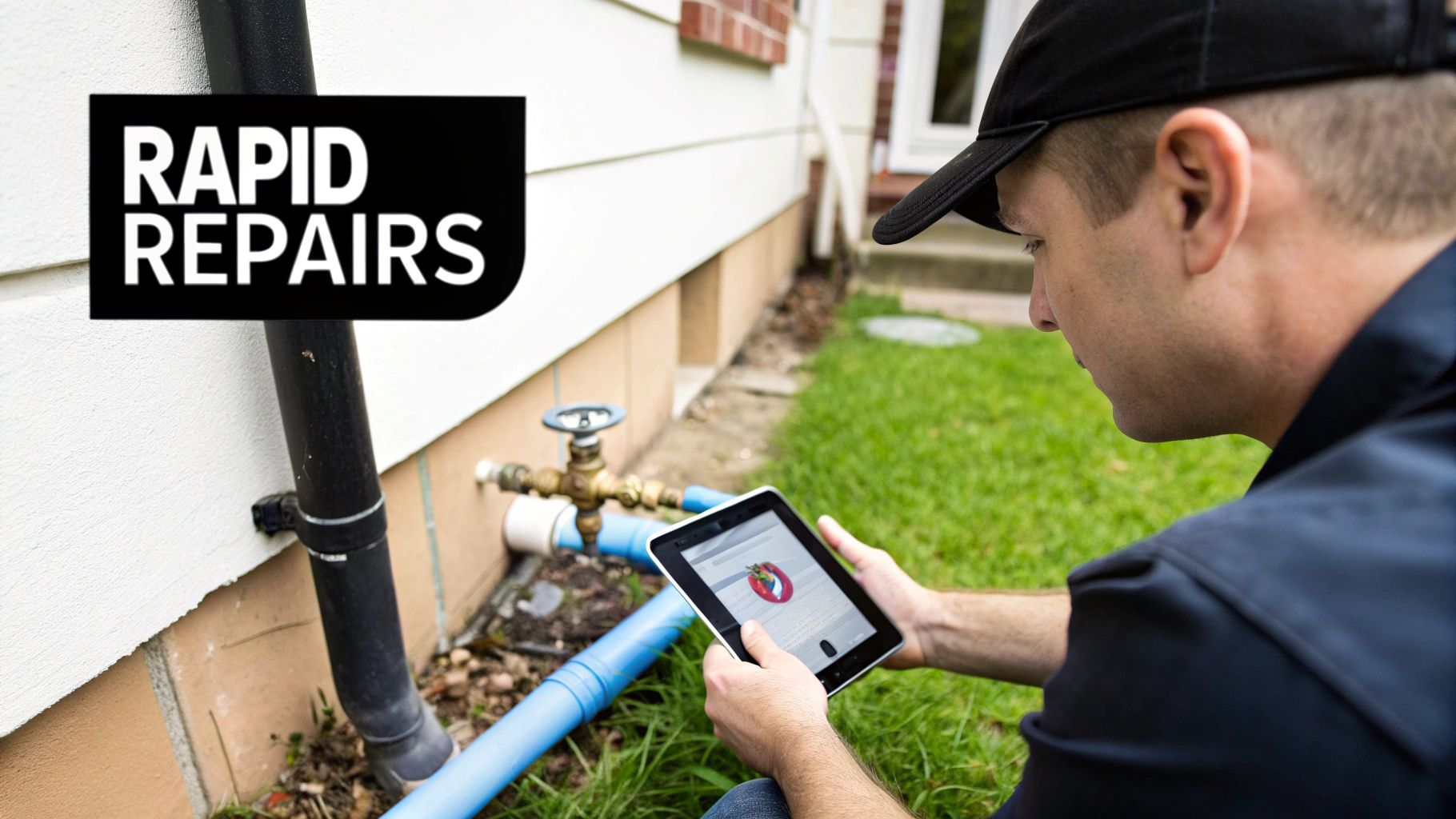
A responsive and efficient maintenance system is the backbone of successful property management. It directly impacts tenant satisfaction, reduces turnover, and protects the long-term value of your investment. This question uncovers a company's operational efficiency, their vendor network, and their protocols for protecting your asset, making it a critical part of the list of questions to ask a property management company.
Why This Question is Crucial
Poorly handled maintenance is one of the top reasons tenants choose not to renew their leases. You need to understand the company's entire process, from how a tenant submits a routine request to how a 2 AM emergency call is managed. A clear process ensures repairs are handled swiftly and cost-effectively, preserving both your cash flow and your property's condition.
What to Look For in an Answer
A top-tier property manager will describe a well-defined, technology-driven process. They should have clear service-level agreements (SLAs) for different types of requests and a transparent system for approvals and billing.
Technology-Forward System: Modern companies use online portals or mobile apps where tenants can submit requests, upload photos, and track progress.
Established Vendor Network: They should have a vetted list of licensed and insured contractors or an in-house maintenance team to handle a wide range of issues.
Clear Emergency Protocols: They must have a 24/7 emergency line and a precise plan for handling urgent issues like major leaks or heating failures, including defined response times.
Red Flag Alert: Be cautious if a manager lacks a 24/7 emergency procedure or cannot provide clear timelines for repairs. Vague answers about their vendor relationships or an inability to explain how repair costs are approved and controlled suggest a disorganized and potentially costly operation.
Actionable Tips
Ask for Specific Timelines: Inquire about their target response times for emergency (e.g., within 1-2 hours) vs. non-urgent (e.g., within 48 hours) issues.
Clarify Approval Thresholds: Ask, "What is the maximum repair cost you will cover without my direct approval?" This should be a specific dollar amount (e.g., $300-$500).
Discuss Vendor Management: Ask if they use an in-house team, a preferred network of third-party vendors, or both. Inquire if these vendors are licensed and insured.
Inquire About Preventive Maintenance: A proactive company will offer preventive maintenance plans for systems like HVAC and plumbing to avoid costly emergency repairs.
For a visual breakdown of what to expect from a professional maintenance process, the video below offers valuable insights.
5. What accounting and financial reporting do you provide?
Transparent and detailed financial reporting is the bedrock of a successful rental investment. You need clear, accurate, and timely information to track income, monitor expenses, and evaluate your property's performance. Asking about accounting practices is a crucial part of our list of questions to ask a property management company, as it reveals how well they will protect and report on your financial interests.
Why This Question is Crucial
Without robust financial reporting, you're essentially flying blind. You won't be able to gauge your property's profitability, identify cash flow issues, or prepare for tax season effectively. This question ensures the company’s accounting standards align with your need for visibility and control over your investment's finances. It moves beyond simple rent collection to true financial stewardship.
What to Look For in an Answer
A professional management company will have a sophisticated and transparent accounting system. They should be eager to show you how they keep you informed and provide easy access to your financial data.
Online Owner Portal: A secure, 24/7 portal where you can view real-time financial statements, access invoices, and track payments.
Detailed Monthly Statements: Look for comprehensive reports like Profit & Loss (P&L) statements, cash flow statements, and a general ledger that itemizes every transaction.
Year-End Tax Documents: They should provide a consolidated year-end statement and all necessary tax forms, such as the 1099-MISC, to make tax filing simple.
Red Flag Alert: Be cautious if a company provides vague, hard-to-read reports or doesn't offer an online portal. A lack of transparency in financial reporting often signals disorganized operations or, in worst-case scenarios, potential mismanagement of funds.
Actionable Tips
Request Sample Reports: Ask to see examples of the monthly and year-end statements they provide to owners. Are they clear and detailed enough for you?
Test the Portal: Inquire if you can see a demo of their owner portal to assess its functionality and ease of use.
Confirm Fund Disbursement: Ask, "How quickly after collecting rent are funds disbursed to my account?" A clear, consistent timeline is essential for your own cash flow management.
Discuss Expense Categorization: Clarify how they categorize expenses. Proper categorization is vital for maximizing tax deductions and understanding where your money is going.
6. What is your experience with your company's legal compliance and Fair Housing practices?
Navigating the complex web of landlord-tenant laws, local ordinances, and federal regulations like the Fair Housing Act is non-negotiable. One misstep can lead to severe penalties, lawsuits, and damage to your reputation. Asking about legal compliance is a crucial part of vetting a property manager, as their expertise becomes your primary shield against legal liability.
Why This Question is Crucial
The legal landscape for landlords is constantly changing. A property management company must be proactively educated and rigorously compliant to protect your investment. This question assesses their internal processes for staff training, discrimination prevention, and adherence to all applicable laws, ensuring they are equipped to keep you and your property on the right side of the law.
What to Look For in an Answer
A professional company will welcome this question and detail their commitment to compliance. They should confidently describe their training protocols, legal resources, and documentation procedures.
Regular Staff Training: They should mention mandatory, recurring training on Fair Housing, state-specific landlord-tenant laws, and local regulations.
Legal Counsel: Look for a company that retains legal counsel or has an in-house expert to review leases, advise on complex situations, and stay updated on legislative changes.
Standardized Procedures: They should have clear, documented procedures for everything from marketing and tenant screening to handling reasonable accommodation requests, ensuring consistency and compliance.
Red Flag Alert: Be cautious if a manager seems dismissive of this topic or gives vague answers like "we follow the law." A lack of specific examples of their training, documentation processes, or how they handle potential complaints could indicate a dangerously reactive, rather than proactive, approach to compliance.
Actionable Tips
Ask About Certification: Inquire specifically, "Do your leasing agents and managers hold any Fair Housing certifications, and how often is training renewed?"
Inquire About Local Laws: Ask about their experience with specific local or state laws that affect your property, such as rent control or "just cause" eviction ordinances.
Review Their Lease: Request a sample lease agreement to review. Ensure it is legally sound and doesn't contain illegal clauses.
Clarify Liability: Ask how their management agreement addresses liability and legal costs if a Fair Housing complaint or lawsuit arises from their actions.
7. How do you handle rent collection and what is your delinquency rate?
Consistent and timely rent collection is the engine of your rental investment. How a company manages this process directly impacts your cash flow, profitability, and the overall financial health of your property. This question reveals their operational efficiency, tenant communication strategies, and their effectiveness at enforcing lease terms, making it a critical part of any list of questions to ask a property management company.
Why This Question is Crucial
A streamlined, modern rent collection system minimizes delays and reduces the likelihood of missed payments. You need to understand their entire process, from the payment methods they offer tenants to the specific steps they take when rent is late. A company with a low delinquency rate has proven procedures that protect your income and handle difficult situations professionally.
What to Look For in an Answer
A top-tier property manager will detail a tech-enabled, systematic approach to rent collection and be transparent about their performance metrics. They should be proud of their low delinquency rate and able to explain how they achieve it.
Modern Payment Options: Look for companies offering online portals, ACH transfers, and automatic payment options. These methods are convenient for tenants and more reliable than mailing checks.
Proactive Communication: They should describe a system of automated reminders sent to tenants before the rent due date.
Firm but Fair Policies: A clear, written policy for handling late payments, including grace periods and the immediate application of late fees as stipulated in the lease. They should be able to cite their portfolio-wide delinquency rate (a rate under 2-3% is excellent).
Red Flag Alert: Be cautious if a company only accepts checks or cash, as this can lead to delays and security issues. A vague answer about their delinquency rate or an unwillingness to share it suggests they either don't track this crucial metric or their performance is poor.
Actionable Tips
Ask for Specifics: Inquire about their exact portfolio-wide delinquency and collection rates over the past 12 months.
Review their Process: Ask for their standard timeline from the moment rent is late to when an eviction notice is filed.
Clarify Tenant Options: Confirm the various payment methods available to tenants. The more convenient the options, the better the compliance.
Understand Late Fee Policy: Ask how late fees are calculated and enforced. Crucially, ask who keeps the late fees: the owner or the management company. This can be a significant hidden revenue stream for them.
8. What is your communication style and how often will I hear from you?
Misalignment on communication can quickly sour a landlord-manager relationship. Establishing clear expectations for how and when you'll receive updates is essential for peace of mind and effective collaboration. This question digs into a company's process for keeping you informed, moving beyond basic reports to assess their proactivity and responsiveness, making it a key part of any interview.

Why This Question is Crucial
Effective property management isn't just about collecting rent; it's about partnership. You need to know that your manager will be proactive with important updates, responsive to your inquiries, and available during emergencies. Understanding their communication protocol prevents surprises and ensures you feel connected to your investment without being bogged down by minor details.
What to Look For in an Answer
A great property management company will have a multi-faceted communication strategy and be able to articulate it clearly. Look for a commitment to both routine updates and strategic insights.
Defined Channels: They should specify their primary communication methods, such as a dedicated owner portal, email updates, and phone calls for urgent matters.
Proactive Reporting: Expect detailed monthly financial statements and regular updates on maintenance, leasing activity, and inspections. Some top-tier companies offer quarterly business reviews.
Clear Responsiveness: They should have a stated policy for responding to owner inquiries, typically within one business day for non-urgent matters.
Red Flag Alert: Be cautious of managers who give vague answers like, "We'll call you if something comes up." This indicates a reactive, rather than proactive, approach. A lack of an online owner portal or a refusal to provide sample reports should also be cause for concern.
Actionable Tips
Establish Preferences Upfront: Clearly state your preferred communication method (email, phone) and desired frequency for routine updates.
Ask for a Dedicated Contact: Inquire if you will have a single point of contact or a dedicated account manager. This streamlines communication and builds a stronger working relationship.
Request Sample Reports: Ask to see examples of the monthly financial statements and inspection reports they provide to owners.
Clarify Emergency Protocols: Understand how they will contact you in an after-hours emergency and what their response timeline is.
Inquire About Strategic Insights: Ask if they provide proactive market analysis or recommendations for rent adjustments and property improvements.
9. What is your insurance and liability coverage, and what should I carry?
Navigating insurance is a non-negotiable aspect of protecting your investment property. A single incident can lead to catastrophic financial loss, making this one of the most important questions to ask a property management company. This question clarifies responsibilities, identifies potential coverage gaps, and ensures both you and the management company are adequately protected against liability and property damage.
Why This Question is Crucial
You need to know precisely what the management company’s policy covers versus what you are required to carry as the property owner. Understanding this division of responsibility prevents dangerous assumptions and ensures there are no gaps in your protection. It also reveals the company's professionalism and their commitment to risk management for their clients.
What to Look For in an Answer
A professional management company will be transparent about their own coverage and have clear insurance requirements for their clients. They should provide you with a certificate of insurance upon request and guide you on the necessary policies you need.
Their Coverage: They should carry their own General Liability and Errors & Omissions (E&O) insurance. A typical General Liability policy might be for $1 million per occurrence and $2 million aggregate.
Your Requirements: They will require you to maintain a specific landlord or dwelling fire policy and often ask to be named as an "additional insured" on your policy. This protects them if a lawsuit arises from an incident on your property.
Vendor Requirements: They should have strict insurance requirements for all third-party vendors who work on your property.
Red Flag Alert: Be cautious of a company that doesn't have its own robust insurance policies or is vague about the coverage you need to carry. A company that doesn't require its vendors to be insured is putting your property and finances at significant risk.
Actionable Tips
Request Proof: Before signing a contract, ask for a copy of their current certificate of insurance.
Discuss Your Policy: Ask what specific type of landlord insurance and liability limits they recommend or require for your property.
Verify Vendor Insurance: Inquire about their process for vetting third-party vendors. It's important to ask what liability insurance for contractors they require from service providers to protect your property from potential risks.
Consult Your Agent: Once you have the company’s requirements, speak with your own insurance agent to ensure you have the correct policy in place and to discuss adding the management company as an additional insured.
10. What are your contract terms, cancellation policies, and track record?
Signing a property management agreement is a significant commitment, so understanding the terms and your options for exiting the relationship is a vital protective measure. This question delves into the fine print of the contract, such as its length and any penalties for early termination. It also prompts an evaluation of the company's history and reliability, which is just as important as the services they promise.
Why This Question is Crucial
A restrictive contract can trap you in a poor-performing relationship, costing you money and peace of mind. You need to know your exit strategy before you even begin. Furthermore, a company’s track record and references provide real-world proof of their competence and service quality, moving beyond sales pitches to actual performance history. This is a key question to ask a property management company to ensure you're partnering with a stable and reputable firm.
What to Look For in an Answer
A confident and transparent company will be upfront about their contract terms and proud of their history. They should readily provide references and performance data.
Flexible Contract Terms: Look for reasonable initial terms (e.g., one year) that may transition to month-to-month afterward.
Clear Cancellation Policy: A standard policy requires a 30 to 60-day written notice. Be cautious of significant early termination fees.
Strong Track Record: An established company might have 10+ years in business and manage a substantial portfolio (e.g., 300+ units), indicating stability and experience.
Performance Guarantees: Some top-tier companies offer guarantees, such as a promise to place a tenant within a certain timeframe or they will waive a fee.
Red Flag Alert: Be wary of companies with excessively long contract terms (e.g., two years or more) with hefty cancellation penalties. Hesitation to provide references or a lack of an established business history should also be cause for serious concern.
Actionable Tips
Request References: Ask for contact information for 3-5 current clients with properties similar to yours. For truly candid feedback, ask if they have a reference from a former client.
Verify Their History: Check online reviews on Google and Yelp, and look up their standing with the Better Business Bureau or state real estate licensing board.
Negotiate the Terms: Don't be afraid to negotiate key points like the notice period or cancellation fees before signing.
Inquire About Guarantees: Ask specifically, "Do you offer any performance guarantees, like a satisfaction guarantee or a leasing guarantee?" This shows their confidence in their own service.
10 Questions to Compare Property Management Companies
Question | Complexity 🔄 | Resources & Cost ⚡ | Expected Outcomes ⭐📊 | Ideal Use Cases 💡 | Key Advantages ⭐ |
|---|---|---|---|---|---|
What are your fee structures and what do they include? | 🔄 Moderate — multiple models (percentage/flat/hybrid) | ⚡ Variable — % of rent, flat fees, plus add‑ons | ⭐📊 Clearer budgeting; prevents surprise charges | 💡 Comparing providers; budgeting total annual cost | ⭐ Predictable billing when fully disclosed |
How do you handle tenant screening and selection? | 🔄 High — multi-step checks and legal compliance | ⚡ Costs for background/credit checks; time for review | ⭐📊 Better tenant quality; lower delinquency/vacancy | 💡 New leases; high-risk markets | ⭐ Reduces risk of non-payment and property damage |
What is your tenant retention rate and how do you handle turnover? | 🔄 Moderate — ongoing engagement & turnover workflows | ⚡ Costs for renewals, turnovers, marketing between leases | ⭐📊 Higher retained income; lower vacancy & turnover costs | 💡 Long-term hold properties; markets with frequent moves | ⭐ Lowers re-leasing costs; stabilizes cash flow |
How do you handle maintenance requests and emergency repairs? | 🔄 High — vendor network or in‑house operations | ⚡ Variable — routine vs emergency spend; possible markups | ⭐📊 Faster fixes; reduced property deterioration | 💡 Older assets; high‑occupancy buildings | ⭐ Protects asset value and tenant satisfaction |
What accounting and financial reporting do you provide? | 🔄 Moderate — system setup and report customization | ⚡ Requires portal/software; time for reconciliation | ⭐📊 Real‑time visibility; simplified tax prep | 💡 Investors needing clear P&L and tax docs | ⭐ Improves financial oversight and compliance |
What is your experience with legal compliance and Fair Housing practices? | 🔄 High — ongoing training and legal oversight | ⚡ Investment in training, audits, legal reviews | ⭐📊 Lower regulatory/legal risk; documented compliance | 💡 Properties in regulated jurisdictions | ⭐ Protects owner from discrimination claims and fines |
How do you handle rent collection and what is your delinquency rate? | 🔄 Moderate — automated systems + enforcement process | ⚡ Costs for payment platforms; legal/eviction expenses | ⭐📊 Consistent cash flow; measured collection rates | 💡 Markets with variable tenant payment behaviors | ⭐ Maintains steady income and defines enforcement path |
What is your communication style and how often will I hear from you? | 🔄 Low–Moderate — set channels and SLAs | ⚡ Minimal direct cost; requires dedicated account time | ⭐📊 Better oversight; timely decisions and updates | 💡 Owners wanting frequent involvement or hands‑off updates | ⭐ Reduces surprises and improves decision speed |
What is your insurance and liability coverage, and what should I carry? | 🔄 Moderate — policy coordination and documentation | ⚡ Insurance premiums; possible required landlord policies | ⭐📊 Clearer risk allocation; claims process clarity | 💡 Properties with liability exposure or high value | ⭐ Clarifies coverage gaps and lowers owner risk |
What are your contract terms, cancellation policies, and track record? | 🔄 Low–Moderate — negotiation and review of terms | ⚡ Potential costs for penalties or minimum terms | ⭐📊 Flexibility or risk of lock‑in; measurable performance history | 💡 Assessing long‑term partnerships or trial periods | ⭐ Ensures accountability and referenceable performance |
Making Your Final Decision with Confidence
You have now journeyed through the critical landscape of vetting a potential property management partner. Armed with a comprehensive checklist of questions to ask a property management company, you are no longer just a property owner seeking a service; you are an informed investor conducting a crucial business interview. The quality of your questions directly influences the quality of the partnership you will form.
This process is about more than just finding a company to collect rent and coordinate repairs. It's about entrusting a significant financial asset to a team that will act as its steward. The goal is to discover a partner who not only has the operational systems in place but also shares your strategic vision for the property.
Synthesizing the Answers: From Interview to Insight
As you gather responses from different companies, the real work begins: turning their answers into actionable insights. Don't just compare fee structures side-by-side. Instead, evaluate the value behind those fees. A company charging a lower percentage might offer less comprehensive services, potentially leading to higher costs from extended vacancies or poorly handled maintenance.
Consider the following as you review your notes:
Transparency vs. Evasion: Did the company provide direct, clear answers supported by data (like their tenant retention or rent delinquency rates)? Or were their responses vague, filled with jargon, and lacking specific numbers? A transparent company is confident in its processes and results.
Proactive vs. Reactive: Evaluate their approach to tenant retention and maintenance. A proactive manager focuses on preventative maintenance and fostering positive tenant relationships to minimize turnover and costly emergency repairs. A reactive manager simply waits for problems to arise, which often costs you more in the long run.
Technological Integration: How do they leverage technology for communication, financial reporting, and maintenance requests? Modern, streamlined systems demonstrate efficiency and a commitment to providing you with real-time access and clear, on-demand reporting. Outdated, paper-based systems can be a significant red flag.
Cultural Fit and Communication: Beyond the logistics, did you feel a sense of alignment? Your property manager is a key member of your investment team. You need a partner whose communication style matches your own and who you can trust to represent your best interests with integrity.
Your Actionable Next Steps
The interview is just the first step. Before making your final decision, complete your due diligence with these crucial actions:
Request and Verify References: Don't just ask for a list of happy clients. Ask for references from owners of properties similar to yours and, if possible, from owners who have recently terminated their contracts. This will provide a more balanced perspective.
Review the Management Agreement in Detail: This legal document governs your entire relationship. Pay close attention to contract terms, termination clauses, and any hidden fees. Do not sign anything until you understand every line item. Consider having a legal professional review it.
Trust Your Instincts: After analyzing all the data and checking every reference, take a moment to consider your gut feeling. A successful partnership is built on trust and rapport. If something feels off, it probably is.
Choosing the right property management company is one of the most impactful decisions you will make as a real estate investor. By diligently asking these targeted questions and carefully evaluating the answers, you move from a position of hope to one of confidence. You are not just hiring a vendor; you are building a foundation for long-term, passive, and profitable real estate ownership. This initial investment of your time will pay dividends for years to come, protecting your asset and freeing you to focus on your next venture.
Feeling overwhelmed by the search? The extensive list of questions to ask a property management company is designed to find a partner who operates with the transparency and expertise you deserve. At Keshman Property Management, we were founded by landlords who asked these very questions and built a service that provides the right answers. To see how our owner-centric approach can maximize your property's potential and give you peace of mind, visit us online at Keshman Property Management.


Comments