
A Landlord's Guide to Rental Property Management
- Sarah Porter

- Jan 30
- 18 min read
Updated: Feb 14
Owning a rental property should feel like a smart investment, not a second full-time job. That's where rental property management comes in. It's the service that turns the hands-on, often stressful, work of being a landlord into a much more passive experience.
Essentially, you're bringing in a professional team to handle all the daily operations—everything from tenant relationships and emergency maintenance to collecting rent and crunching the numbers. You hire a specialist whose entire job is to protect your asset and keep the returns flowing smoothly.
What Is Rental Property Management

Let's use an analogy. Think of your rental property as a ship and you're the owner. You've set the destination—profitability and long-term appreciation. A property manager is the experienced captain you hire to navigate the often choppy waters of the rental market. They handle the day-to-day steering, keep the engine running, and manage the crew (your tenants).
This professional oversight keeps your investment on course. It helps you steer clear of the common icebergs that can sink an owner's returns, like long vacancies, costly legal mistakes, and surprise emergency repairs. Instead of you taking those late-night calls about a leaky faucet or spending weekends screening applicants, your manager takes care of it all.
The Core Purpose of Management
At its heart, property management is all about building a bridge. On one side, you have your investment goals as the owner. On the other, you have the tenant's need for a safe, well-maintained home. A good management system serves both parties and, in doing so, accomplishes three key things for you:
Protect Your Asset: Through regular inspections and proactive maintenance, a manager doesn't just preserve your property's condition; they often enhance its value over time.
Ensure Consistent Cash Flow: By marketing your property effectively, screening for reliable tenants, and enforcing rent collection, managers work to keep vacancies low and disruptions to your income at a minimum.
Free Up Your Time: This might be the biggest benefit. Management services lift the operational burden off your shoulders, giving you the freedom to focus on your career, your family, or finding your next investment.
The true value of professional rental property management lies in its ability to convert a high-maintenance, active responsibility into a source of passive income, giving you financial freedom without the daily operational headaches.
This structured approach is a game-changer for anyone who wants the financial rewards of real estate without the day-to-day grind of being a landlord. To get a better sense of the tasks involved, this guide to managing vacation rental property offers a great overview. You can also dig into the specific mechanics by reading our post on https://www.mypropertymanaged.com/post/how-does-property-management-work-your-ultimate-guide.
What a Property Manager Actually Does
So, you've heard the pitch about hiring a "captain for your investment ship." It sounds good in theory, but what does that captain actually do day in and day out? A professional property manager's job really comes down to four critical roles, all working together to protect your asset and keep your cash flow positive.
Think of it like running a small, focused business. Marketing finds your customers (tenants), and screening makes sure they're the right customers. Maintenance keeps your product (the property) in top shape, and financial management ensures the whole operation turns a profit. Let's break down how these four jobs work in the real world.
Finding Great Tenants with Proactive Marketing
Nothing kills an investor's return faster than an empty property. That's why a property manager’s first and most urgent job is to get your rental leased—and fast. This is way more than just sticking a sign in the yard and hoping for the best.
A modern, effective marketing strategy is a full-court press designed to attract the largest possible pool of qualified renters. This typically includes:
Professional Photos and Listings: Let's be honest, phone pictures just don't cut it anymore. High-quality photos that make your property shine are essential. A good manager pairs these with a compelling description and posts the listing on all the major rental sites people actually use.
Smart Pricing: Setting the right rent is a science. A manager uses real-time market data to find that sweet spot—a price that’s competitive enough to attract applicants quickly but high enough to maximize your income.
Responsive Showings: When potential tenants inquire, you need to be ready. A manager handles every call, text, and email, scheduling professional tours and selling the unique benefits of your property.
This isn't a passive process. It's an active hunt to turn a vacant unit from a liability into a revenue-generating asset as quickly as possible.
Meticulous Tenant Screening
Once the applications start coming in, the real work begins. Vetting potential tenants is probably the single most important thing a manager does. One bad tenant can set you back thousands in lost rent, property damage, and legal headaches. A thorough screening process is your best defense against that nightmare scenario.
This isn't about a gut feeling; it’s a systematic, data-driven process. The goal is simple: find someone who pays on time, takes care of the property, and is easy to work with.
A rigorous tenant screening process isn't about being exclusionary; it's about being diligent. It protects the owner from financial risk, the property from potential damage, and the community from disruptive neighbors.
A rock-solid screening protocol always includes these four steps:
Credit Check: To see how they've handled their financial obligations in the past.
Background Check: To look for any red flags in their criminal history.
Income Verification: To make sure they can actually afford the rent, usually requiring an income of at least 3x the monthly rent.
Rental History and References: To hear directly from previous landlords about what they were like as a tenant.
Round-the-Clock Maintenance and Repairs
Let's face it: stuff breaks. A pipe will burst at 2 a.m. The AC will die on the hottest Saturday in July. For a self-managing landlord, these are weekend-ruining emergencies. For a property manager, it’s just another Tuesday. They are the buffer between you and those panicked, late-night phone calls.
This part of the job is both reactive (fixing what's broken) and proactive (preventing things from breaking in the first place). Managers coordinate everything, from a simple leaky faucet to a full roof replacement. They also handle ongoing upkeep, including routine pest control. In fact, many property managers borrow from established hotel pest control strategies to keep properties clean and pest-free.
A great manager doesn't just call the first person on Google. They have a trusted network of vetted, insured, and reasonably-priced vendors who can get the job done right.
To help you visualize the scope of these services, here’s a quick summary of what a property manager typically handles.
Key Property Management Services at a Glance
Service Area | Key Responsibilities | Benefit to the Owner |
|---|---|---|
Marketing & Leasing | Professional photography, online listings, property showings, market analysis. | Minimizes vacancy, attracts a larger pool of qualified applicants. |
Tenant Screening | Credit checks, background checks, income verification, rental history verification. | Reduces risk of non-payment, property damage, and evictions. |
Maintenance & Repairs | 24/7 emergency response, coordinating vendors, preventative maintenance. | Protects the property's value, keeps tenants happy, and saves you time. |
Financial Management | Rent collection, expense payments, detailed monthly and annual statements. | Provides financial transparency, simplifies tax preparation, and ensures profitability. |
This table shows how each service area directly contributes to a more profitable and less stressful ownership experience.
Detailed Financial Management and Reporting
Finally, a property manager is the bookkeeper and financial steward for your investment. They handle all the money flowing in and out, giving you a clear, transparent picture of exactly how your property is performing.
This financial oversight is what ties everything together. The global property management market is expected to hit $31.87 billion by 2029, showing just how much owners value this professional oversight. And the challenges are very real: 41% of managers regularly chase late rent, and 60% struggle with complex compliance laws.
For owners of condos, single-family homes, or multifamily units, having a firm like Keshman Property Management—with our 20 years of experience—is a game-changer. Especially when 75% of property companies report rising operational costs, our expertise helps protect your bottom line. You can learn more from this property management market report on ResearchAndMarkets.com.
Key financial duties always include:
Rent Collection: Ensuring rent is collected on time, every time.
Expense Management: Paying all property-related bills for you, from the mortgage and insurance to landscaping and repairs.
Financial Reporting: Sending you a detailed monthly statement that clearly breaks down every dollar of income and every cent of expenses.
This clear, consistent reporting gives you a simple, at-a-glance view of your investment's health, which makes tax time a breeze and helps you make smarter decisions for the future.
Understanding Management Fees and Your ROI
When you're thinking about hiring a property manager, one of the first questions that pops into your head is probably, "How much is this going to cost me?" It's a perfectly logical question, but it misses the bigger picture.
A better way to frame it is, "What kind of return will I get on this cost?" Thinking of a management fee as just another expense is a trap many first-time investors fall into. The reality is, it’s an investment in your property's performance and, frankly, your own sanity. A good property manager doesn’t just cost you money; they should be making you money by keeping your rental income steady, vacancies short, and protecting your asset from all the things that can and do go wrong.
Demystifying Common Pricing Models
In the property management world, you'll mainly run into two ways companies charge for their services. Figuring out which one fits your style is crucial.
Percentage of Monthly Rent: This is the industry standard. The manager takes a cut of the monthly rent they collect, usually somewhere between 8% and 12%. The great thing about this model is that your manager's goals are directly aligned with yours—they don't get paid unless you get paid.
Flat Monthly Fee: Some firms opt for a fixed dollar amount every month, no matter what your property rents for. This gives you a predictable, easy-to-budget expense, which is a big plus for owners who like to keep their cash flow consistent.
Now, the monthly fee is just the starting point. You always need to ask about other potential charges. A transparent company, like us here at Keshman, will lay everything out on the table from the beginning. Look out for things like setup fees, charges for renewing a lease, or markups on maintenance work. To get a much deeper dive, you can check out our guide on property management fee structures.
The Real Cost of Self-Management
To really see the value in a management fee, you have to compare it to the true cost of doing it all yourself. The expenses of self-management aren't just line items on a spreadsheet; they're measured in your time, your stress levels, and the very real risk of making a mistake that costs you thousands.
Just look at where a professional manager's time goes. These are the exact same headaches you'd be taking on.
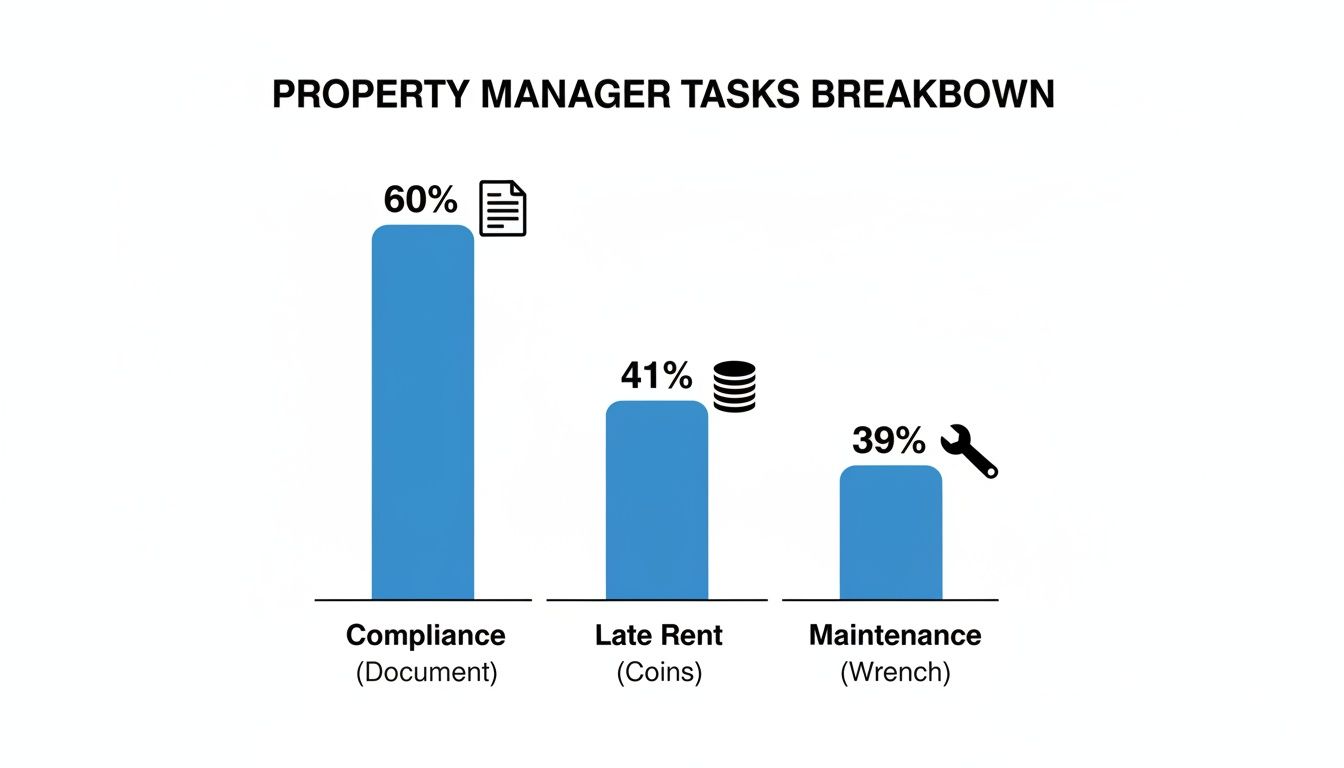
As you can see, keeping up with landlord-tenant laws is a massive time-sink. Right behind that are the constant struggles of chasing down late rent and juggling repair calls.
How a Management Fee Pays for Itself
Let's put some real numbers to this. Say your property rents for $2,000 a month, and the management fee is 10%, which works out to $200 per month or $2,400 for the year. Seems like a lot, right? But watch how quickly that "cost" gets wiped out.
Avoiding One Month of Vacancy: A pro manager's marketing and quick leasing process can easily prevent just one month of your property sitting empty. That’s $2,000 back in your pocket, nearly covering the entire year's fee in one go.
Securing a Better Tenant: Their tough screening process helps you dodge the bullet of a problem tenant—the kind who pays late, damages the place, or forces an eviction. A single eviction can cost $3,500 or more between legal fees and lost rent. Averting that one disaster pays for management for well over a year.
Negotiating Better Repair Rates: Experienced managers have a roster of trusted vendors they've worked with for years. Getting a 15-20% discount on a big-ticket item, like a $5,000 HVAC unit, saves you up to $1,000. That's five months of management fees paid for right there.
When you reframe the management fee as an investment in efficiency, risk mitigation, and income optimization, its value becomes clear. It’s not about what you pay; it’s about the costly mistakes, vacancies, and headaches you avoid.
At the end of the day, paying for expert management is about buying back your time and building a protective moat around your investment. It’s what turns a hands-on, second-job headache into the passive, reliable income stream you wanted in the first place.
How to Choose the Right Property Manager
Think of hiring a property manager less like hiring a vendor and more like bringing on a key business partner. You’re entrusting them with a massive asset, so this decision is absolutely fundamental to your success as an investor. A great manager does so much more than just collect rent; they actively protect your investment, navigate complex challenges, and ultimately, make owning property a more profitable and far less stressful experience.
To find that ideal partner, you have to look past the sales pitch. You need a solid framework for judging their real-world capabilities, their day-to-day processes, and whether their philosophy truly aligns with your long-term goals. It all comes down to asking the right questions.
Establishing Your Non-Negotiable Criteria
Before you even start interviewing potential managers, take a moment to define what’s non-negotiable for you. These are the absolute must-haves that any reputable company should have locked down, no questions asked. Think of this as your first filter to separate the true professionals from the rest.
Your essential checklist should always include these three things:
Proper Licensing and Insurance: This is the bare minimum. Your manager must have the required real estate broker license for your state, along with both Errors and Omissions (E&O) and general liability insurance. This isn't just red tape—it’s what protects you from legal and financial headaches if something goes wrong.
Deep Local Market Knowledge: The rental market can change dramatically from one zip code to the next. A top-tier manager lives and breathes your specific area. They know what to charge for rent, understand the nuances of local tenant-landlord laws, and have a go-to list of reliable local vendors who will actually show up.
A Proven Track Record: Look for a company with a history of managing properties just like yours. If you own a single-family home, a manager who only deals with massive apartment complexes might not be the right fit. At Keshman Property Management, our 20 years of experience covers everything from condos to multifamily buildings, so we have the specific expertise you need.
Key Questions to Ask During Interviews
Once you’ve got a shortlist of candidates who meet your basic criteria, the interview is where you can really see what they’re made of. This is no time for softball questions. You need to dig into the nitty-gritty of their operations to see exactly how they’d handle your property.
Here are a few practical questions designed to get you the real answers:
Walk me through your entire tenant screening process. A vague response like "we run a background check" isn't good enough. They should be able to detail their exact process for credit checks, criminal background checks, income verification (ask what their income-to-rent ratio is), and how they verify past landlord references.
What are your average vacancy rates and days on market? These numbers are a direct reflection of how effective their marketing is. A good manager should know these metrics off the top of their head and be ready to explain how they work to keep both numbers as low as possible.
How do you handle late rent payments and evictions? Ask for their step-by-step procedure. When are notices sent? At what point do they initiate the formal legal process? Their answer will tell you everything you need to know about their grasp of legal compliance and their commitment to protecting your cash flow.
Describe your maintenance and repair process. Who fields the late-night calls? Do they have an in-house team or a network of third-party vendors? What’s the spending limit for repairs they can approve without getting your sign-off? This clarifies communication and cost controls before they become a problem.
A prospective property manager's ability to provide detailed, data-backed answers to operational questions is a strong indicator of their professionalism. Vague responses often signal a lack of structured processes.
Assessing Their Use of Technology
In today’s market, technology is a huge differentiator. The right tools make operations more efficient for you and create a much better, smoother experience for your tenants.
The industry has changed for good. Digital tools are no longer a nice-to-have; they’re essential. In fact, 67% of property management companies now use specialized software to run their business. This tech adoption is fueling incredible growth, with the property management software market expected to grow at a 45.6% compound annual rate through 2030.
Managers are also relying on AI-powered tenant screening tools (65%) and automated systems for lease management (48%). Tenants expect this, too—80% want to pay rent online, and 72% prefer digital communication. For you, the owner, a tech-forward approach simply means more efficiency and total transparency. You can dive deeper into these property management statistics on resimpli.com.
A modern manager will provide you with a dedicated online portal where you can see financial statements 24/7. They’ll also offer a separate one for tenants to pay rent and submit maintenance requests. This isn’t just about convenience; it provides the kind of on-demand access and clarity that defines professional service today.
Setting Your Partnership Up for Success
You’ve done the hard part and picked the right property manager. Now comes the handoff—and this step is just as critical. The best owner-manager relationships are built on clear expectations right from the start. Think of it like a business launch: the details you hammer out now will set the tone for the entire partnership.
This initial phase is all about a structured transfer of information, assets, and authority. The goal is to give your new manager everything they need to hit the ground running, so there are no hiccups for your tenants and your investment is protected from day one. When done right, this transition is what makes owning a rental property actually feel passive.
The Onboarding Blueprint
The whole process kicks off the moment you sign the property management agreement. This is the legally binding contract that spells out all the duties, fees, and responsibilities. Once that's inked, the operational transfer begins.
It usually involves a few key steps:
Document Transfer: You'll hand over all the important paperwork—existing leases, tenant contact info, any contracts with vendors, and property-specific documents like warranties or HOA rules.
Key Handover: Your manager will need a full set of keys for the unit, mailbox, and any common areas.
Financial Setup: This is a big one. They'll set up dedicated accounts for security deposits and rent collection, making sure every dollar is managed according to local laws.
This handoff is designed to be exhaustive for a reason. It prevents things from falling through the cracks and gives your manager a complete picture of your property's history and current status.
Navigating Common Relationship Pitfalls
Even with the best manager on your team, a few common behaviors can put a strain on the relationship. Knowing what they are ahead of time helps you build a partnership that lasts. The secret? Trust the expert you hired.
One of the biggest issues we see is micromanagement. It's totally understandable to want to be in the loop, but constantly second-guessing your manager’s daily decisions ties their hands and slows everything down. You hired a professional for a reason—let them do their job while you keep an eye on the big-picture results.
A successful owner-manager relationship thrives on trust and clearly defined roles. The owner sets the investment strategy, while the manager executes the operational plan. When these lines blur, efficiency and effectiveness suffer.
Another classic stumbling block is not setting up a dedicated maintenance reserve fund. This is simply a pot of money set aside just for repairs. Without it, every leaky faucet or broken doorknob turns into a lengthy approval process, which only frustrates tenants and often lets small problems turn into big, expensive ones.
Establishing Clear Communication Protocols
To sidestep misunderstandings, you need to set clear communication guidelines right from the jump. This isn't about being in constant contact; it’s about getting meaningful updates efficiently.
Talk about and agree on these three things:
Preferred Communication Method: Do you prefer a quick email, a phone call, or just checking the owner portal?
Frequency of Updates: Decide how often you want to hear from them. A monthly report along with your financial statement is a pretty standard and effective rhythm.
Approval Thresholds: This is crucial. Set a specific dollar amount—say, $300—for repairs that your manager can approve on their own. This empowers them to fix routine issues quickly while ensuring you're always consulted on major expenses.
By tackling these potential friction points upfront and creating a clear roadmap, you’re laying the groundwork for a smooth and productive partnership. This collaborative approach is what makes rental property management a genuinely stress-free experience.
How to Measure Your Property's Performance

So, how can you tell if your rental property is actually a good investment? It’s not just about the rent check hitting your account every month. A truly successful rental generates solid returns efficiently, and the only way to know for sure is to look at the numbers.
Tracking a few key metrics—what we call Key Performance Indicators (KPIs)—gives you an honest, unbiased look at your property's financial health. These numbers tell the real story behind your investment, revealing how quickly you're filling vacancies, how much income you're actually collecting, and ultimately, whether your asset is working for you. A great property manager doesn't just handle tasks; they live and breathe these numbers and give you clear reports to prove it.
The Metrics That Matter Most
To make smart, data-driven decisions instead of relying on gut feelings, you need to focus on the right KPIs. While you could track dozens of different things, a handful are absolutely essential for any rental owner.
This table breaks down the most important metrics you should be watching to gauge your property's health and the effectiveness of your management.
Essential KPIs to Track Your Rental Property's Performance
KPI (Key Performance Indicator) | What It Measures | Why It's Important |
|---|---|---|
Occupancy/Vacancy Rate | The percentage of time the property is occupied versus empty. | A high vacancy rate is lost income, plain and simple. Keeping this number low is the top priority for maximizing cash flow. |
Average Days on Market (DOM) | How long it takes to find and place a new tenant after a vacancy. | A low DOM signals that your marketing is effective, your pricing is right, and your leasing process is efficient. |
Rent Collection Rate | The percentage of rent successfully collected each month versus what was due. | Anything consistently below 98-99% might point to problems with tenant screening or your collection process. |
Net Operating Income (NOI) | Your total income minus all operating expenses (excluding mortgage payments). | This is the purest measure of your property's profitability before financing costs are factored in. |
Maintenance & Repair Costs | The total amount spent on routine upkeep and unexpected repairs over time. | Tracking this helps you budget accurately and identify if an older appliance or system is becoming a money pit. |
These figures give you a real-time snapshot of how things are running. But remember, no single number tells the whole story. A 100% occupancy rate sounds fantastic, but not if your rent is 20% below market value. You have to look at these metrics together. To dig deeper, check out our guide on how to calculate your rental property ROI to maximize investments.
What Good Reporting Looks Like
You shouldn't have to chase down this information. A transparent property manager makes it easy, providing clear and regular reports that turn raw data into simple insights. This gives you the peace of mind that your investment is in good hands.
The point of tracking performance isn't just to look back at what happened; it's to shape the future. Good data helps you and your manager spot trends, fix small problems before they become big ones, and make smarter decisions to grow your property's value.
Think of these numbers as your investment’s vital signs. By keeping a close eye on them, you can ensure your property isn't just occupied, but truly profitable for years to come.
Frequently Asked Questions About Property Management
Even after getting the full rundown on services, it's natural for owners to have some "what if" questions about how this all works in the real world. We get it.
Let's dive into some of the most common questions we hear from landlords and investors who are thinking about partnering with a management company.
Can I Afford a Property Manager with Just One Rental Property?
Absolutely. In fact, we often see owners with a single property get the most bang for their buck from professional management. There's a common myth that you need a huge portfolio for it to be worth it, but that's just not the case.
Think of it this way: a great manager can boost your rental income, slash those costly vacancy periods, and get maintenance done more efficiently than you likely could on your own. For many owners, the management fee is more than covered by the extra income and massive time savings.
Hiring a manager for a single property isn't just another expense. It's a strategic move to treat your investment like a professional business from day one, making sure it's running at peak performance.
A transparent pricing model—like the one we use—is built to help every owner, whether you have one property or twenty. It makes professional rental property management a smart, accessible investment for anyone.
How Involved Will I Need to Be After Hiring a Manager?
That’s entirely up to you. Our main job is to make owning your property as hands-off as you want it to be. We’re on the ground handling the day-to-day grind, from late-night tenant calls and coordinating repairs to managing lease renewals.
You’ll get detailed monthly statements and we’ll always loop you in on the big decisions, like approving a major repair or giving the final nod on a new tenant. You can be as dialed-in or as checked-out as you like, all while knowing your investment is being cared for by seasoned pros.
What Makes a Great Property Manager Stand Out?
Once you get past the basics like licensing and years in the business, a couple of things really separate the great property managers from the good ones.
Direct Landlord Experience: When your manager is also a landlord—like our team here at Keshman—they just get it. They’ve walked in your shoes and understand your worries firsthand. This translates into a more personal, strategic, and genuinely helpful approach.
A Transparent Business Model: You want to see straightforward pricing with zero hidden fees or surprise charges. A manager’s financial success should be tied directly to yours. It’s that simple.
At the end of the day, a top-tier manager aims to do more than just meet your expectations; they want to exceed them. With our 20 years of experience, our goal is to make your life as a property owner both profitable and genuinely enjoyable, turning that asset into a truly stress-free stream of income.
Ready to turn your rental property into a genuinely passive investment? The team at Keshman Property Management has spent two decades making ownership less work and more reward for landlords just like you. See how our transparent, hands-on approach can boost your returns by visiting us at https://mypropertymanaged.com.


Comments