
A Landlord's Guide to Breaking a Lease in Florida

When a tenant breaks their lease, your mind immediately goes to the bottom line. It's a stressful situation, but thankfully, Florida law gives landlords a clear roadmap for protecting their investment. The key is being proactive and building specific protections right into your lease agreement.
Your Financial Rights When a Tenant Breaks a Lease
An unexpected vacancy can throw your entire financial plan for a property into disarray. But as a Florida landlord, you're not left without recourse. The law, specifically Florida Statute 83.595, provides a solid framework for handling these situations and recovering your losses.
This statute is your best friend when a tenant leaves early. It lays out two distinct paths you can take, and the smart move is to present these options to your tenant before they sign the lease. By having them agree to a specific remedy upfront, you remove all the ambiguity and potential for conflict down the road. It turns a potential crisis into a clear, predictable business transaction.
The Early Termination Fee: Your Best Defense
By far, the most common and effective tool is the early termination fee, which is also referred to as "liquidated damages." This is a clause you write directly into your lease that gives the tenant a straightforward out: pay a pre-determined, fixed amount (the law caps this at two months' rent) and they are completely off the hook for any future rent.
Here’s why this is almost always the better option:
It’s Clean and Simple: Once the tenant pays the fee and moves out, you're done. No chasing them for months of unpaid rent, no drawn-out legal battles. The contract is satisfied.
It’s Predictable: You know exactly what you’re getting. This money immediately offsets the costs of finding a new tenant—marketing, cleaning, and, of course, the lost rent during the vacancy.
It Reduces Your Risk: This fee gives you immediate cash flow to cover the mortgage and other bills while your property is empty. In my experience, the cost of a single turnover can easily run from $2,500 to $5,000, so this upfront payment is a massive financial buffer.
Without this clause, you’re stuck with the default remedy, which is a much messier process.
Understanding Your Options Under Florida Law
So, what are the two remedies outlined in the statute? It’s crucial to understand the difference because it dramatically impacts how you handle the vacancy.
Here is a simple breakdown of the two choices you can present to a tenant when they sign the lease:
Landlord Options for Early Lease Termination in Florida
Remedy Option | Landlord Action | Tenant's Financial Responsibility |
|---|---|---|
Option 1: Liquidated Damages | The landlord accepts a pre-agreed fee (up to 2 months' rent) as full settlement. The landlord does not have to try and re-rent the unit. | The tenant pays the agreed-upon fee and has no further rent obligation once they vacate the property. |
Option 2: Default Remedy | The landlord retakes possession of the property and makes a good-faith effort to re-rent it as quickly as possible. This is known as the "duty to mitigate." | The tenant is responsible for paying rent each month as it comes due until the landlord finds a new tenant. |
As you can see, the first option offers speed and certainty, while the second can be unpredictable and require more work on your part. By including the liquidated damages clause in your lease, you're building in a layer of financial protection that is absolutely essential in today's market.
A thoughtfully written lease is more than a contract; it's a risk management strategy. By clearly defining the consequences of breaking a lease, you discourage casual terminations and protect your financial interests when they do occur.
These protections have never been more critical. The Florida real estate market is getting more expensive to operate in, with many property owners seeing insurance premiums jump by 9% to 20% each year. When your operating costs are rising that fast, you simply can't afford to have a property sit empty for months. An unexpected vacancy isn't just an inconvenience—it's a direct threat to your investment's bottom line. Understanding and using the tools Florida law provides is the key to making sure your rental property remains a profitable, rewarding venture. To get a better handle on these dynamics, it's worth exploring the nuances of Florida's rental market and how they affect property owners.
Navigating Florida’s Strict Legal Notice Requirements
When a tenant breaks their lease, your first move is dictated by a very specific set of Florida laws. This isn't a situation where you can just change the locks or tell them to get out. You have to follow a precise legal script, starting with a formal written notice.
Getting this first step wrong—maybe you send the wrong type of notice or deliver it improperly—can derail your entire case. If that happens, a judge could throw it out, and you’ll be right back at square one, losing valuable time and money.
Curable vs. Incurable Violations: Knowing Which Notice to Send
Not all lease violations carry the same weight. Florida law splits them into two distinct camps: issues the tenant can fix (curable) and serious breaches they can't (incurable). This difference is critical because it determines the exact legal notice you must serve.
Curable Violations: Think of these as correctable mistakes. Maybe they brought in a pet without permission, are consistently parking in a fire lane, or have let the lawn die despite the lease requiring them to maintain it. For these, you must serve a 7-Day Notice to Cure. This gives the tenant a week to resolve the problem. If they do, great. If not, you can then move forward with lease termination and eviction.
Incurable Violations: These are the big ones—actions that can't be taken back. We're talking about things like intentionally damaging the property, causing a major and ongoing disturbance, or repeatedly committing the same violation you’ve already warned them about. For these, you can issue a 7-Day Unconditional Quit Notice. This tells the tenant the lease is terminated, and they have seven days to move out, no second chances.
The All-Important 3-Day Notice for Unpaid Rent
By far, the most common reason for a tenant breaking their lease is failing to pay rent. When that happens, the law requires you to serve a 3-Day Notice to Pay or Vacate.
This notice has to be perfect. It must be in writing and state the exact amount of rent due, without adding late fees or other charges. It also has to clearly state that the tenant has three business days—excluding weekends and legal holidays—to either pay up in full or move out.
That three-day window is non-negotiable. I've seen landlords have their cases dismissed for simple mistakes, like miscalculating the rent or not giving the tenant the full three business days. It’s an easy but costly error. For a closer look at the entire process, our landlord's guide on how to evict a tenant legally is a great resource to help you sidestep these common pitfalls.
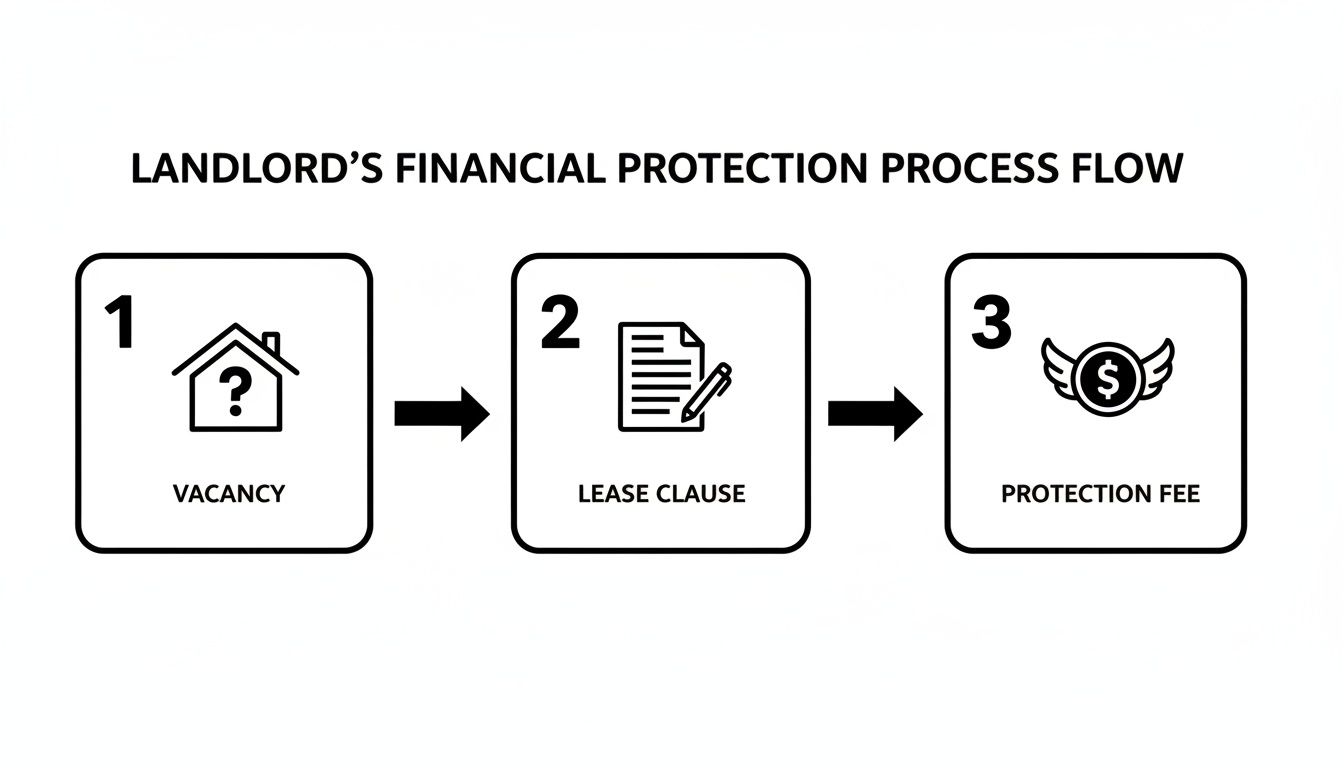
As this shows, having a solid lease clause from the start is what turns a potential crisis into a manageable financial process.
Proper documentation isn't just paperwork; it's your primary evidence in court. Every notice sent, every communication logged, and every photo taken builds a robust case that protects you from "he said, she said" disputes.
How to Properly Serve Notice (and Document Everything)
Drafting the right notice is only half the battle; you also have to "serve" it according to the law. Florida gives you three ways to do this:
Personal Delivery: Hand the notice directly to the tenant.
Substituted Service: Leave it with someone else who lives there, as long as they are at least 15 years old.
Posting: If you can't do either of the first two, you can post the notice somewhere obvious, like the front door.
Whichever method you use, document it obsessively. Write down the date, time, and how you delivered it. If you post the notice, snap a quick photo of it on the door with your phone. This proof is what will save you if the tenant later claims they never received it. Getting the notice right is the bedrock of a solid case when a tenant is breaking a lease in Florida.
Meeting Your Duty to Mitigate Damages
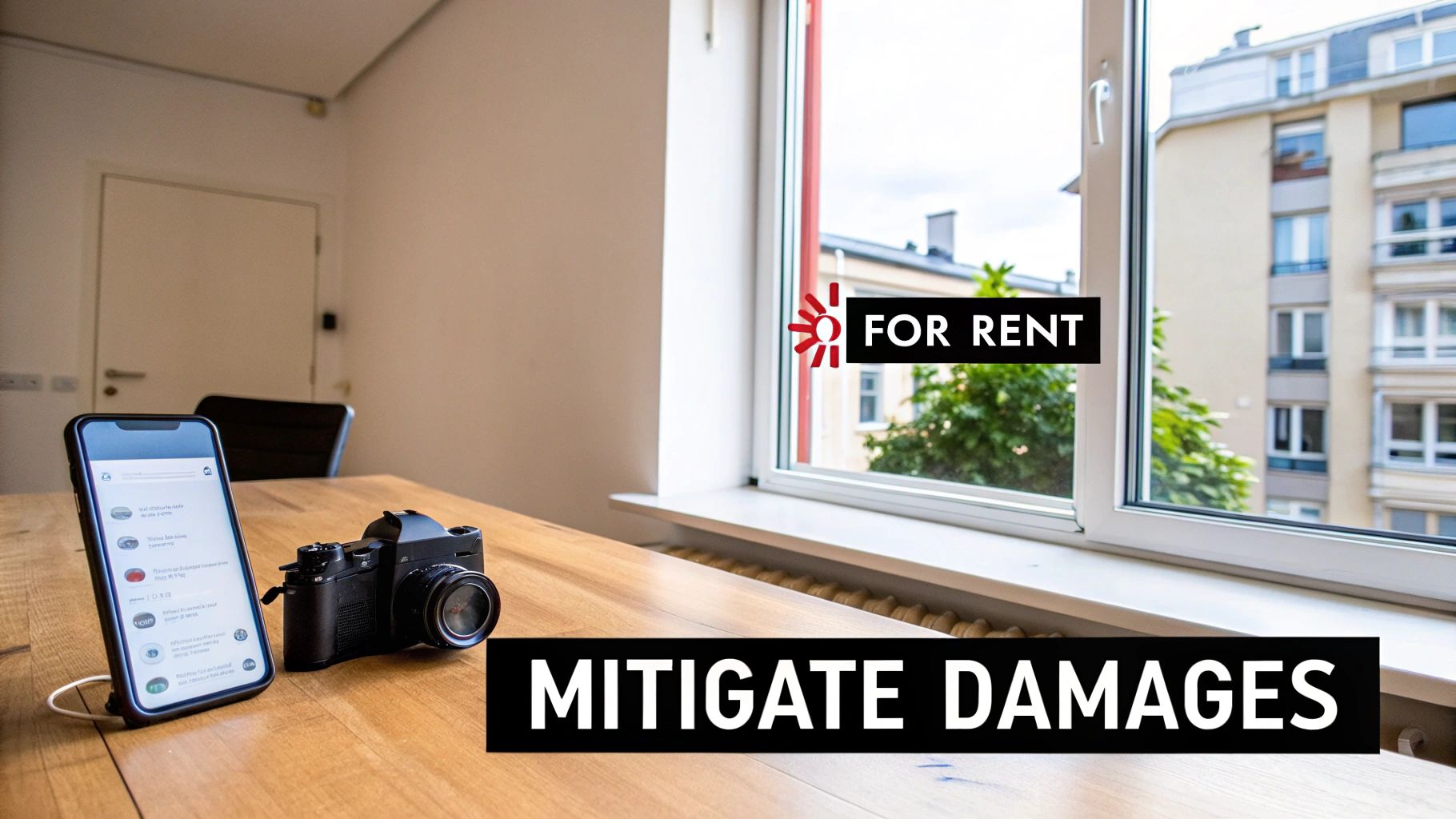
When a tenant breaks their lease and you haven't gone the early termination fee route, Florida law gives you a clear job to do. It’s called the duty to mitigate damages, and it simply means you have to make a real, honest effort to re-rent the property as soon as you can.
This isn't about being nice to the tenant who left—it's a legal obligation and, frankly, just good business. A judge won't look kindly on a landlord who lets a unit sit vacant for months just to run up the bill for the former tenant. You’ve got to be proactive in minimizing your financial losses, which also has the effect of reducing what the old tenant owes.
What Does a Reasonable Effort Look Like?
"Reasonable effort" sounds a bit vague, but in the real world of property management, it means you handle this vacancy with the same energy and process you'd use for any other empty unit. You don't have to bump it to the front of the line, but you certainly can't let it gather dust.
Courts want to see consistent, timely action. Think about your standard operating procedure. If you normally get professional photos, list on three major rental sites, and start showings within 48 hours of a property being ready, then that's the playbook you need to follow here. Any major delay or change in your process could be flagged as a failure to mitigate.
Key Takeaway: The goal is to show a continuous, commercially sound effort to find a new, qualified tenant. The best way to protect yourself if you end up in court is to have a rock-solid paper trail of everything you did.
The moment you officially get that property back, the clock starts ticking on your mitigation duties.
An Actionable Mitigation Checklist
Proving you did your part is all about the evidence. Here’s a rundown of what to do and how to document it, based on years of experience managing these exact situations.
This practical checklist will help you follow the right steps to meet your legal duty and get your property re-rented efficiently.
A Practical Mitigation Checklist for Florida Landlords
Follow these steps to ensure you meet your legal duty to mitigate damages while efficiently re-renting your property.
Action Step | Best Practice Tip | Documentation Method |
|---|---|---|
Start Marketing Immediately | The day you regain possession, get the process started. Put up a "For Rent" sign, launch your digital listings, and notify any existing waitlists. | Save screenshots of online listings with timestamps. Keep a photo of the "For Rent" sign in place. |
Use Quality Advertising | Use high-quality photos and write a compelling description. Post on the same platforms you always use—like Zillow, Apartments.com, or Realtor.com. | Keep copies of the ad copy and a list of all websites where the property was advertised. |
Set Fair Market Rent | Price the unit competitively based on comparable properties in the area. You aren't required to offer a discount, but you can't inflate the price to scare off applicants. | Document your market analysis with printouts or links to comparable listings (comps) you used to set the rent. |
Show the Property Actively | Respond to inquiries promptly and schedule showings consistently. Don't ignore leads or make it difficult for prospective tenants to see the unit. | Maintain a communication log of all inquiries (phone calls, emails, texts) and a calendar of every showing you conduct. |
Screen All Applicants | Stick to your standard tenant screening criteria. You don't have to lower your standards or accept an unqualified applicant just to fill the vacancy quickly. | Keep records of all applications received and document the lawful reasons for any rejections (e.g., credit score, income). |
By systematically working through this checklist, you build an undeniable record that you acted in good faith to solve the problem. It’s not just about fulfilling a legal requirement; it’s about taking control of the situation and getting your property back to producing income as fast as possible.
You might even find that a professional can help you navigate this process faster. If you're feeling overwhelmed, looking into tenant placement services to streamline your screening can be a smart move to ensure you find a qualified replacement without missing a beat.
Handling the Security Deposit After a Broken Lease

Once a tenant has vacated your property, the security deposit moves to the front and center. Florida has very specific laws governing this process, and getting it wrong can be costly. It’s crucial to remember that the deposit isn’t just your money to keep. Think of it as a trust fund you hold to cover actual, documented losses directly resulting from the tenant's breach.
This isn’t about punishing the tenant for leaving early. It's about using the funds to make your business whole again after they failed to meet their lease obligations.
What You Can Legally Deduct
When a tenant breaks a lease in Florida, you can't just keep the whole deposit out of spite. Every single dollar you withhold needs to be justified with solid evidence.
Here’s what you can typically cover:
Unpaid Rent: This one's the most straightforward. It covers any rent due for the time they actually lived in the unit but didn't pay for.
Accelerated Rent: If your lease doesn't have an early termination clause, you can claim rent for the time the unit remained empty while you were actively trying to find a new tenant.
Re-Renting Costs: Reasonable expenses you paid to market the property and find a replacement—things like listing fees for rental websites—are fair game.
Physical Damages: This is for damage beyond normal wear and tear. A few scuff marks on the paint is wear and tear. A giant hole punched in the drywall is damage.
Cleaning Costs: Did the tenant leave the place so dirty it required more than a standard cleaning to be rent-ready? You can deduct the cost of that extra, heavy-duty cleaning.
Knowing the difference between wear and tear and actual damage is one of the biggest challenges. For a deeper dive, check out our guide on https://www.mypropertymanaged.com/post/what-can-a-landlord-deduct-from-a-security-deposit-key-rules-you-need-to-know, which gives detailed examples to help you make the right call.
The Critical Timelines You Cannot Miss
This is where many landlords get into trouble. Florida's laws on security deposit timelines are incredibly strict. Miss a deadline by even a single day, and you could be forced to return the entire deposit, no matter how much the tenant owes you.
As soon as you regain possession of the property, a clock starts ticking. You have two paths.
The 15-Day Rule: If you plan on returning the full security deposit with no deductions, you have 15 days to get it to them. Period.
The 30-Day Rule: If you intend to claim any portion of the deposit, you have 30 days to send the tenant a formal, written "Notice of Intent to Impose Claim on Security Deposit."
This notice is non-negotiable and must be sent via certified mail to the tenant's last known address. It has to be an itemized list, clearly spelling out each deduction and the reason for it. If you fail to send this notice correctly and on time, you forfeit your right to the deposit.
Expert Tip: Don't assume you know the tenant's new address. Unless they've given you a forwarding address in writing, send the certified notice to the rental unit's address. This is your proof of due diligence and fulfills your legal obligation.
Calculating and Documenting Deductions
Let's put this into a real-world context. Say a tenant with a $2,000 security deposit breaks their lease and moves out. You go in and assess the situation.
Here's how a potential calculation might look:
Unpaid Rent: They left mid-month and still owe $1,000.
Repairs: A deep, ugly scratch in the hardwood floor is going to cost $400 to professionally repair.
Cleaning: The oven looks like it was never cleaned, and it takes a professional $150 to get it back to a rentable state.
Advertising: You spent $50 on premium online listings to get it re-rented quickly.
Your total legitimate claim against the deposit is $1,600. This means you must refund the remaining $400 to the tenant. Sometimes, assessing property condition involves dealing with common issues; you might find some helpful tips for addressing specific property damages like wall stains.
Your Notice of Intent should list each of these charges clearly. More importantly, you must be able to back them up. Keep every receipt for repairs, every invoice from cleaners, and screenshots of your ad expenses. If a tenant ever challenges your deductions, that documentation will be your best defense.
When a Tenant Can Legally Break a Lease in Florida
Even though a lease is a solid contract, it's not ironclad. Florida law carves out a few specific situations where a tenant's right to a safe home can override their obligation to pay rent for the full term. As a landlord, knowing these exceptions isn't just about following the rules—it's about smart risk management.
When you understand why a tenant can legally walk away, you can avoid messy disputes and potential lawsuits. It all comes down to recognizing your core responsibilities and handling sensitive situations with professionalism.
Active Military Duty Under Federal Law
One of the most straightforward exceptions comes from federal law, not state law. The Servicemembers Civil Relief Act (SCRA) protects active-duty military members who get orders to relocate, ensuring their service doesn't create a housing crisis for them.
If your tenant is called to active duty or receives orders for a permanent change of station (PCS), they have the right to terminate their lease.
For it to be valid, they have to check a few boxes:
They must prove the lease was signed before they went on active duty.
The active duty period must be for at least 90 consecutive days.
They need to give you written notice along with a copy of their official orders.
Once you have the proper notice in hand, the lease ends 30 days after the next rent payment is due. For example, if rent is due on the 1st of the month and your tenant gives you notice on June 10th, the lease officially terminates at the end of July.
Landlord Violations and Constructive Eviction
A tenant’s right to a safe, livable home is non-negotiable. If you let the property fall into serious disrepair, you could find yourself facing a "constructive eviction." This legal concept applies when the living conditions become so bad that the home is considered uninhabitable.
We're not talking about minor annoyances here. Think of major issues like:
No hot or cold running water.
A broken furnace in the middle of winter.
A serious, unaddressed pest infestation (rats, roaches, etc.).
Major structural problems, like a persistently leaking roof or unsafe floors.
A tenant can't just pack up and leave, though. They first have to give you a seven-day written notice that clearly outlines the problems. This gives you a chance to make things right. If you don't address the issues within that week, they may have legal grounds to terminate the lease without any further obligation to you.
A landlord's duty to provide a habitable home is absolute. Being proactive with maintenance will always be cheaper and less stressful than defending yourself against a constructive eviction claim.
Protection for Victims of Domestic Violence
Florida law also offers a lifeline to tenants who are victims of domestic violence and need to move for their own safety. Under specific circumstances, they can break their lease early without facing a penalty.
Typically, the tenant will need to provide you with documentation, such as a copy of a police report or a restraining order. This is an incredibly delicate situation. Your job is to handle it with compassion while adhering to the legal process. A well-drafted Florida Lease Agreement template often includes clauses that outline these rights, which can be a helpful reference.
Knowing these exceptions is just part of managing a rental property effectively. In a volatile market, where rent prices in cities like Tampa and Jacksonville can shift unexpectedly, lease breaks become more common. While landlords often win eviction cases, the process can easily sideline a property for 30-60 days, costing you thousands in lost rent. This is why having a rock-solid lease and a clear understanding of the law is so vital to protecting your cash flow.
Answering Your Top Questions About Florida Lease Breaks
When a tenant breaks a lease, it can feel like you're navigating a legal minefield. I've been in Florida property management for a long time, and I've found that most landlord questions circle back to a few key issues. Let's tackle them head-on, so you know exactly what to do.
These aren't just hypotheticals; they're the real-world situations that can make or break your bottom line.
Can I Just Keep the Security Deposit?
This is easily the most common question I get, and the answer is a hard no. In Florida, you can never automatically keep the security deposit, no matter why the tenant bailed. Think of it as a fund held in trust to cover your actual, provable financial losses—not a penalty.
To make a claim, you have to follow the law to the letter. You have 30 days from the day you get the keys back to send a "Notice of Intent to Impose Claim on Security Deposit" by certified mail. This isn't just a friendly letter; it's a legal document that must list every single dollar you're deducting for unpaid rent, damages beyond normal wear and tear, or costs to re-rent the place.
A word of caution: If you miss that 30-day deadline or fail to send the notice, you forfeit your right to touch that deposit. A judge could force you to return the entire amount, even if the tenant owes you thousands. Don't make this costly mistake.
What's a Lease Break Fee? Should I Use One?
An early termination fee, as defined in Florida Statute 83.595, is one of the best tools a landlord can have. It’s a pre-set amount, usually equal to two months' rent, that lets a tenant buy their way out of the lease, no strings attached.
It’s a clean break for everyone. For this to be an option, you must include it in the lease as an addendum the tenant specifically agrees to at signing. If they choose this route, pay the fee, and move out, the deal is done. You can’t go after them for more lost rent, even if the property sits vacant for three months.
I strongly recommend including this clause. It gives you immediate cash flow to cover the turnover, removes uncertainty, and helps you avoid a drawn-out conflict.
Do I Have to Take My Tenant to Court for Unpaid Rent?
Going to court should always be a last resort. It’s a slow, frustrating, and often expensive process.
Your first move is to properly apply their security deposit to the debt. If they still owe you money, the next step is a formal demand letter sent to their last known address. This letter should lay out exactly what they owe, how you calculated it, and give them a firm deadline to pay.
You’d be surprised how often this resolves the issue. But if they ignore you, small claims court is your next step. My experience has been that landlords who have kept meticulous records—from the signed lease to photos of damages and logs of their re-renting efforts—usually have a very strong case.
My Tenant Found a Replacement. Am I Stuck with Them?
Absolutely not. You are under no obligation to accept a replacement just because your former tenant sent them your way. While it's great they're trying to help minimize your losses, you still have total control over who lives in your property.
Any applicant, no matter who referred them, must pass your standard, non-discriminatory screening criteria.
Credit Score: Do they meet your minimum threshold?
Income: Is their income verified and at least 3x the monthly rent?
Background Check: Did they pass your criminal background screening?
Rental History: Any red flags from previous landlords?
You can only turn down an applicant for legitimate business reasons that you apply to everyone. Just be careful: rejecting a perfectly qualified candidate could be viewed as a failure to mitigate your damages. The key is to be fair and consistent with every single application you review.
At Keshman Property Management, we've guided countless property owners through these exact scenarios for over 20 years. We build protective clauses into our leases and manage every step of the process to shield your investment from financial loss. If you're looking for an experienced partner to maximize your earnings and minimize your stress, visit us at https://mypropertymanaged.com.


Comments