
Outsource Property Management: How to Choose the Right Partner and Boost ROI
- Sarah Porter

- Dec 9, 2025
- 13 min read
Updated: Dec 10, 2025
When you outsource property management, you’re hiring a third-party expert to run the day-to-day operations of your rental property. It’s a common move for owners who live far from their investments, don't have the time, or simply don't want to get tangled up in tenant relations and legal compliance.
Knowing When to Outsource Property Management
Handing over the keys to a professional isn't just about making your life easier; it's a critical business decision. A lot of landlords start out managing their own properties, thinking they'll save a few bucks. But they quickly run into the hidden costs of going it alone—the late-night emergency calls, the hassle of chasing down rent, and the constant worry about making a legal misstep.
The tipping point usually comes out of nowhere.
It might be the moment you realize you've spent an entire weekend fixing a leaky faucet instead of being with your family. Or maybe it's when you’re trying to decipher local fair housing laws and it hits you that you're completely out of your depth. These are the moments that make one thing crystal clear: your time and your peace of mind are incredibly valuable.
Calculating the True Cost of Self-Management
Before you can know if outsourcing is the right call, you have to get real about what self-management is actually costing you. This goes way beyond just dollars and cents.
Think about these factors:
Time Commitment: How many hours are you really spending each month on your property? This isn't just about repairs; it's advertising vacancies, showing the unit, screening tenants, and fielding calls.
Legal Risk: Are you 100% certain you're compliant with every local, state, and federal landlord-tenant law? One mistake during an eviction or tenant screening can drag you into a costly legal fight.
Stress and Burnout: What’s the mental price you're paying? Dealing with difficult tenants, surprise repairs, and financial unknowns takes a toll on your health and well-being.
Property management is a relentless cycle of tasks. Just look at what goes into creating a preventive maintenance schedule, and you'll get a sense of how much work a professional can take off your hands.
The ever-increasing complexity of real estate is a huge reason more investors are turning to pros. In 2024, the global property management market reached $26.58 billion, and it’s expected to climb to nearly $49.9 billion by 2035. This boom is driven by investors who need solid, tech-forward solutions to manage their portfolios well.
The decision to outsource often boils down to a simple trade-off: exchanging a variable, unpredictable amount of your personal time and energy for a fixed, predictable monthly fee.
This decision tree gives you a quick way to visualize whether it's time to make a change.
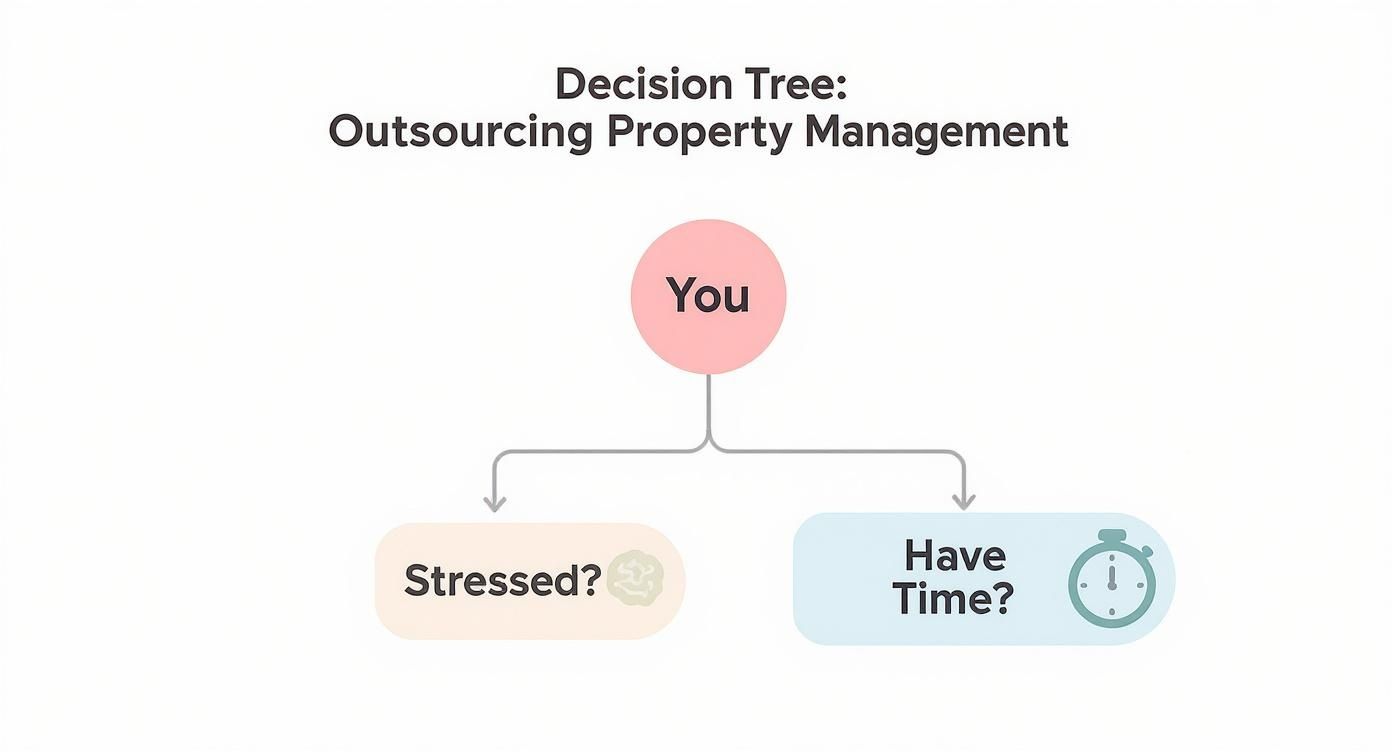
As the graphic shows, whether you’re totally overwhelmed or just want to get your time back, outsourcing is often the most logical next step for your investment.
How to Find and Vet the Right Property Manager
Picking a property manager isn't just about handing over the keys; you're hiring a CEO for your real estate investment. It’s a huge decision, and your bottom line depends on getting it right. A quick Google search is one thing, but the best people almost always come from trusted, local sources. You need a partner who gets your property, not just a name at the top of a search result.
Your best bet is to tap into your local network. Real estate investment meetups and local landlord associations are goldmines. Start talking to other investors in your area. Who do they trust with their rentals? Their direct, unfiltered experience is worth more than any slick marketing brochure. A strong recommendation from someone who has been with a manager for years is the ultimate seal of approval.

Asking the Right Questions During the Interview
Okay, you've got a shortlist. Now the real work begins. This is where you separate the true professionals from the ones who just sound good on the phone. Your goal is to get a crystal-clear picture of their actual day-to-day operations, not just listen to their sales pitch.
Don’t be afraid to get into the weeds. Move past the fluffy questions and dig into how they really run their business.
Tenant Screening: Ask them to walk you through their entire screening process, step-by-step. What’s their minimum credit score? How, exactly, do they verify income? A vague answer here is a massive red flag. A weak screening process is a direct path to late payments and evictions.
Maintenance Protocols: What happens when a tenant calls at 2 a.m. with a burst pipe? Do they have a list of vetted, insured plumbers and electricians on call? Crucially, ask about their repair authorization limit—the amount they can spend on a repair without needing your sign-off first.
Financial Reporting: What kind of owner statements can you expect, and how often? A pro-level company will provide detailed, itemized reports every month showing all income and expenses. This makes your life (and your accountant's life) so much easier come tax time.
For an even more comprehensive list of what to ask, check out these 8 essential property manager interview questions for 2025.
Property Manager Vetting Checklist
To keep your interviews on track and make comparing candidates easier, use a structured checklist. Here are some of the key areas I always cover when vetting a new firm.
Vetting Area | Key Questions to Ask | Ideal Response / Green Flags |
|---|---|---|
Local Market Expertise | What are the current rental rates for a property like mine in this specific zip code? What local trends are you seeing? | They can quote specific, accurate rent ranges without hesitation. They mention local employers, schools, or upcoming developments. |
Technology & Systems | What software do you use for rent collection and owner reporting? Can tenants submit maintenance requests online? | They use modern, cloud-based software like AppFolio or Buildium. They offer online portals for both owners and tenants. |
Fee Structure | Can you walk me through every single fee I might be charged? What's included in the monthly management fee? | They provide a simple, transparent fee schedule. They can clearly explain any extra charges (e.g., leasing fees, renewal fees) and when they apply. |
Eviction Experience | How many evictions have you handled in the last year? What is your process and typical timeline? | They have a low eviction rate (which points to good screening) but have a clear, legally-compliant process when it's necessary. |
Communication | Who will be my direct point of contact? What is your guaranteed response time for owner inquiries? | They assign a dedicated property manager to your account. They promise to return calls/emails within 24 business hours. |
This checklist isn’t exhaustive, but it hits the most critical points that directly impact your ROI and peace of mind. A confident, professional manager will have no trouble providing detailed answers to all these questions.
Spotting Red Flags Before You Sign
Sometimes, the biggest warning signs aren't what they say, but what they don't say. A top-tier manager is transparent, specific, and can back up their claims with data and processes. Be wary of anyone who dodges questions or gives you generic, canned answers.
A critical red flag is a lack of deep knowledge about your specific neighborhood. If a manager can't speak confidently about local market rents, nearby schools, or area-specific ordinances, they can't effectively manage your asset. It's that simple.
Another major warning is an overly complex fee structure. If they can't clearly explain every potential charge on their list, from tenant placement to maintenance markups, you should be concerned. Hidden fees are a classic sign of a company that isn't putting your interests first.
While the context is different, you can even adapt frameworks from other service industries, like these 10 questions to ask before hiring a PPC management agency, to help you probe their business acumen. At the end of the day, a great partner will welcome your diligence and have solid, confident answers for every question you throw their way.
Making Sense of Management Fees and Contracts
This is it. The moment you sign that management agreement, your partnership becomes official. This isn't just a piece of paper; it’s the legal blueprint for your entire relationship with the property manager. Getting into the nitty-gritty of the contract isn't just a suggestion—it's the only way to safeguard your investment and sidestep costly surprises down the road.

The first thing you’ll probably notice is the fee structure. It can look a little intimidating at first, but most companies build their pricing from a few standard charges. Your mission is to get a crystal-clear, itemized list of every single potential cost before you put pen to paper.
What You're Actually Paying For: Common Fee Models
The bread and butter of their pricing is the monthly management fee. You’ll typically see this land somewhere between 8% and 12% of the rent that's actually collected. So, if your rent is $2,000 and the fee is 10%, you’re looking at $200 per month. Here's a pro tip: always confirm the fee is based on collected rent, not scheduled rent. You should never, ever pay a management fee for a vacant unit.
But that’s not the whole story. You'll likely run into a few other common charges:
Leasing Fee: This is a one-time cost for the work of finding and placing a new tenant. It's often 50% to 100% of the first month's rent.
Lease Renewal Fee: A much smaller, flat fee they charge for convincing a good tenant to stay put for another year.
Maintenance Markup: Some firms will add a small percentage, like 10%, to contractor invoices. This is their fee for the headache of coordinating repairs.
Eviction Fee: If the worst happens, they’ll charge a flat fee to manage the eviction process, which is separate from any court costs you'll have to cover.
These fees are pretty standard in the industry, but transparency is everything. To really get a handle on how these costs stack up, check out this excellent guide to property management fee structures.
The Contract Clauses You Absolutely Cannot Skim Over
A management agreement is about so much more than just the money. It lays out the rules of the game for both of you. There are a few key clauses that can make or break your experience, so give them your full attention.
First up, the termination clause. I can't stress this one enough. What’s your exit strategy if you're unhappy? This clause dictates the notice period (usually 30-90 days) and any penalties for bailing early. A fair contract will give you an out, without huge fees, if the manager isn't holding up their end of the bargain.
Next, find the repair authorization limit. This is the dollar amount a manager can spend on a repair without needing to call you for permission first. A common limit is around $300 to $500. Setting this at a number you’re comfortable with gives them the freedom to fix a leaky faucet efficiently but ensures you’re in the loop for a big-ticket item like a new water heater.
Never, ever sign a contract with fuzzy language about responsibilities. A good agreement will explicitly spell out everything the manager is supposed to do—from marketing and screening to inspections and financial reports—leaving zero room for confusion.
Finally, look for the owner reserve fund requirement. Most managers will ask you to keep a baseline amount of cash, maybe $500, in an account they can access. This isn't for them to spend freely; it’s to cover small repairs or emergencies right away so they aren't stuck waiting for you to send money. Nail down these contract details, and you’ll be on your way to a profitable partnership.
Making the Handover to Your New Manager Painless
Alright, you’ve done the hard work and picked your property manager. Now comes the part where so many landlords drop the ball: the handover.
A messy, disorganized transition is a recipe for disaster. It creates chaos for your tenants, frustrates your new manager, and ultimately starts this important relationship off on the wrong foot. The whole point here is to set your new manager up for a win right from the get-go.
Think of it this way: you’re not just handing over keys. You’re handing over a business, and that business needs a complete, detailed instruction manual.
The "Turnkey" Handover Package
First things first, you need to assemble a comprehensive handover package. Your new manager needs the full history and current status of your property and everyone living in it. A complete file prevents those frantic, late-night calls asking for basic information that should have been provided upfront.
Here’s a checklist of the absolute must-haves:
Lease Agreements: A signed copy of every single current lease, including any addendums or special clauses you’ve added.
Tenant Files: This is more than just a name. It should include full contact info, a clear payment history log, and the original move-in inspection report (with photos!).
Maintenance History: A log of all repairs, big and small. Who did the work? How much did it cost? Are any appliances or systems still under warranty? Include all vendor contact info.
Keys, Codes, and Access: A full set of clearly labeled keys for everything—units, mailboxes, common areas, storage closets. Don't forget any gate or alarm codes.
Getting this right is more important than ever. The property management industry is booming, expected to hit a global market value of around $16.66 billion by 2025. With more owners outsourcing, the expectation for professional, seamless service is high. You can discover more insights on the property management market to see just how fast this space is growing.
How to Tell Your Tenants (Without Causing a Panic)
Your tenants are the most important people in this equation, and they hate surprises. An out-of-the-blue email announcing a new manager can spark anxiety and mistrust. The key is clear, professional, and reassuring communication.
A great tenant notification letter does more than just state the facts—it builds confidence. It needs to clearly explain the change, introduce the new manager, and spell out exactly what it means for them, especially when it comes to paying rent and getting things fixed.
Make sure your letter covers these critical points:
The Official Start Date: Pinpoint the exact date the new management team takes over.
New Point of Contact: Provide the new manager’s name, phone number, and email address.
How to Pay Rent: This is a big one. Clearly explain the new rent payment process. Is there an online portal? A new mailing address? Leave no room for confusion.
Submitting Repair Requests: Outline the new procedure for reporting maintenance issues.
A Note of Reassurance: End on a positive note. Let them know you’ve chosen this manager carefully to ensure the property remains a great place to live.
Follow these steps, and you’ll sidestep the common pitfalls, minimize disruption, and lay the groundwork for a smooth, profitable partnership.
Measuring the True ROI of Your Property Manager

Handing over the keys to a property manager isn't just another expense on your balance sheet. It’s a strategic investment in your asset's performance and your own peace of mind. The real trick is knowing how to measure if that investment is actually paying off.
This means looking far beyond the management fee percentage. You need to dig into the numbers that reveal the true story of how your property is performing. Those key performance indicators (KPIs) are what separate a manager who is a cost center from one who is a genuine profit driver.
Key Metrics to Monitor
Your monthly owner statements are packed with useful data, but you have to know what you’re looking for. To get a clear, unbiased view of your manager’s effectiveness, keep a close eye on these critical metrics.
Vacancy Rate: How often is your property sitting empty? A great manager will keep this number consistently low with smart marketing and tenant retention efforts that actually work.
Average Days on Market: When a tenant leaves, how long does it take to get a new one in? Every single day a unit is empty is income you'll never get back. An efficient manager has a well-oiled machine for turning units around fast.
Tenant Turnover Cost: This is the total cost of a vacancy—think cleaning, paint, repairs, marketing, and any leasing fees. A manager who minimizes this expense is one who keeps good tenants happy and staying put.
These numbers give you a solid, data-backed foundation for holding your manager accountable. If you want to dive deeper, our rental property ROI calculator can help you turn these figures into actionable insights.
The real value of a great property manager is found in the costs they help you avoid—like a lengthy eviction, a major repair that was caught early during an inspection, or a lawsuit from a compliance mistake.
The Invaluable Soft ROI
Let's be honest, not every return shows up on a spreadsheet. The "soft ROI" is all about what you get back personally: your time, your energy, and your sanity. What's it worth to you to not get that 2 a.m. call about a burst pipe?
This is a massive reason why the U.S. property management industry was valued at approximately $119.1 billion in 2024. In fact, over 80% of landlords outsource tasks like rent collection and maintenance because they know their time is better spent elsewhere. You can dig into the full research on these property management trends and statistics to see just how common it is.
When you track the hard numbers and acknowledge the soft returns, you can be confident that your decision to hire a manager is delivering a powerful, measurable return.
Common Questions About Outsourcing Property Management
Deciding to hand over the keys to a property manager is a big step, and it's natural to have a lot of questions. I hear the same ones all the time from owners who are on the fence. Let’s clear up some of the most common concerns right now.
What Percentage Do Most Property Managers Charge?
This is usually the first thing people ask, and for good reason. On average, you can expect property management fees to be somewhere between 8% and 12% of the monthly rent that's actually collected.
Where you land in that range really depends on a few things: the location of your property, what kind of property it is (a single-family home versus a fourplex), and how many units you have. But the monthly percentage is just one piece of the puzzle. You’ve got to look at the whole picture.
Be on the lookout for other common charges, such as:
Leasing Fees: This is a one-time fee for finding and placing a new tenant. It's often 50-100% of the first month's rent.
Maintenance Markups: Some companies will add a small percentage on top of invoices from contractors to cover their time coordinating the repair.
Eviction Fees: If a tenant situation goes south, there’s usually a flat fee for managing the eviction process.
My advice? Always demand a full, itemized fee schedule before you sign anything. No one likes surprise costs.
How Involved Can I Be After Hiring a Manager?
You can be as involved or as hands-off as you're comfortable with. A good management agreement is a flexible document that lets you set the ground rules for communication and decision-making.
Many owners I work with just want a detailed report each month and prefer not to get bogged down in the daily details. Others want to keep a tighter grip on the finances. For example, it’s very common to set a rule that any repair or expense over a certain threshold—say, $500—requires your direct approval. This keeps you in control of major financial decisions.
The point of outsourcing isn't to give up control; it's to delegate the work. You define the strategy and the budget, and your manager handles the day-to-day operations.
This setup gives you the freedom that comes with professional management without ever feeling like you've lost authority over your own investment.
Is It Worth Outsourcing for Only One Rental Property?
Absolutely. The math for outsourcing isn't about how many properties you own—it’s about your time, your expertise, and your peace of mind. For a single-property owner, the value can be even more pronounced.
Think about it. Maybe you live hours away from your rental. Or your day job is incredibly demanding and you just don't have the bandwidth to deal with late-night maintenance calls. Perhaps you're just not confident you know all the ins and outs of local landlord-tenant laws, which can be a real minefield.
In any of those situations, bringing in a pro can save you a world of headaches and prevent expensive mistakes. The cost of one mishandled eviction or an extra month of vacancy can easily wipe out a whole year's worth of management fees. From that perspective, it's a smart investment for any landlord.
At Keshman Property Management, we give every property the focus it deserves, whether it's your only rental or part of a larger portfolio. Find out how our transparent, owner-focused approach can make your investment more profitable and less stressful.


Comments