
Your Guide to hiring property management company How to Choose the Right Partner
- Ravinderpal Singh
- Dec 21, 2025
- 17 min read

Before you even think about interviewing a single property management company, the most important work happens right at your own desk. It all starts with getting crystal clear on what you want and need as a landlord. Are you aiming for aggressive rent growth, or is your top priority a stable, long-term tenant who pays on time, every time?
Deciding on these fundamentals is the only way to find a manager who’s truly on the same page.
Defining Your Goals Before You Start Your Search
Jumping into the search without a clear objective is like trying to build a house without a blueprint. You’ll end up with something, but it probably won’t be what you envisioned. From my experience, the best landlord-manager relationships are always built on shared goals and well-defined expectations.
Before you start making calls, take some time to map out your needs. A great starting point is to research the full spectrum of landlord services to understand everything a company can do for you.
This little bit of homework helps you create what I call an "owner's brief"—a simple outline of your investment goals, financial targets, and how you prefer to operate. This brief becomes the yardstick you'll use to measure every candidate, helping you see past a polished sales pitch to the operational reality.

Clarifying Your Financial Objectives
Your financial strategy is the engine that drives every decision. Are you trying to maximize cash flow month-to-month, or is your eye on long-term equity growth? Your answer will directly shape the instructions you give your future manager.
Think about where you fall on this spectrum:
Aggressive Growth: This approach is all about maximizing rental income. It might mean more frequent turnovers to keep rents at the top of the market, investing in strategic upgrades, and being comfortable with slightly higher vacancy risks to get the right price.
Stable Income: Here, the priority is consistent, predictable cash flow. You'd rather have a reliable, long-term tenant—even at slightly below-market rent—to keep vacancy and turnover costs to a minimum.
Asset Preservation: Your main concern is protecting the physical condition of your property. You'll need a manager who's obsessive about preventative maintenance and conducts meticulous property inspections.
Determining Your Desired Involvement Level
Be brutally honest with yourself about how much—or how little—you want to be involved. A mismatch in expectations here is a classic recipe for frustration. What one owner calls "staying in the loop," another manager will see as micromanagement.
The most effective approach is to define your involvement with specific, practical boundaries. Setting clear thresholds for communication and decision-making prevents misunderstandings and empowers your manager to operate efficiently.
For instance, if you're a busy professional living out of state, you might want a completely hands-off setup where you're only contacted for major emergencies. On the other hand, if you're a local investor who enjoys the details, you might want to approve any maintenance expense over $250 and ask for a monthly summary of tenant communications.
By nailing down these financial and operational goals upfront, you're not just hiring a service provider; you're building a strategic partnership. This initial clarity is truly the most critical factor in hiring a property management company that will help you succeed.
Finding and Vetting Your Top Candidates
With your priorities straight, it's time to sift through the noise and build a real shortlist of contenders. Forget generic online searches for a minute. The goal here isn't to find every property manager in a 50-mile radius; it's to pinpoint three or four solid candidates who actually understand your type of property and investment goals. This is about finding a partner, not just hiring a service.
A fantastic starting point is your own professional network. Your real estate agent, mortgage broker, and even your insurance agent are on the front lines and hear the good, the bad, and the ugly about local property managers. They can give you candid referrals. Another goldmine? Local Real Estate Investor Associations (REIAs). You'll get unbiased recommendations straight from other owners who have been in your shoes.

Reading Between the Lines of Online Reviews
Once you have a few names, the digital deep-dive begins. Sites like Yelp, Google, and the Better Business Bureau (BBB) are a good start, but you have to learn how to interpret what you’re seeing. A single, furious review from a tenant who got evicted for not paying rent is one thing. A consistent pattern of complaints from other owners about shoddy communication or surprise fees is a massive red flag.
Look for the trends. Are multiple people mentioning slow response times? Unexplained charges? On the flip side, do you see repeated praise for their smooth tenant placement process or proactive maintenance? This kind of qualitative detective work tells you far more than a simple star rating ever could.
Building Your Shortlist: A Practical Checklist
Now, let's get that long list whittled down. Before you even think about picking up the phone, run your potential candidates through this initial screening. It's a simple way to avoid wasting time on companies that are a poor fit from the get-go.
License Check: Is the company and its head broker fully licensed in your state? This is the bare minimum—a non-negotiable sign of a legitimate operation.
Property Specialization: Do they manage single-family homes like yours, or is their portfolio full of massive apartment complexes? A manager who specializes in your niche will have the right experience, vendor contacts, and tenant screening process.
Insurance Verification: Ask them to provide proof of General Liability and Errors & Omissions (E&O) insurance. This is your safety net, protecting you if they make a costly mistake.
Digital Footprint: Take a look at their website. A professional, modern site isn't just about looks; it often indicates a company that embraces technology and efficient systems—a must in today’s rental market.
Following these steps should easily narrow your options down to 3-4 strong candidates to interview. You'll go into those conversations knowing you’re only talking to qualified, relevant professionals.
A thoughtful vetting process is your first line of defense against future problems. Taking the time to verify credentials and check for alignment with your property type is the most efficient way to ensure you only interview high-quality candidates.
The global property management market is booming, jumping from around $21.17 billion to over $23 billion in just one year, thanks to high rental demand. This growth means you have more options, but it also makes a structured vetting process absolutely essential to find the right fit.
As you vet, it helps to know what modern management looks like. For instance, how do they handle rent collection and financial security? Understanding relevant industry-specific solutions for housing rentals gives you a benchmark for what a top-tier firm should be using. Before you head into interviews, it’s also smart to brush up on the https://www.mypropertymanaged.com/post/8-core-property-management-company-responsibilities-for-2025. This prep work allows you to skip the basics and dive into the specifics of how they'll actually manage your property.
Asking the Right Questions in the Interview
This is where the rubber meets the road. You've sifted through websites and online reviews, but the interview is your chance to get a feel for how a company really operates. The goal here is to ask open-ended questions that force them to talk about their actual processes, not just give you a polished "yes."
Anyone can say they screen tenants. A pro will be able to walk you through exactly how they do it.
Instead of asking, "Do you screen tenants?" try this: "Talk me through your tenant screening process, from the moment an application lands on your desk to the final lease signing." This one question forces them to reveal the true depth of their due diligence.
Probing Their Operational Expertise
The day-to-day grind is what you're paying for. You need absolute confidence that they have solid, battle-tested systems for everything from collecting rent to handling middle-of-the-night emergencies. Their answers here will separate the real professionals from the amateurs.
Let's use a classic landlord nightmare: a pipe bursts at 2 AM on a holiday weekend. How do they handle it?
A top-tier manager will have a detailed answer that doesn't miss a beat. They should immediately talk about:
Emergency Protocol: A 24/7 emergency line, a roster of trusted vendors who will actually answer the phone, and a clear plan to keep you in the loop without needlessly waking you up.
Tenant Management: How they’d immediately get in touch with the tenant, dispatch help, and manage the chaos to minimize property damage and keep your tenant from panicking.
Owner Updates: A promise to notify you within a reasonable timeframe with a quick summary—what happened, what they did, and what to expect next.
A vague answer like, "Oh, we'd call a plumber," is a massive red flag. It tells you they don't have a system, meaning they’ll be scrambling during a crisis, burning through your time and money.
A great property manager doesn't just manage properties; they manage situations. Their ability to lay out clear, step-by-step processes for both routine and emergency scenarios is the best indicator of their competence.
Uncovering Their Financial and Leasing Acumen
Nothing kills your ROI faster than a vacant property. A manager's skill in marketing, finding great tenants, and minimizing turnover is directly tied to your bank account. You want to hear data and specific strategies, not just vague promises.
Get right to the point. Ask them, "For a property like mine, what's your current average time to fill a vacancy, and what specific strategies do you use to keep that number low?"
A sharp candidate will have these numbers on hand. They might say their average is around 21 days and then detail exactly how they achieve that:
Getting Ahead of Vacancy: They start marketing the unit 30-60 days before the current tenant moves out, using professional photos and listing it everywhere that matters.
Making Showings Easy: They might use modern tools like self-showing lockboxes or high-quality virtual tours to get as many eyes on the property as possible, quickly.
Moving Fast on Applications: They should have a streamlined screening process that gets a decision back to a qualified applicant within 24-48 hours.
This line of questioning reveals if they're just posting an ad and hoping for the best, or if they have a real, data-driven strategy. For more ideas on what to ask, check out our guide on 8 essential property manager interview questions for 2025.
Assessing Their Communication and Technology
Let's be honest, property management today runs on good communication and smart tech. You need to know exactly how they'll keep you informed and what tools they use to make life easier for everyone. A company still fumbling with paper rent checks and endless phone tag is going to be a headache.
Drill down with a few specific questions:
What software platform do you run on? You're listening for names like AppFolio, Buildium, or RentManager. It shows they've invested in a professional system for accounting, maintenance, and communication.
How and when will I see my financial statements? A great answer sounds like this: "You'll have 24/7 access to an online owner portal, and we push out detailed monthly statements by the 10th of each month, guaranteed."
How do you handle non-emergency requests from tenants? They should describe a documented system, like an online portal or a dedicated email, not just giving out a personal cell number.
How fluently they talk about their tech and communication says a lot. If they seem uncomfortable or give you vague answers, you can bet their systems are outdated, which almost always leads to frustration down the road.
Decoding Management Fees and Contracts
After you’ve wrapped up the interviews, it’s time to put on your detective hat and dig into the financials. The single biggest mistake I see landlords make is getting lured in by the lowest monthly fee. A low percentage looks fantastic on paper, but it often hides a maze of extra charges that can make it the most expensive choice in the long run.
Your job is to look past the advertised rate and figure out the total cost. That means getting a copy of their full management agreement and getting crystal clear on every single line item before you even think about signing.
The Two Main Fee Models: Percentage vs. Flat-Rate
Most property management companies build their pricing around one of two core models.
The most common is the percentage-based model, where the company takes a slice of the monthly rent they collect for you. In most markets, full-service residential property management fees fall somewhere between 6% and 12% of the collected rent. This is the industry standard for a reason—it aligns their income with yours. If you don't get paid, they don't get paid. Simple.
Then there’s the flat-fee model. With this structure, you pay a fixed dollar amount every month, no matter what the rent is. This can sound great, especially for higher-end properties where a percentage fee can really add up. The potential downside? It might not incentivize the manager to push for top-of-market rent since their pay isn't directly tied to it. You have to run the numbers for your specific rental to see which approach actually leaves more money in your pocket.
It’s also worth noting how technology plays a role. The property management software (PropTech) market was valued at over USD 26 billion in the mid-2020s, and for good reason. Managers who invest in modern platforms from providers like AppFolio or Buildium can often operate more efficiently, which translates to better service.
Watch Out for the "Hidden" Fees
That base management fee is just the starting point. The real cost is often buried in a list of ancillary or "à la carte" charges that can pop up when you least expect them. You have to ask about these directly, because they can easily tack on hundreds, if not thousands, of dollars over a year.
Here are the usual suspects to look for:
Leasing Fee: This is for finding and placing a new tenant. It’s almost always a separate charge, typically 50% to 100% of the first month's rent. This is standard practice.
Lease Renewal Fee: Some companies charge you just for signing a new lease with a tenant who is already in place. This can feel like a penalty for keeping a good tenant, and it’s often a flat fee like $200 to $400.
Vacancy Fee: This is a big one. Be very suspicious of any company that charges their full management fee even when the property is empty. You shouldn't be paying for management when there's nothing to manage.
Maintenance Markup: Many firms add a surcharge of 10% to 20% on top of vendor invoices for coordinating repairs. A transparent company will disclose this upfront and be able to justify it.
Eviction Fee: If the worst happens, you’ll likely see an hourly rate or a flat fee for the time they spend on eviction proceedings.
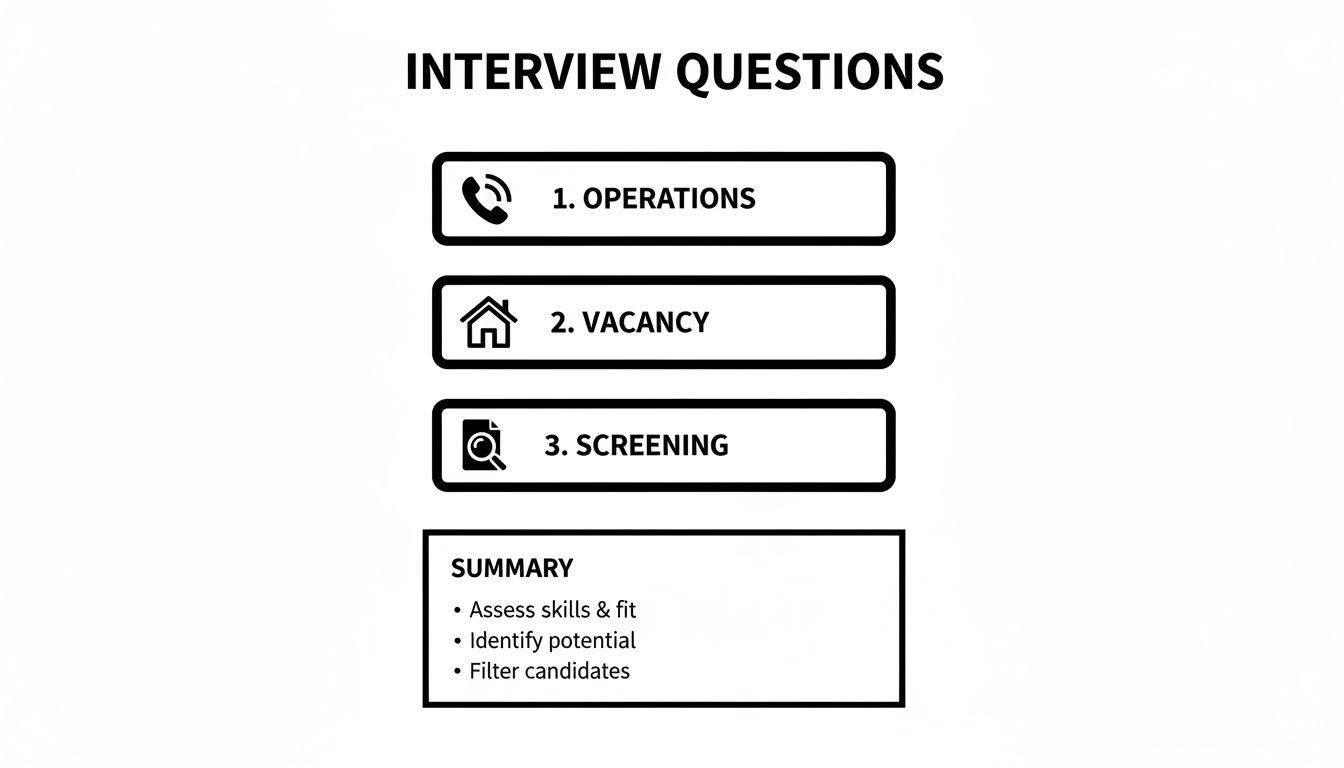
Drilling down into these areas gives you a complete picture of a company’s skills, not just what they tell you in their sales pitch.
The fee structure a company uses can dramatically impact your bottom line. It's crucial to understand what you're paying for and what extra costs might appear on your statement. This table breaks down the most common models.
Comparing Common Property Management Fee Structures
Fee Type | Typical Range | What It Covers | Potential Hidden Costs to Watch For |
|---|---|---|---|
Percentage-Based | 6% - 12% of collected rent | Core services like rent collection, tenant communication, and basic financial reporting. | Maintenance markups, lease renewal fees, eviction coordination fees, and administrative charges. |
Flat Fee | $100 - $200 per unit/month | Same core services as the percentage model, but at a fixed monthly rate. | Can have the same hidden costs; also, may not cover leasing or initial setup. |
"À la Carte" | Varies widely | Pay only for specific services you need (e.g., tenant placement only, rent collection only). | Can become expensive if you need multiple services; often lacks comprehensive oversight. |
Guaranteed Rent | Lower % + insurance premium | The management company pays you rent even if the tenant doesn't, backed by an insurance policy. | Higher overall cost, strict tenant screening requirements, and specific claim procedures. |
Ultimately, the "cheapest" option on paper is rarely the most cost-effective. Always calculate the total potential cost, including these extra fees, to make a true apples-to-apples comparison.
Critical Contract Clauses You Can't Afford to Skim
The management agreement is the rulebook for your entire professional relationship. Don't just glance at it—read every single word. Pay extremely close attention to the clauses that define how and when your partnership can end.
A fair property management agreement protects both you and the manager. If the contract feels heavily skewed in their favor, that's a massive red flag. Don't be afraid to ask for changes before you sign.
Here are the key sections to scrutinize:
Termination Clause: How do you get out of the deal if you're unhappy? Watch out for long notice periods (anything over 60 days is pushing it) or steep financial penalties for early termination. A fair contract usually allows for a 30-day notice.
Automatic Renewal: Many contracts will automatically roll over for another full year unless you provide written notice during a very specific timeframe (e.g., 30-60 days before the contract expires). If you miss that window, you’re locked in.
Reserve Funds: This clause specifies how much of your money the manager holds in a reserve account for small, day-to-day repairs. Make sure the amount is reasonable (typically $300-$500) and that there's a clear process for approving any expenses that exceed that limit.
Owner Responsibilities: The contract will also detail your obligations, like maintaining adequate insurance and keeping the reserve account funded. For a deeper look, check out our guide on what is in a property management agreement.
By carefully decoding the fees and combing through the contract, you give yourself the power to make a smart financial decision. This diligence ensures you’re not just hiring a service, but building a transparent, predictable partnership that truly protects your investment.
Making the Final Choice and Ensuring a Smooth Handover
You’ve done the hard work. You’ve crunched the numbers on fees, sat through the interviews, and you have a clear front-runner. But don't pop the champagne just yet. The last few steps are every bit as important as the first ones. This is where you confirm your gut feeling with real-world proof and manage a handover so seamless that your tenants barely notice a thing.

Getting this last mile right is all about being diligent and organized. A sloppy transition can cause missed rent, confused tenants, and maintenance requests that disappear into a black hole—starting your new partnership off on the wrong foot.
Verifying References The Right Way
Before you sign on that dotted line, it's time to check their references. And I don't mean just calling the glowing list of happy clients they hand you. That’s like asking a job applicant for their best friend’s phone number.
To get the real picture, you absolutely must speak with both current and former clients.
A current client gives you a snapshot of how things are today. But a former client? They can offer the unfiltered truth about why they left. Maybe it was an amicable split because they sold the property. Or maybe it was a death by a thousand paper cuts—poor communication, surprise fees, you name it. This is where you’ll find the unvarnished reality.
When you get them on the phone, ask pointed, specific questions:
"Walk me through how they handle a late-night maintenance emergency. How's their communication?"
"Are their monthly financial statements easy to understand and consistently on time?"
"Have you ever been surprised by a fee on your statement that wasn't clearly explained beforehand?"
(And for the former clients) "What was the single biggest reason you decided to move on?"
This kind of digging gets you past a simple "yeah, they're good" and gives you a feel for their actual day-to-day operations.
The Essential Transition Checklist
Alright, you've made the call and signed the management agreement. Now, the handover begins. A messy transition is a surefire recipe for chaos, leading to frustrated tenants and a rocky start. You need a checklist.
Think of a smooth handover as the first real test of your new partnership. It's not just about handing over a set of keys; it's about arming your new manager with every piece of information they need to protect your investment from day one.
A well-executed transition plan is the first sign of a professional partnership. It demonstrates a shared commitment to clarity, organization, and tenant satisfaction, minimizing disruption and setting a positive tone for the relationship ahead.
I always break my own checklists down into a few key areas to make sure nothing gets missed.
Key Handover Components
Your goal is a complete and clean transfer of responsibility. Here’s what that looks like:
Documentation Transfer: This is the paper trail that tells the story of your property. Your new manager needs copies of everything. * Current and past lease agreements * Tenant applications and screening reports (these are gold) * Any pet addendums or policy documents * The original move-in inspection reports, complete with photos * A full rent roll showing who lives where, what they pay, and when it’s due
Financial and Legal Handoff: This part is critical for compliance and cash flow. * Tenant security deposits (be extremely careful here and follow all local laws for transferring these funds) * Any prorated rent you've already collected for the current month * All keys, fobs, garage openers, and access codes * Your property insurance provider's contact information
Informing the Tenants: Your tenants should never be the last to know. Clear, proactive communication is non-negotiable. It shows them the change is professional and that they're in good hands. * Send a formal, written notice introducing the new management company by name. * Provide all the new contact information for the manager. * Clearly spell out the new process for paying rent and, just as importantly, for submitting maintenance requests.
By taking a structured approach, you're not just delegating tasks; you're empowering your new property manager to succeed. This final bit of diligence is what solidifies your choice and kicks off your partnership with total clarity.
Answering Your Lingering Questions About Hiring a Property Manager
Even after you've done your homework—interviewing candidates, checking references, and poring over contracts—it's totally normal to have a few last-minute questions. Handing over the keys to your investment is a huge decision, one that affects your bank account and your stress levels. Let's walk through some of the most common "what-if" scenarios that pop up right before owners sign on the dotted line.
Getting these details ironed out now is the best way to prevent misunderstandings and headaches down the road.
How Much Involvement Will I Really Have?
This is probably the biggest question on every owner's mind. The short answer? As much or as little as you want, as long as it's spelled out in the contract.
A good property manager is hired to shield you from the day-to-day grind. No more late-night calls about a leaky faucet or playing mediator in a tenant squabble. That's what you're paying them for.
But being hands-off shouldn't mean being in the dark. A solid partnership is built on clear communication.
Routine Stuff: For minor repairs or standard tenant notices, your manager should have the autonomy to just handle it.
The Big Decisions: For anything major—like an expense over a pre-set limit (say, $500), a lease renewal decision, or the start of an eviction—you should always have the final say.
Your management agreement is your rulebook here. If you truly want to approve every single repair, you can write that in, but be warned: it can seriously slow things down. Most experienced owners find that trusting the systems you've already vetted leads to a much smoother operation.
The goal isn't to wash your hands of the property entirely. It's to shift your role from day-to-day operator to the strategic director of your investment.
What If I Don't Like the Tenant They Place?
This is a common fear, but one that’s almost always avoided by a rock-solid screening process. Remember, you're hiring them for their professional expertise in finding qualified tenants, which relies on objective data, not a gut feeling. Their process should be non-negotiably thorough—credit checks, income verification, eviction history, and background checks are the bare minimum.
You should have already grilled them on their screening criteria during the interview. If they laid out a detailed, multi-step process, you need to trust it. Trying to step in and veto a well-qualified applicant because of a personal feeling not only creates friction with your manager but could also land you in hot water with Fair Housing laws.
Trust the process you paid for. If you find you're constantly at odds with their choices, it might be a sign of a deeper misalignment in your partnership.
Are Property Management Fees a Tax-Deductible Expense?
Yes! This is a financial upside that many new landlords miss. In almost all situations, property management fees are considered a direct business expense and are fully tax-deductible.
Think of it as a necessary cost of doing business to keep your rental income flowing. When you factor this in, the actual cost of hiring a manager is often lower than the sticker price. Just be sure to keep meticulous records of every payment you make.
Deductible expenses typically include:
The monthly management percentage
Tenant placement or leasing fees
Any other administrative or service fees detailed in your agreement
Of course, you should always run this by your accountant to see how it fits into your specific tax situation, but it’s a powerful financial point to remember when you're weighing the cost versus the benefit.
Can I Insist on Using My Own Handyman or Plumber?
This really depends on the company's policy, and it's something you need to ask about upfront.
Many larger firms have a strict policy of using their own network of vendors. They do this to control quality, manage liability, and streamline the billing process. They've already vetted these pros for insurance and reliability, and they often get better pricing due to the volume of work they provide.
Other managers, often smaller or more flexible companies, might be perfectly fine with you using your own trusted vendors, but there will be strings attached.
Your go-to person will likely need to:
Provide proof of general liability insurance and any necessary licenses.
Agree to work within the manager’s invoicing and payment system.
This is a non-negotiable point to clarify before you sign anything. If using your long-time, trusted handyman is a deal-breaker for you, make that crystal clear from day one. For many owners, however, tapping into the manager's established and vetted network is one of the biggest perks of the service—it means no more scrambling to find a reliable pro on a Friday night.
At Keshman Property Management, we build transparent partnerships designed to protect your investment and free up your time. With over 20 years of experience as landlords ourselves, we know what matters to owners. Learn more about our straightforward, effective approach to property management by visiting us at https://mypropertymanaged.com.


Comments