
What Do Property Managers Do: A Practical Guide to Rentals, Fees, and Hiring
- Sarah Porter

- Dec 19, 2025
- 19 min read
Updated: Dec 20, 2025
In a nutshell, a property manager is your professional stand-in, the person who handles all the day-to-day work that comes with owning a rental property. Their entire job is to manage the investment on your behalf, making sure it stays profitable, well-maintained, and legally sound—all while keeping your tenants happy.
The Four Core Roles of a Modern Property Manager
The best way to think about a property manager is as the CEO of your investment. Their role isn't a single task but a blend of four distinct, equally critical functions. This balanced approach ensures your asset isn't just surviving; it's thriving for long-term growth.
When a manager masters these four roles, everything works in harmony. For instance, creating great tenant relationships (Role 3) leads directly to fewer vacancies and better financial returns (Role 1).
The Financial Strategist
First and foremost, a good manager is a financial steward for your property. Their goal is to maximize what you earn while keeping a tight rein on expenses. This is much more than just collecting a rent check.
Key financial responsibilities include:
Setting Competitive Rent: They dive into market data to find the sweet spot—the highest rent you can charge that still brings in great tenants without long vacancies.
Meticulous Expense Tracking: They handle all the bills—mortgage, insurance, taxes, and maintenance—always looking for ways to trim costs without cutting corners.
Detailed Financial Reporting: You get clear, easy-to-read monthly statements showing exactly where your money is coming from and where it’s going.
The Operations Chief
Next, the manager acts as the operations chief, overseeing the physical health of the building. This is the hands-on work that protects your property's value over time. They coordinate everything from a running toilet to an emergency roof leak, using their network of trusted vendors to get the job done right.
The real goal is preventative care. They fix the small stuff before it snowballs into a massive, expensive headache.
A great property manager doesn't just react to problems—they anticipate them. By managing the physical asset proactively, they protect your cash flow and prevent small repair bills from turning into major capital expenditures.
This kind of operational skill has become essential. The property management industry in the United States is huge, generating an estimated $136.9 billion in revenue in 2025 across roughly 335,000 businesses. That growth shows just how crucial professional oversight has become for investors. You can explore more data on the property management industry from IBISWorld to see the trends.
The diagram below breaks down these four interconnected roles.
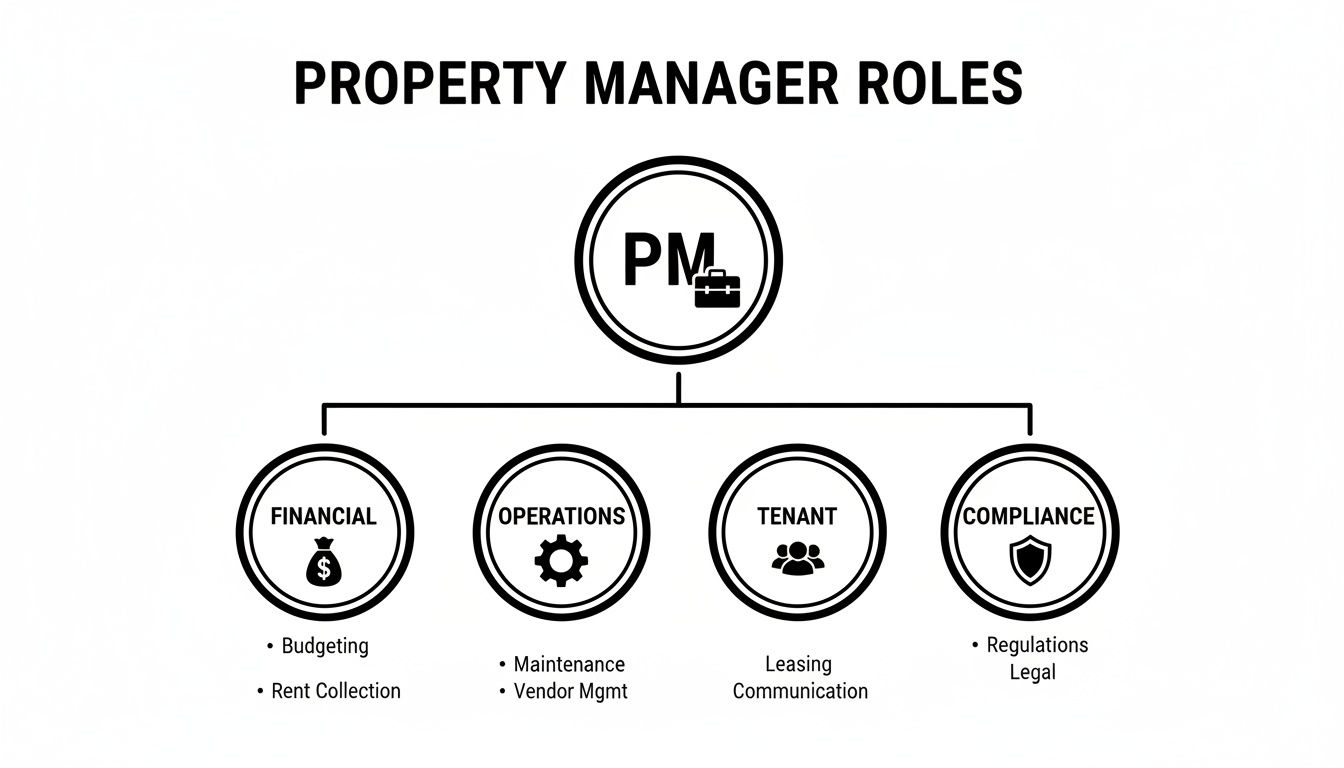
As you can see, each function supports the others, creating a stable foundation for a successful rental property.
To make it even clearer, here's a quick summary of how these four core functions work together.
The Four Core Functions of a Property Manager at a Glance
Core Role | Key Responsibilities | Impact on Your Investment |
|---|---|---|
Financial Strategist | Sets rent, collects payments, manages budget, provides financial reports. | Maximizes profitability and ensures positive cash flow. |
Operations Chief | Manages maintenance, conducts inspections, handles emergency repairs. | Protects the physical asset and preserves its long-term value. |
Tenant Relations Expert | Markets vacancies, screens applicants, handles communication and disputes. | Reduces vacancy rates and secures reliable, long-term tenants. |
Compliance Officer | Enforces leases, navigates landlord-tenant laws, handles evictions. | Minimizes legal risk and protects you from costly lawsuits and fines. |
Each of these roles is a full-time job in itself, which is why having an expert handle them is so valuable.
The Tenant Relations Expert
An investment property only makes money when it’s filled with good, reliable tenants. The manager is responsible for the entire tenant journey, acting as a kind of customer service specialist.
They market the property to attract a wide pool of applicants, run thorough background and credit checks to find the best fit, manage the move-in process, and serve as the go-to person for any tenant questions or concerns.
The Compliance Officer
Finally, your property manager is your compliance officer. They are your guide through the tangled web of local, state, and federal housing laws.
From fair housing rules to proper eviction protocol, they know the regulations inside and out. This expertise is what keeps you out of legal hot water, shielding you from expensive fines and lawsuits while ensuring your business is run by the book.
A Day in the Life of a Property Manager

So, what does a property manager actually do on a typical Tuesday? Forget the idea of a quiet desk job. A manager's day is a whirlwind of marketing, tenant relations, maintenance triage, and financial oversight. To really get a feel for their value, you have to look at the practical, hands-on tasks that fill up their schedule.
You can think of their work as following the natural lifecycle of a tenancy. It all starts long before a tenant even sees the property.
Attracting and Securing Quality Tenants
Let's be blunt: a vacant property is a money pit. That’s why a huge chunk of a manager's energy goes into marketing and leasing. This isn't just sticking a "For Rent" sign in the yard and hoping for the best.
It all begins with creating a compelling property listing. That means professional-quality photos, descriptive copy that sells the lifestyle, and getting that listing onto all the popular rental websites. The goal is to cast a wide net and get a flood of applications from great potential tenants.
The pressure is on, too. Industry data for 2025 shows that keeping properties occupied is the number one worry for managers—with 20% more managers calling it a major threat than the year before. This concern is what fuels their daily grind of marketing, showing units, and processing applications. You can discover more insights on property management trends to see what's driving the market.
Once the applications start pouring in, the manager puts on their detective hat.
A property manager's most important job is finding the right tenant. Placing one bad tenant can cost an owner thousands in lost rent, legal fees, and property damage, erasing years of profit.
This is where a bulletproof screening process is non-negotiable. They dig deep, going far beyond the application form itself. A professional screening always includes:
Income Verification: Making sure the applicant earns enough to comfortably cover rent. This means checking actual pay stubs or bank statements.
Credit History Review: Looking at the credit report to see if the applicant has a history of paying their bills on time. It’s a great indicator of financial responsibility.
Rental History Check: Calling previous landlords is a must. You find out if they paid on time, took care of the property, and were a good neighbor.
Criminal Background Check: Screening for any relevant criminal history, all while strictly following fair housing laws.
Managing Leases and Collecting Rent
Once the perfect tenant is found and approved, the work shifts to paperwork and onboarding. The manager drafts a solid lease agreement that protects everyone involved, clearly laying out all the rules and expectations. They also perform a meticulous move-in inspection, taking photos and detailed notes to document the property's condition. This one step can prevent a world of headaches over security deposits down the road.
With the tenant moved in, the financial engine starts humming. The most basic, yet critical, task is simply collecting the rent. Most modern managers use online portals, which makes it incredibly easy for tenants to pay automatically and on time.
But what happens when rent is late? The manager has to act fast. That means sending formal notices, enforcing late fees exactly as stated in the lease, and communicating with the tenant firmly but professionally. This consistency is what keeps the cash flow predictable for the owner.
Coordinating Maintenance and Repairs
Think of a property manager as an air traffic controller for maintenance. They are the go-to person for every tenant repair request, from a dripping faucet to a broken furnace. Their day is a constant balancing act, triaging issues to figure out what’s urgent and what can wait.
Three Tiers of Property Maintenance
Preventative Maintenance: This is the proactive stuff—servicing the HVAC system before it breaks in July, cleaning the gutters in the fall, or routine pest control. It’s all about preventing small problems from turning into massive, expensive ones.
Routine Repairs: These are the everyday fixes for normal wear and tear. Think leaky faucets, a garbage disposal on the fritz, or a running toilet.
Emergency Response: When a pipe bursts at 2 a.m. or the heat goes out in the middle of a blizzard, the manager is the one who gets the call and needs to have a solution—fast.
A huge part of what property managers do is build a trusted network of vendors. They have go-to plumbers, electricians, and handymen who are licensed, insured, and do great work for a fair price. That network is worth its weight in gold, especially when you need someone reliable in an emergency.
Financial Reporting and Owner Communication
Finally, behind all the action is a steady commitment to clear and transparent accounting. At the end of every month, the manager puts together detailed financial statements for the owner.
These reports show you exactly how your investment is doing. They give you a clean breakdown of all the income that came in and every single expense that went out, from management fees to the cost of a new water heater. This level of financial clarity lets you track performance without getting tangled up in the day-to-day drama. It's the foundation of a strong, trusting relationship between an owner and their manager.
How Management Duties Change with Property Type
A property manager's job is definitely not a one-size-fits-all gig. The daily playbook changes dramatically depending on whether they're looking after a standalone house, a condo unit, or a small apartment building. Each property type comes with its own unique set of challenges and priorities.
A truly skilled manager knows how to pivot, shifting their focus, communication style, and expertise to match what the asset needs. Let's break down how their responsibilities look across three common investment scenarios.
Managing a Single-Family Home
When you're dealing with a single-family home, the relationship between the manager, the owner, and the tenant is much more direct. The manager essentially becomes the single point of contact for everything—from the leaky faucet to the overgrown lawn.
The big focus here is on total asset preservation. Unlike a condo or apartment, every major system—the HVAC, the roof, the plumbing—is dedicated to just one tenant. This puts the manager squarely in charge of coordinating all upkeep and repairs for the entire property.
Key duties that are pretty unique to single-family homes include:
Coordinating Exterior Maintenance: This is a big one. It often means hiring landscapers for lawn care, arranging snow removal, and generally keeping up the home's curb appeal to protect the owner's investment.
Managing Standalone Systems: The manager is responsible for scheduling routine HVAC servicing, gutter cleaning, and roof inspections. These preventative tasks are crucial for avoiding massive, costly surprises down the road.
Cultivating a Deep Tenant Relationship: With just one tenant to focus on, a good manager can build a strong rapport. This encourages the tenant to treat the house like their own and report small issues before they spiral into bigger problems.
Managing a Condominium Unit
Managing a condo throws a new and powerful player into the mix: the Homeowners Association (HOA) or condo board. Suddenly, the property manager has to be a skilled diplomat, carefully balancing the owner's interests, the tenant's needs, and the association's long list of rules.
Here, the job is less about the building's exterior and much more about navigating a web of regulations and relationships. The manager is the crucial go-between who keeps everyone on the same page.
A manager for a condo owner is part ambassador and part rule enforcer. Their main value comes from understanding the HOA's bylaws inside and out, protecting the owner from potential fines while ensuring the tenant has a peaceful living experience.
This role requires a delicate touch and excellent communication. The manager has to clearly lay out the HOA rules for the tenant, handle any reported violations, and work with the association to fix any problems in common areas that impact the unit itself.
Specific responsibilities for a condo manager often involve:
Enforcing HOA Bylaws: They make sure the tenant gets it—all the community rules on noise, parking, pets, and using the amenities.
Serving as the Association Liaison: If a roof leak starts in a common area and seeps into the unit, the manager is the one who contacts the HOA on the owner's behalf to get it resolved.
Managing Shared Amenity Access: The manager handles the logistics for pools, gyms, and clubhouses, from distributing key fobs to managing reservations as required by the HOA.
Managing a Small Multifamily Building
When you level up to a small multifamily building—like a duplex, triplex, or four-plex—the complexity multiplies. The manager isn't just dealing with a single tenancy anymore; they're overseeing a small community. Interpersonal dynamics become just as critical as fixing a broken heater.
The challenges are communal. What one tenant does can directly affect their neighbors, so the manager has to be a pro at resolving disputes fairly and professionally. The financial side also gets more detailed, especially when it comes to splitting costs for shared resources.
A manager's focus expands to include:
Maintaining Common Areas: They are now responsible for the cleanliness and safety of shared spaces like hallways, laundry rooms, entryways, and any outdoor areas.
Managing Interpersonal Tenant Issues: When a noise complaint crops up or a parking spot dispute gets heated, the manager is the neutral mediator who needs to find a solution.
Allocating Shared Utility Costs: For buildings with a single water meter or one trash service, the manager has to create and enforce a fair system for dividing these bills among the tenants, making sure it's all spelled out in the leases.
In the end, understanding these nuances is what separates a great property manager from a mediocre one. They know that each property type demands a different strategy to protect the investment and keep the returns flowing.
Decoding Property Management Fees and Contracts
This is where the rubber meets the road. A great partnership with a property manager boils down to two things: understanding how they get paid and what your agreement with them actually says. Getting this right from the start is the key to a transparent and successful relationship.
Let’s be honest, the first question on every owner's mind is, "So, what's this going to cost me?" It's a fair question. You need to know how fees will impact your cash flow. While the exact numbers can vary a bit based on your market and the level of service you need, the fee structures themselves are pretty standard.
Common Property Management Fee Structures Compared
Think of property management fees like a menu at a restaurant. Your main course is the monthly management fee, but there are also à la carte items for specific, one-off services. Most companies use a blend of a few common fee types to cover their work.
Here’s a breakdown of the most common fee models you'll encounter:
Fee Type | Typical Cost | What It Covers | What to Watch For |
|---|---|---|---|
Monthly Management Fee | 8% - 12% of collected rent | Day-to-day operations: rent collection, tenant calls, routine maintenance coordination, inspections. | Make sure it's based on collected rent, not scheduled rent. This ensures their goals are aligned with yours. |
Leasing Fee (or Tenant Placement Fee) | 50% - 100% of one month's rent | The heavy lift of finding and placing a great tenant: marketing, showings, background checks, lease signing. | Some firms charge this even if an existing tenant renews. Clarify if there's a separate, lower renewal fee. |
Lease Renewal Fee | Flat fee (e.g., $150 - $300) | The administrative work of renewing a lease with a current tenant, saving you from a costly vacancy. | A great value compared to a full leasing fee. It incentivizes the manager to keep good tenants happy. |
Maintenance Markup | ~10% on vendor invoices | The manager's time coordinating repairs—getting quotes, scheduling work, and ensuring it's done right. | Is there a cap? Reputable firms are transparent and don't use this to turn repairs into a profit center. |
Project Management Fee | 5% - 10% of project cost | Overseeing major capital improvements like a roof replacement or a full kitchen renovation. | This is for projects outside of normal maintenance. Ensure the scope is clearly defined beforehand. |
The monthly management fee is the big one. It's the recurring cost for keeping your investment running smoothly.
A key detail to look for is that the fee, typically between 8% to 12%, is based on rent collected, not just what's owed. This is a critical distinction. It means if you don't get paid, they don't get paid. Simple as that.
Understanding this menu of fees helps you see the full picture and avoid any surprises down the road.
Navigating the Management Agreement
The property management agreement is your rulebook. It's the legally binding contract that spells out every single detail of your working relationship, from how money is handled to how the partnership can be ended. Don't just skim it—read it.
This document is your ultimate protection and the foundation for a clear, professional relationship. For a deeper look at the nuts and bolts, our guide covers what is a property management agreement in much more detail.
When you're reviewing the contract, zoom in on these sections:
Termination Clause: How do you part ways if things don't work out? Look for the required notice period (usually 30 or 60 days) and check if there are any early termination penalties.
Repair Authority and Limits: A manager needs the freedom to handle small repairs without bothering you. The contract should set a specific spending limit (say, $300) they can approve on their own. This lets them fix a leaky faucet immediately but ensures they need your go-ahead for a new water heater.
Owner Responsibilities: This part clarifies your duties, like keeping the property insured and maintaining a reserve fund for unexpected repairs.
Hold Harmless Clause: This is standard legal language that protects the manager from liability for things they didn't directly cause through negligence. It confirms they’re acting as your agent, not as the property owner.
Finally, a good manager also helps you keep your own financial house in order. They provide the clean records you need for tax season and can help you navigate the complexities of your landlord tax obligations. By getting a firm handle on both the fees and the contract, you're setting yourself up for a profitable, low-stress partnership.
The New Tech Powering Modern Property Management
Forget the old stereotype of a manager with a giant ring of keys and a clunky filing cabinet. Today’s top property managers are more like tech operators, using a powerful digital toolkit to make everything run smoother and boost your bottom line. The job has moved from just putting out fires to proactively managing your investment with data-driven precision.
At the heart of it all is property management software (PMS). Think of it as the command center for a rental portfolio. These platforms bring everything—from rent collection to maintenance tickets—into one organized place. Tenants get their own online portal where they can pay rent, upload photos of a leaky faucet, and review their lease anytime, day or night. This convenience keeps them happy and frees up your manager from tedious admin work.
The Rise of AI and Automation
Artificial intelligence and automation are taking efficiency to a whole new level. With rental application fraud becoming a serious problem, managers now use AI-powered screening tools that can spot fake IDs and inconsistencies in a flash, saving owners from the nightmare of a bad tenancy.
Automation handles the routine stuff that used to eat up hours. Imagine systems that automatically send reminders for late rent or ping tenants when their lease is about to expire. This ensures rules are enforced consistently without the manager having to manually track every single detail. They can even use AI tools like chatbots for effective lead generation, turning website visitors into potential tenants. You can explore a variety of helpful chatbot lead generation strategies to see how powerful this can be.
A property manager's job is quickly becoming about analytics and automation. The property management software market is already valued at $3.04 billion, and its rapid growth makes sense when you see AI adoption climbing from ~21% to ~34% in just one year. This big jump is partially a defense against the 70% of managers who reported a spike in fraudulent applications. Learn more about the latest property management market findings.
Smart Homes and Virtual Operations
The tech isn't just behind the scenes; it's being built right into the properties themselves. Things that sounded like science fiction a few years ago are now essential for attracting the best tenants.
Here's what a modern, tech-enabled rental experience looks like:
Virtual Tours: High-definition 3D tours let prospective renters "walk through" a unit from their couch. This is huge. It opens your property up to a global audience and drastically cuts down on vacancy time.
Digital Lease Signing: Leases are sent, signed, and stored securely online. The whole process becomes faster and way more convenient for everyone.
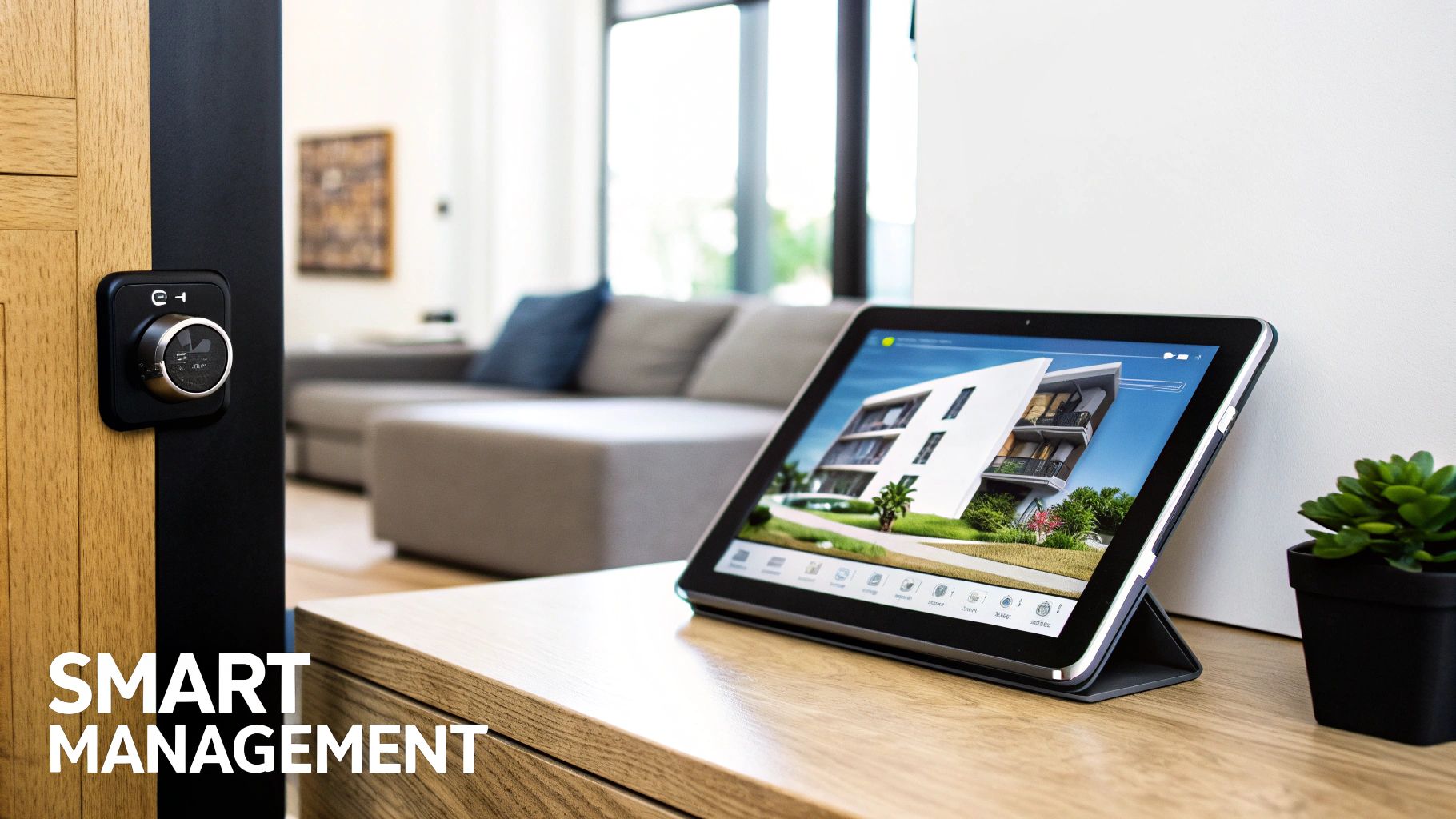
Smart Home Devices: Keyless entry adds a layer of modern security and means no more changing locks between tenants. Smart thermostats can be adjusted remotely, saving a bundle on utility bills when a unit is empty.
These aren't just trendy gadgets anymore. They are core operational tools that give owners a serious competitive edge. For a deeper dive into what's on the horizon, check out our guide on 7 key property management technology trends for 2025. By embracing this technology, a great property manager turns basic oversight into strategic asset management.
How to Hire the Right Property Manager for Your Investment
Choosing the right property manager is one of the most critical financial decisions you'll make for your investment. This isn’t just about finding someone to collect checks; it’s about entrusting a valuable asset to a professional partner who will protect it.
A great manager can be the difference between a thriving, profitable rental and a constant source of stress. The wrong choice can lead to costly vacancies, legal nightmares, and preventable property damage. To make a confident decision, you need a solid game plan. Let's walk through how to find, vet, and ultimately hire a manager who truly aligns with your goals.
Sourcing and Vetting Potential Candidates
Your search starts with building a shortlist of qualified candidates. And no, a quick Google search isn’t enough. The best managers are often found through trusted channels and a bit of old-fashioned due diligence.
Kick things off by asking for referrals. Talk to other real estate investors in your network, your real estate agent, or even your CPA. Firsthand recommendations are gold. You should also check out local chapters of professional organizations like the National Association of Residential Property Managers (NARPM). Their members are typically held to a higher standard of ethics and practice.
Once you have a few names, it’s time to vet them—before you even pick up the phone for an interview.
Check Licenses and Insurance: Most states require property managers to hold a real estate broker's license. You can usually verify this online with your state's real estate commission. Also, ask for proof of general liability and errors and omissions (E&O) insurance. This protects you.
Read Online Reviews: Scan their reviews on Google, Yelp, and the Better Business Bureau. Don't just look at the star rating. Pay close attention to how the company responds to negative feedback. A professional, solution-oriented reply to a complaint says a lot more than a dozen five-star reviews.
Essential Interview Questions to Ask
The interview is where you dig into how they actually operate. This is your chance to understand their processes, communication style, and on-the-ground expertise. You need to move beyond generic questions and get into specific, "what if" scenarios.
The goal of the interview isn't just to hear what a manager says they will do, but to understand how they do it. Ask for their average vacancy period or for a real-world example of how they handled a difficult tenant. Their ability to give you hard numbers and clear examples is a huge indicator of their experience and transparency.
Come prepared with a list of questions that get to the heart of property management. For a complete guide, check out our article on the 8 essential property manager interview questions for 2025.
Here are a few key areas you absolutely must cover:
Tenant Screening: "Walk me through your entire tenant screening process. What are your non-negotiable criteria for income, credit, and rental history?"
Maintenance and Repairs: "How do you handle a plumbing emergency at 2 a.m.? What's your spending limit for a non-emergency repair before you need my approval?"
Financial Reporting: "What kind of financial statements can I expect to receive, and how often? Can you show me a sample owner statement?"
Performance Metrics: "What is your average vacancy rate across your portfolio? How long does it typically take you to get a vacant unit rent-ready and filled?"
Critical Red Flags to Watch For
Knowing what to look for is only half the battle; you also need to know what to avoid. If you spot any of these warning signs during the hiring process, it's probably best to walk away.
Ambiguous Fee Structures: If a manager can't give you a simple, clear breakdown of every single fee, be very cautious. Vague explanations and hidden charges are a massive red flag.
Poor Communication: How responsive are they now, before you’ve even signed a contract? If they’re slow to return your calls or emails during the "wooing" phase, imagine how it will be once they have your business.
Lack of Local Market Knowledge: A good manager should know your local rental market inside and out. They should be able to talk confidently about current rent comps, neighborhood trends, and specific local landlord-tenant laws.
Disorganized Operations: First impressions matter. If their office is a mess, their paperwork is jumbled, or they seem generally unprepared for your meeting, that chaos will likely carry over into how they manage your property.
By following this framework—sourcing carefully, vetting thoroughly, interviewing strategically, and watching for red flags—you put yourself in the best position to hire a property manager who will truly be a partner in your investment's success.
Common Questions About Property Management
Even after you get the rundown of a property manager's duties, a few practical questions almost always pop up. Let's tackle some of the most common things owners ask so you can get a clearer picture of what this partnership really looks like.
Do I Lose Control if I Hire a Manager?
This is probably the biggest fear for most property owners, and it's a completely valid concern. But the truth is, you're delegating tasks, not surrendering your authority. A good property management agreement is your rulebook; it clearly spells out what your manager can and can't do without your approval.
You’re still the one calling the shots on the big stuff. You approve the final tenant, you give the green light for any significant repairs, and you set the long-term strategy for your investment. Think of your manager as the expert who executes your game plan, handling all the day-to-day grind so you don’t have to. They work for you, not in place of you.
Are Property Management Fees Tax-Deductible?
Yes, they absolutely are. For most rental property owners, property management fees are considered a tax-deductible business expense. This is a huge benefit that can help offset the cost, making the service much more affordable than it might seem at first glance.
Of course, tax laws can have their own quirks, so it’s always a smart move to run this by your accountant. They can give you the final word on how it applies to your specific financial situation.
What's the Difference Between a Property Manager and a Realtor?
It's easy to lump all real estate pros together, but their roles are worlds apart. A Realtor (or real estate agent) is a specialist in transactions—buying and selling property. Once the keys are handed over and the deal is closed, their job is usually done.
A property manager, on the other hand, is in it for the long haul. Their focus is on the ongoing, day-to-day operation of your rental. Their work kicks into high gear after you own the property and continues month after month, year after year. They're handling tenants, maintenance, and cash flow, not just the sale.
Think of it this way: A Realtor helps you buy the car. A property manager is the expert mechanic who keeps it running smoothly for years, ensuring it remains a reliable and valuable asset.
When Does It Make Sense to Hire a Manager?
There's a tipping point for every landlord where self-management just stops making sense. You hit that point when the time, hassle, and stress you're pouring into the property start to feel more costly than a manager's fee.
A few common triggers usually push owners to make the call:
You own more than one property. The logistics start to get complicated fast.
You live far from your rental. Trying to manage from a distance is a recipe for disaster.
You have a busy career or family life. You simply don't have the bandwidth for late-night emergency calls or chasing down rent.
You’re just plain tired of it. You want the investment income without the landlord headaches.
Hiring a manager is an investment, but you're not just investing in your property—you're investing in your own time and peace of mind.
At Keshman Property Management, we treat your property with the personalized attention it deserves, backed by 20 years of hands-on experience. Let us make your rental property ownership less daunting and more gratifying.


Comments