
Property: property management company services that protect your investment
- Sarah Porter

- Jan 16
- 17 min read
Think of property management services as the complete operational toolkit for your rental property. It’s everything required to handle the day-to-day running of your investment, from marketing and tenant screening all the way to maintenance and financial reporting.
Understanding Your Property's Business Manager
Your rental property is, for all intents and purposes, a small business. It generates revenue (rent), has expenses (maintenance, taxes), serves customers (your tenants), and needs marketing to fill vacancies. Trying to do all of that yourself means you're not just the owner—you're the CEO, accountant, marketer, and customer service department rolled into one. For many, a "passive" investment quickly becomes a very active, time-consuming job.
This is where a good property manager steps in. They act as the dedicated business manager for your asset. Their entire job is to maximize your return on investment while minimizing the headaches, ensuring the business of your property runs profitably without you having to be involved in every little detail.
The Core Pillars of Management
Property management really boils down to four critical functions. Each one tackles a different, yet essential, part of making your rental a success. Let's break them down.
Marketing and Leasing: This is all about one thing: getting rid of costly vacancies. A manager's job here is to create fantastic listings and run smart campaigns on how to market rental properties effectively to attract a large pool of high-quality applicants.
Tenant Relations: This is the people side of the business—finding and keeping great tenants. It involves everything from airtight screening and background checks to handling lease enforcement and navigating any disputes that come up.
Property Maintenance: This is about protecting the physical asset itself. It includes proactive, preventative upkeep to catch small problems before they become big, expensive ones, plus handling repair requests quickly and efficiently.
Financial and Legal Oversight: This pillar ensures your investment is not only making money but also staying on the right side of the law. This means consistent rent collection, managing expenses, providing clear financial statements, and navigating the often-tricky world of landlord-tenant regulations.
At Keshman Property Management, our 20 years of hands-on landlord experience shapes how we deliver these services. We understand the anxieties of ownership because we’ve lived them. Our approach is designed not just to manage properties, but to support property owners themselves.
Having this perspective turns a complex, often stressful process into a clear, manageable, and profitable venture. By letting a professional handle the operational details, you’re free to focus on your bigger investment picture. You can dive deeper into the specifics in our guide on what to expect from a property management company. The right partnership can truly transform property ownership from a chore into a rewarding experience.
The Four Pillars of Property Management Explained
To really get your head around what a property management company does, it helps to think of their services as four distinct, yet connected, pillars. Imagine these are the columns holding up your entire rental investment. If even one is wobbly, the whole structure is at risk. But when all four are solid and working in harmony, your property is stable, profitable, and a whole lot less stressful.
A professional property manager sits right in the middle, coordinating everything. They’re the general contractor for your investment.
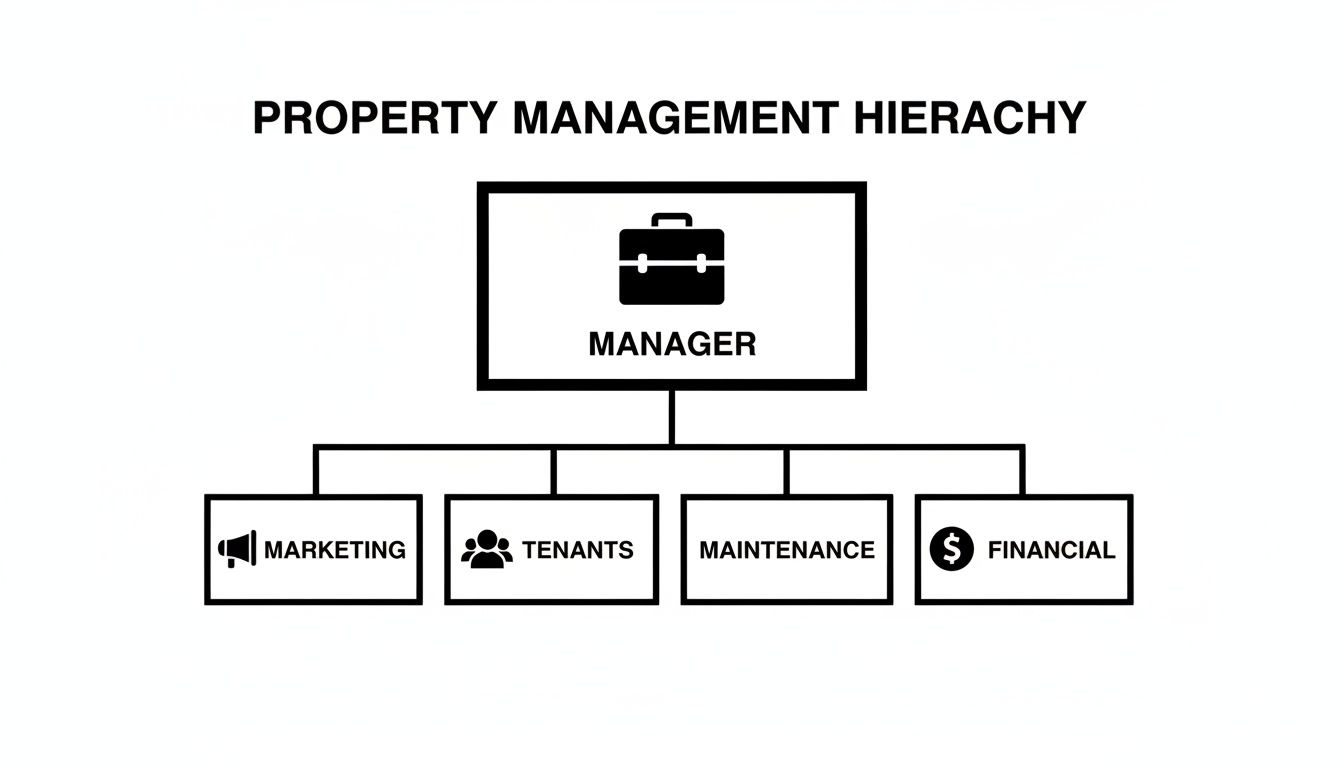
As you can see, these aren't just separate to-do lists. They're interconnected systems that a good manager orchestrates to protect your asset and help it grow. Let's break down what each pillar actually involves.
Pillar 1: Marketing and Leasing
The first pillar is all about one thing: eliminating costly vacancies. An empty property doesn’t just mean you’re not making money; it means you’re actively losing it on taxes, insurance, and utilities. Great marketing and leasing is the engine that keeps your property occupied and your bank account happy.
This all starts well before a "For Rent" sign ever goes up. It begins with a deep dive into the local market to figure out the sweet spot for rent—a price that attracts great tenants quickly without leaving any money on the table. Once that's locked in, the mission is to make your property look its absolute best online.
Today’s leasing game is played with a full toolkit designed to grab attention:
Professional Photos and Videos: Let's be honest, smartphone pictures don't cut it anymore. High-quality visuals are the first handshake with a potential renter, and they often determine whether someone even bothers to book a showing.
Virtual Tours: Convenience is king. Immersive 3D tours let people "walk through" the home from their couch, which dramatically widens the net of potential applicants, including those relocating from out of town.
Listing Syndication: A great listing doesn't do much good if no one sees it. Your property gets pushed out to dozens of the most popular rental sites, putting it directly in front of people actively looking for a place just like yours.
The whole point is to create a flood of interest, which flows right into the next crucial pillar.
Pillar 2: Tenant Management
Once you've got a pool of applicants, the game shifts to picking the right one. This is, without a doubt, one of the most critical parts of protecting your investment for the long haul. A fantastic tenant pays on time and treats the place like their own, making your life easy. A bad one can turn into a nightmare of late rent, property damage, and legal headaches.
Tenant management is really about relationship management, covering everything from the application to move-out. It all kicks off with an ironclad, legally sound screening process.
Key Insight: Thorough tenant screening is your best defense against future problems. It’s so much more than a quick credit check; it’s about piecing together a full puzzle of an applicant's history and reliability.
A truly comprehensive background check looks at the whole picture:
Credit History Review: How do they handle their financial obligations?
Criminal Background Check: Is there anything in their past that poses a risk to the property or the neighborhood?
Eviction History Search: Have they been a problem for other landlords?
Income and Employment Verification: Can they actually, comfortably, afford the rent?
Once a great tenant is in place, the work continues. It’s about clear communication, fair but firm lease enforcement, and being responsive when they have a question or concern. This builds a positive relationship, which is the secret sauce for getting good tenants to renew their lease year after year.
Pillar 3: Property Maintenance and Repairs
This pillar is all about protecting the physical asset—the actual bricks and mortar you invested in. A property that’s kept in great shape doesn't just rent for more money and attract better tenants; it also stops tiny, cheap problems from spiraling into massive, budget-busting disasters.
Smart maintenance is a two-part strategy: being proactive and being reactive.
Proactive Maintenance: This means scheduled check-ups and preventative care for the big-ticket items like the HVAC, roof, and plumbing. The goal is simple: make things last longer and catch small issues before they become big emergencies.
Reactive Repairs: Things will inevitably break. When they do, a fast, professional response is what matters. A management company gives tenants a simple way to report issues and already has a roster of trusted, insured vendors ready to fix anything from a running toilet to a middle-of-the-night heating failure.
This system is what saves you from getting those dreaded late-night phone calls and the headache of scrambling to find a reliable plumber who will actually show up.
Pillar 4: Financial and Legal Oversight
The final pillar is the one that makes sure your investment is actually profitable and that you're not accidentally breaking any laws. This is the "back office" work that keeps the whole operation running cleanly. Without it, you could have a great tenant in a well-maintained property and still lose money.
This is where the numbers and rules come into play:
Diligent Rent Collection: Having a clear, consistent process for collecting rent on time, every time. This is the lifeblood of your cash flow.
Expense Management: Taking care of all the bills for you—the mortgage, property taxes, insurance, and vendor invoices.
Detailed Financial Reporting: Giving you easy-to-read monthly and annual statements that show exactly where your money came from and where it went. This transparency is key for tracking your ROI and for tax time.
Legal Compliance: Landlord-tenant law is a tangled web of federal, state, and local rules that are always changing. This pillar is about navigating that maze to keep you protected from lawsuits and expensive fines.
Now, let's pull all these concepts together into a quick-reference table.
Core Property Management Services at a Glance
This table breaks down the essential services a property management company provides, helping you see the full scope of support at a glance.
Service Category | Key Activities | Benefit to Owner |
|---|---|---|
Marketing & Leasing | Market analysis, professional photos/tours, listing syndication, property showings, applicant screening. | Minimizes vacancies, secures higher-quality tenants, and achieves optimal rental rates. |
Tenant Management | Lease execution, move-in coordination, rent collection, communication, lease enforcement, renewals. | Increases tenant retention, ensures consistent cash flow, and reduces turnover costs. |
Property Maintenance | Routine inspections, preventative maintenance programs, 24/7 repair coordination, vendor management. | Protects property value, prevents costly repairs, and keeps tenants happy and safe. |
Financial & Legal Oversight | Expense payments, detailed financial reporting, owner distributions, eviction handling, legal compliance. | Provides financial clarity, ensures profitability, and mitigates legal and financial risks. |
Ultimately, these four pillars work together to transform a hands-on, often stressful, rental property into a more passive, professionally managed investment.
Why Professional Management Is a Strategic Advantage

The rental market we see today is a world away from what it was just a decade ago. It's become a fast-paced, complicated, and incredibly competitive field where tiny details can make or break your bottom line. For property owners, this shift completely changes what it means to be a landlord.
If you still think of a property manager as just a rent collector, it's time for an update. In this market, professional property management company services aren't a luxury; they're a strategic necessity. It's a direct investment in protecting your asset, keeping it competitive, and ensuring its long-term financial health.
This need is fueling some serious growth. The global property management market is booming, projected to hit a value of around USD 27.81 billion by 2025. This explosion is driven by a flood of real estate investment and growing cities, with North America alone grabbing a 37% growth share. As the field gets more crowded, smart investors are turning to experts to help them navigate it all. You can learn more about these market dynamics to get deeper insights into this global trend.
Navigating Rising Tenant Expectations
Today’s tenants are different. They expect a smooth, professional experience, just like they get from any other service in their life. The old days of mailing a check and leaving a voicemail about a leaky pipe are over.
Modern renters demand modern conveniences. They’re looking for:
Online Portals: They want to pay rent, log maintenance requests, and get in touch with management 24/7, right from their phone.
Rapid Communication: A fast, professional response isn’t a nice-to-have anymore; it's the expected standard.
Tech-Savvy Features: From virtual tours before they even apply to smart home gadgets, tenants are drawn to properties that feel current and efficient.
Trying to build and maintain this kind of tech infrastructure on your own is a huge, expensive headache. A professional firm already has these systems polished and ready to go, which instantly makes your property far more appealing to high-quality, tech-savvy tenants.
A professional manager doesn't just manage a building; they manage the entire tenant experience. This focus on service is what leads to longer tenancies, fewer vacancies, and a stronger, more stable return on your investment.
Keeping Pace with Evolving Regulations
Landlord-tenant law is a tangled web of federal, state, and local rules that are always changing. One simple mistake—like using an outdated clause in your lease, mishandling a security deposit, or not giving proper notice—can land you in a world of legal trouble, with hefty fines and even overturned evictions.
These aren't just small administrative hurdles; they are major legal risks that can put your entire investment on the line. A professional property management company makes legal compliance a central part of its job.
They live and breathe this stuff, staying on top of every legislative update to ensure your rental is run by the book. From fair housing laws in your marketing to legally sound eviction processes, their expertise acts as a crucial shield, protecting you from liability and letting you sleep at night.
The Shift from Cost to Investment
When it comes down to it, the decision to hire a professional is about a change in perspective. Seeing management fees as just another "cost" is missing the bigger picture. It’s far more accurate to view them as a strategic investment that delivers a clear, measurable return.
You see this return on investment in several key areas:
Reduced Vacancy Times: Professional marketing and a streamlined leasing process get your property rented much faster.
Higher Quality Tenants: A tough, thorough screening process weeds out applicants who are likely to cause problems with late payments or property damage.
Lower Maintenance Costs: Proactive upkeep and access to a network of trusted, affordable vendors save you a ton of money on repairs.
Optimized Rental Rates: Expert market analysis makes sure you're charging the perfect price—not so low that you’re leaving money on the table, and not so high that you scare off good applicants.
When you add up all these financial gains and factor in the priceless time you get back, the service often pays for itself and then some. Professional management is the strategic advantage that can turn a hands-on headache into a high-performing, genuinely passive asset.
How Property Management Fees Actually Work

Let's talk about the money. Understanding the cost of property management company services is probably the most critical step for any owner, yet it’s often a source of major confusion. Fee structures can feel like a maze, making it tough to compare companies and know what you'll actually pay.
Think of it like a restaurant bill. Sometimes, you pay one price for an all-inclusive meal. Other times, you get an itemized bill with separate charges for every little thing. Neither is right or wrong, but you absolutely need to know which you're signing up for to avoid a nasty surprise at the end of the month.
The property management industry is a giant in the United States, with revenues projected to hit USD 136.9 billion by 2025. With over 335,000 businesses in the space, you have a ton of choices. This competition makes it essential to understand the different pricing models so you can find a partner who truly helps your bottom line.
The Most Common Fee Models
You'll almost always run into one of two main fee structures: the percentage-of-rent model or the flat-fee model. Each has its own logic and appeals to different kinds of property owners.
The Percentage-of-Rent Model
This is the industry standard. The management company takes a slice of the monthly rent they collect, typically between 8% and 12%. So, if your property rents for $2,000 a month and the fee is 10%, you’ll pay your manager $200.
The biggest upside here is that the manager’s incentives are directly tied to yours. If they don't collect the rent, they don't get paid. Simple. This model motivates them to keep your property filled with a good, paying tenant because their success literally depends on your cash flow.
Key Takeaway: A percentage model is straightforward and performance-based. But always, always ask if the fee is based on rent collected or rent due. A fee based on collected rent is the only one that truly protects you as the owner.
The Flat-Fee Model
Just like it sounds, this is a fixed dollar amount every single month, no matter what your property rents for. For example, it might be $100 per unit.
This model gives you predictability. If you're an owner who needs to budget down to the dollar, this can be really appealing. It also tends to be a better deal for owners with high-rent properties, where a flat fee could be much lower than a 12% cut of a large rental income.
Watch Out for Hidden Fees
Beyond that main management fee, the real difference between a great partner and a headache often comes down to the "à la carte" charges. These extra fees can nickel-and-dime you, quickly eating into your profits if you aren't paying close attention from the start.
Here are some of the most common add-on fees you need to look for in any management agreement:
Leasing Fee: A one-time charge for finding and placing a new tenant. This often runs anywhere from 50% to 100% of the first month's rent.
Lease Renewal Fee: A smaller fee billed when an existing tenant signs a new lease.
Maintenance Markups: Some companies tack on a surcharge (like 10%) to every vendor invoice for the "service" of coordinating repairs.
Eviction Fee: An hourly rate or flat fee for the time and hassle of managing an eviction.
Vacancy Fee: Believe it or not, some companies will charge you for managing an empty property.
This is where true transparency becomes non-negotiable. For a deeper look into all the potential costs, feel free to check out our guide on property management fee structures.
At Keshman Property Management, we just don't believe in that approach. As landlords ourselves with 20 years of experience, we know that unexpected fees destroy trust and create financial stress. Our model is built on the simple idea that our success should come directly from your profitability—not from a long menu of extra charges. Our goal is to make owning property feel rewarding, not overwhelming, and that starts with a clear, honest pricing structure that always puts your earnings first.
Choosing a Partner Who Thinks Like a Landlord
When you're looking for someone to manage your property, you'll find that not all services are created equal. Lots of firms can check the boxes—collect rent, schedule repairs, send you a statement. But the real difference-maker isn't the software they use or the size of their office. It’s their mindset.
The best partners don't just manage a property; they think like an owner because they are owners. There's a huge gap between managing from a corporate checklist and making decisions with the wisdom that only comes from having your own money on the line.
The Landlord Advantage in Decision-Making
A management company run by seasoned landlords brings a practical, hard-won perspective to the table. This isn't just theory; it’s firsthand experience that directly benefits your bottom line and gives you genuine peace of mind.
At Keshman Property Management, our 20 years of personal experience as landlords informs everything we do. We’ve been there. We've screened the tenants, paid for the leaky roof out of our own pocket, and felt that pit in our stomach when a good tenant gives notice. That background completely changes our approach.
This owner-first perspective really shines in three critical areas:
Smarter Tenant Screening: We look past the credit score. Having dealt with our share of difficult tenancies, we’ve learned to spot the subtle red flags on an application that a by-the-book manager might easily miss.
Cost-Conscious Maintenance: We treat your money like it’s ours. We know how infuriating it is to overpay for repairs, so we find durable, cost-effective solutions instead of the cheap, quick fix that’s guaranteed to break again next year.
Empathetic Communication: We get it. We know the stress that comes with owning property. When we have to call you about a major repair, we do it with the understanding of someone who has been on the receiving end of that same dreaded call.
Expert Insight: When your property manager has landlord DNA, you get more than just a task-doer—you get a strategic partner. They're wired to anticipate problems, protect your cash flow, and constantly look for ways to increase the long-term value of your asset.
Expertise Across Diverse Property Types
This landlord mindset is invaluable whether you own a single condo or a portfolio of apartment buildings. Our experience isn't limited to one niche; we've managed a wide range of properties, and we understand the unique challenges and opportunities that come with each.
We provide specialized management for:
Condos and Townhouses
Single-Family Homes
Multifamily Dwellings (Duplexes, Triplexes, etc.)
Small to Mid-Sized Apartment Buildings
Today's tenants also expect modern conveniences. Did you know 72% of renters in the U.S. prefer digital communication with their landlords, and a full 80% want the ability to pay rent online? A firm like Keshman, which pairs two decades of on-the-ground experience with the modern tech tenants demand, is crucial for keeping your properties competitive and profitable.
Picking the right partner is a big deal and requires a thorough look to make sure their approach truly aligns with your goals. A smart landlord follows a careful due diligence process. This ultimate real estate due diligence checklist is a great resource to help you structure your own evaluation.
Our goal is simple: to make owning property less stressful and more rewarding. We do that by mixing professional systems with the priceless perspective of a fellow landlord. It's a partnership designed to protect and grow your investment. For more tips, take a look at our guide to hiring the right property management company.
Your Top Property Management Questions, Answered
Deciding to bring in a professional to manage your property is a big step, and it's smart to have questions. After all, this is a significant asset we're talking about. To help you get clear on the details, we've compiled straightforward answers to the questions we hear most often from owners like you.
When Is the Right Time to Hire a Property Manager?
There isn’t a single magic moment, but the right time usually announces itself pretty loudly. It’s when you realize your investment property is starting to feel more like a second (or third) job.
One of the clearest signs is when the day-to-day grind starts eating up all your free time. If your nights and weekends are spent fielding maintenance calls, chasing down rent, and drowning in paperwork, you’ve stopped being a strategic investor and have become an overworked, unpaid landlord.
Other common triggers often include:
Growing Your Portfolio: Managing one or two properties might be doable. But the complexity skyrockets with every new door you add.
Distance Becomes an Issue: Trying to manage a rental from another city—or even another state—is a recipe for stress. You simply can't respond effectively to emergencies or keep a close eye on your investment from afar.
Feeling Lost in Legal-ese: Landlord-tenant laws are a constantly shifting maze. If you’re worried about compliance and legal risks, it’s a huge sign you need an expert in your corner.
Ultimately, if the stress of self-management is costing you peace of mind or preventing you from finding your next great investment, it’s the perfect time to explore a professional partnership.
What Red Flags Should I Watch Out for in a Company?
This is a critical question. Choosing the right partner is everything, and spotting the wrong one early can save you a world of headaches. The biggest red flag, without a doubt, is a muddy or confusing fee structure. If a company can’t give you a straight answer on what they charge and why, run. A long list of hidden "a la carte" fees is a major warning.
Pay close attention to how they communicate from the very first interaction. If they’re slow to get back to you or give you vague, canned answers before you’ve even signed on, just imagine what it will be like when there's a real emergency.
The bottom line is this: A great property management relationship is built on trust and transparency. A reputable company will be upfront about their pricing, clear in their communication, and honest about their entire process from day one.
Dig into online reviews, but look for patterns. A single bad review might be a fluke, but consistent complaints about neglected maintenance or poor tenant relations are a definite sign of trouble. Also, be wary of any company that isn’t crystal clear about how they handle repairs and vet their vendors—you need to know you aren’t being overcharged.
How Does a Property Management Company Handle Evictions?
A seasoned property manager knows that the best way to handle an eviction is to avoid it in the first place. That starts with an iron-clad, legally compliant tenant screening process. Finding a fantastic, reliable tenant is your single best defense against ever having to go down this road.
But sometimes, even with the best screening, things go wrong. If an eviction becomes the only option, a professional firm takes the entire process off your plate, navigating the legal system with precision. This is one area where you absolutely cannot afford to "wing it." One small procedural mistake can get your case thrown out, forcing you to start all over while the rent losses pile up.
Here’s what that professional process looks like:
Serving Proper Legal Notice: They ensure the correct notices are delivered exactly as required by state and local law.
Filing with the Court: They handle all the necessary legal paperwork to initiate the eviction lawsuit correctly.
Coordinating Removal: If the court rules in your favor and the tenant still won't leave, the manager works with law enforcement to legally regain possession of your property.
Their expertise in local landlord-tenant law is invaluable here, shielding you from costly missteps and ensuring a difficult situation is resolved as quickly and professionally as possible.
How Involved Can I Be in the Big Decisions?
You can be as involved as you want to be—it’s all about setting clear expectations from the start. A good management agreement will define your role and the manager’s authority, giving you complete control over the things that matter most while freeing you from the daily grind.
For instance, the manager will do the legwork of marketing the property, running background checks, and presenting you with a shortlist of top-tier applicants. But you’ll almost always have the final say on who signs the lease. The same goes for major expenses. You’ll agree on a maintenance spending limit (say, $500). For anything above that, they’ll get multiple quotes and come to you for approval before any work begins.
The goal is to find that perfect balance. You delegate the time-sucking tasks—the late-night calls about a leaky faucet, the rent collection—without ever giving up your authority as the owner. It’s a structure designed to keep you informed and in command of your investment's future, not chained to its daily demands.
At Keshman Property Management, we bring 20 years of our own hands-on landlord experience to the table, pairing it with professional systems that protect and grow your investment. Discover how our transparent, owner-focused approach can make your life easier.


Comments