
Property Management Single Family Homes: A Landlord's Essential Guide
- Sarah Porter

- Jan 23
- 13 min read
Updated: Jan 28
Owning a single-family rental is a fantastic investment, but it was never supposed to become a second full-time job. Professional property management for single family homes is what turns that property from a demanding side hustle into a truly hands-off, profitable asset. It's the bridge between fielding late-night repair calls and actually enjoying consistent, passive income.
The True Role of a Single Family Property Manager
Think of a property manager less as a rent collector and more as the dedicated CEO of your investment. Their primary mission is to protect and grow your asset's value, keep the returns reliable, and handle the day-to-day operational grind. This frees you up to focus on what matters most. After all, you didn't buy a home to become an expert on tenant law or plumbing emergencies—and that’s precisely where a great manager steps in.

A More Personal Approach
Managing a single-family home requires a completely different touch than overseeing a large apartment complex. While multifamily properties can be systematized, single-family rentals hinge on a direct, one-on-one relationship with tenants who see the property as their home.
This means a manager needs to be skilled at:
Building strong tenant relationships to encourage long-term stays and better care of your property.
Providing personalized communication for both you and your tenants, so everyone feels heard and stays in the loop.
Coordinating with individual contractors for repairs, rather than just calling down to an on-site maintenance team.
This high-touch model is what makes it work. The U.S. property management industry, where single-family homes are a huge component, is on track to hit $136.9 billion in revenue by the end of 2025. This growth, highlighted in reports from sources like IBISWorld, underscores just how resilient this asset class is and why specialized management is so critical.
A great property manager does more than just fill vacancies. They act as your strategic partner, maximizing your revenue, minimizing your risks, and preserving the physical integrity of your most valuable asset.
Ultimately, professional management for single-family homes is about buying back your time and gaining peace of mind. It’s the key to unlocking the true, passive potential of your real estate investment, knowing an expert has your back.
The Core Services That Protect Your Investment
When you bring a property management firm on board for your single-family home, you're doing more than just hiring someone to cash a rent check. You’re essentially buying a full-service system designed to safeguard your asset, boost its returns, and free you from the day-to-day grind of being a landlord.
Think of these services as the four pillars holding up your investment, keeping it stable, profitable, and genuinely passive.
Tenant Placement and Meticulous Screening
Getting the right person into your property is the bedrock of successful landlording. This isn't just about filling a vacancy quickly; it’s about finding a responsible tenant who will care for your home like you would.
A good manager's most critical work starts right here. They take care of everything from professional marketing and property showings to running in-depth background checks on every single applicant. That means verifying income, pulling credit reports, and digging into rental history to weed out potential issues before they ever become your problem.
Finding a high-quality tenant is the single most effective way to protect your cash flow and property condition. A thorough screening process prevents 90% of future landlord headaches.
This careful vetting process is all about setting you up for a smooth, stable tenancy from day one.
Rent Collection and Financial Reporting
Consistent cash flow is the lifeblood of any rental investment. Your property manager is the one who makes sure that blood keeps pumping, putting solid systems in place for on-time rent collection. They handle the invoicing, process the payments, and enforce the lease terms—including any late fees. This alone saves you from having those awkward, uncomfortable conversations with tenants.
But it goes beyond just getting the money in. They also provide you with completely transparent financial reports. Every month, you’ll get a simple, clear statement that breaks down:
All rental income received.
Any expenses paid out for maintenance or other costs.
The final net profit that lands in your bank account.
This gives you a perfect, at-a-glance picture of how your investment is performing, without you ever having to chase down a dollar.
Maintenance and Proactive Repairs
Smart property management is all about being proactive, not reactive. Following a good seasonal home maintenance checklist is key to protecting your home’s value and avoiding huge, unexpected repair bills down the road.
Your manager acts as the first line of defense for all maintenance issues. They take the tenant calls, troubleshoot the problem, and dispatch trusted, vetted contractors from their network to get things fixed—quickly and correctly. This isn't just about fixing a leaky faucet. It's about preserving your property's long-term value by catching small issues before they snowball into costly disasters.
Legal Compliance and Regular Inspections
The rental world is a minefield of local, state, and federal laws. A professional manager is your guide and your shield, making sure your property and your lease are always compliant with fair housing laws, local codes, and all other regulations.
They also conduct routine inspections of the property. This serves two purposes: it ensures the tenant is taking good care of the home, and it helps spot potential maintenance issues early. To get a deeper look at everything a manager handles, check out our guide on the core property management company responsibilities. This constant oversight keeps you out of legal hot water and gives you peace of mind that your investment is being looked after properly.
Decoding Property Management Fees
No one likes surprise fees. When you're trying to figure out if hiring a property manager makes financial sense, the last thing you want is a confusing or hidden fee structure. Think of these fees less as a "cost" and more as an investment. You're investing in a service that protects your property, keeps the rent coming in, and most importantly, gives you back your time.
The most common fee you'll see is the monthly management fee. This is the ongoing charge for the day-to-day work of managing your property—things like answering tenant calls, collecting rent, and handling those late-night maintenance emergencies. It’s typically a percentage of the rent collected, usually somewhere between 8% and 12%. This model is great because it means your manager's success is tied directly to yours. If you don't get paid, they don't get paid.
Common Fee Structures Explained
Beyond that monthly percentage, a few other standard fees cover specific, intensive tasks. Getting a handle on these will help you compare different management companies apples-to-apples.
Leasing Fee: Sometimes called a tenant placement fee, this is a one-time charge for the heavy lift of finding and screening a new tenant. It covers advertising your property, showing it to potential renters, and doing the crucial background and credit checks. Expect this to be between 50% to 100% of the first month's rent.
Lease Renewal Fee: To encourage managers to keep great tenants in place (which saves you a ton of money on turnover costs), many charge a small flat fee to handle a lease renewal. It’s far less than a full leasing fee and well worth it for stability.
Maintenance Markup: When a repair is needed, the property manager coordinates everything from getting quotes to making sure the work is done right. For that administrative oversight, some add a small percentage—often around 10%—to the vendor's invoice.
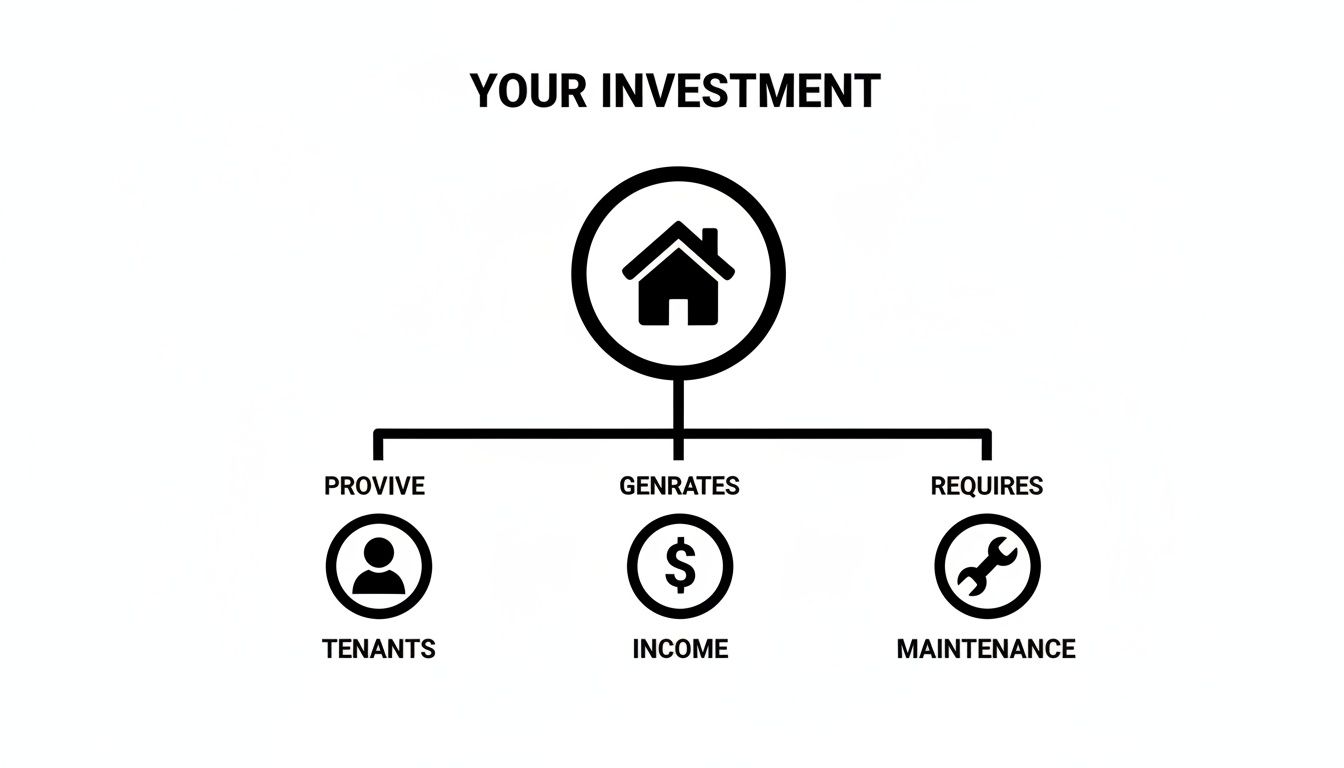
A good manager acts as the central hub for your investment, balancing the needs of the tenant, the flow of income, and the physical upkeep of the property itself.
A Real-World Cost Example
So, what does this all look like in practice? To make it tangible, let's run the numbers for a typical single-family rental.
The table below breaks down what you might expect to pay over the course of a year for a home that rents for $2,500 per month.
Fee Type | Common Industry Range | Example Cost (on $2,500/month rent) |
|---|---|---|
Monthly Management Fee | 8% - 12% of collected rent | $250/month (at 10%) |
Leasing Fee (One-Time) | 50% - 100% of one month's rent | $1,875 (at 75%) |
Lease Renewal Fee (One-Time) | Flat Fee ($150 - $350) | $250 |
Maintenance Markup | 5% - 10% on vendor invoices | $50 (on a $500 repair bill) |
As you can see, the biggest costs are the ongoing management and the initial placement of a tenant. If you have a stable tenant for a full year, your total management cost would be $3,000 ($250 x 12). While that's a real number, it often pales in comparison to the cost of one bad tenant, a two-month vacancy, or a botched repair job.
Knowing these figures helps you ask smarter questions and spot any unusual or hidden charges. For a deeper dive, check out our guide to property management fee structures. The goal is to find a partner who delivers clear, undeniable value for every dollar you invest.
Staying on the Right Side of the Law
Let's be honest: the world of rental regulations is a legal minefield. For a DIY landlord, one wrong step can lead to some seriously expensive headaches. Managing a rental home is so much more than just collecting a check; you're operating a business within a thick web of local, state, and federal laws. A great property manager is your expert guide, making sure every move you make is legally sound.

This legal shield goes up long before a tenant even gets the keys. It all starts with how you market the property. Every ad must comply with the Fair Housing Act, which strictly prohibits discrimination. It’s surprisingly easy to use the wrong phrase in a property description and find yourself facing a violation.
From there, a manager makes sure your lease agreement is bulletproof and tailored to your state's specific landlord-tenant laws. This isn't a generic template you download online; it's a vital legal instrument outlining everyone's rights and duties. You can get a deeper look into what makes a solid contract by understanding what is a property management agreement.
Protecting Your Investment (and Your Wallet)
Navigating the financial rules of renting is just as tricky. States have very specific, and often rigid, laws about how you handle a tenant’s money.
A manager's expertise is absolutely critical in a few key areas:
Security Deposits: Laws dictate exactly how much you can charge, where you have to keep the money (like a separate escrow account), and the precise timeline you have to follow when returning it.
Late Fees: There are often legal caps on how much you can charge for late rent, and many states require a specific grace period before you can even assess a fee.
Giving Proper Notice: Whether you need to enter the property for a repair or start the eviction process, you have to follow the letter of the law on how and when you deliver notices.
A single mistake in handling a security deposit can lead to penalties that are double or even triple the deposit amount. That's how a small oversight becomes a huge financial hit.
When You Have to Evict
No one wants it to happen, but sometimes eviction is the only option. When it comes to this, following the correct legal procedure is not optional—it's mandatory. Trying to take matters into your own hands by changing the locks or shutting off the power is illegal and will land you in a world of trouble.
A professional in property management for single family homes knows the exact, step-by-step legal dance required. From serving the first notice to filing the correct paperwork with the court, they manage a tough situation with professionalism and by the book. This protects you from a potential wrongful eviction lawsuit and gets your property back as quickly as the law permits, giving you invaluable peace of mind.
How to Measure Your Rental's Success
Is your rental property actually making you money, or is it just treading water? It's a surprisingly tough question to answer without the right numbers. A good property manager doesn’t just collect the rent; they track the vital signs of your investment and give you a clear picture of its financial health.
Think of it like a regular check-up. Key performance indicators (KPIs) are the metrics that tell you what’s working and what isn’t, translating all the day-to-day activity into simple, actionable insights.

Key Metrics Every Owner Should Know
You don't need to get lost in a sea of spreadsheets. Success really boils down to a few core numbers that tell the most important parts of your property's story. If you're going to track anything, start with these.
Here are the essentials:
Occupancy Rate: This is the big one. It's not just about whether you have a tenant; it's about consistency. A high occupancy rate—ideally 95% or more—tells you your pricing is right, your tenants are happy, and your management is effective. Every single day your property sits empty is money out the window.
Time-to-Lease: Once a tenant moves out, how quickly can you get a new, qualified one in? This metric is a direct reflection of your marketing and screening process. For a well-priced, well-maintained home, you should be aiming for under 30 days. Anything longer, and you're losing momentum.
Net Operating Income (NOI): This is your property's true profit. You calculate it by taking all the income your property generates and subtracting every operating expense—think taxes, insurance, and repairs (but not your mortgage). What's left is the NOI, a crystal-clear number showing how much money the asset itself is producing.
Your Net Operating Income is the ultimate truth-teller for your investment. It cuts through the noise and shows you precisely how much money your asset is generating on its own.
Tracking Costs for Long-Term Value
Income is only half the equation. Smart investors are just as obsessed with their expenses. Keeping a close eye on maintenance and repair costs is crucial for understanding the long-term health of your property. If you see repair bills creeping up or getting surprisingly high, it might be a warning sign of a bigger problem that could eat away at your returns if left unchecked.
Single-family homes have become the bedrock of the rental market for a reason. They tend to have lower turnover and lease up faster than apartments, delivering solid average annual returns of 8-12% for many investors. In our experience, owners who partner with a management service like Keshman often see their net yields climb by 20-25% simply by fine-tuning these operations and making decisions based on data, not guesswork. For more on the numbers behind this, you can dig into these property management market trends.
At the end of the day, measuring success is all about having a partner who can show you the proof in the pudding—with real, measurable results you can actually understand.
Should You Manage Your Rental Yourself or Hire a Pro?
This is the million-dollar question for almost every owner of a single-family rental. Do you handle it all yourself, or do you bring in a professional? This isn't just about saving money on fees; it’s a serious decision about your time, your sanity, and the future performance of your investment. It helps to think of it less as an expense and more as an investment in your own freedom.
Going the DIY route looks great on a spreadsheet, especially when you’re focused on maximizing every dollar of cash flow. But the real costs are often hidden in the hours and energy you have to pour into it. Think about all the little things—like finding a company for routine residential window cleaning services. Those "small" tasks pile up fast, and suddenly your passive investment feels a lot like a demanding part-time job.
Key Questions to Ask Yourself
To make the right call, you need to be brutally honest with yourself about what you can—and want—to handle. A clear-eyed assessment of your own time, skills, and resources is the foundation of successful property management for single family homes, whether you're the one doing it or you're hiring it out.
Start by asking these questions:
How close do you live? If you're not within a 30-minute drive, every showing, every maintenance call, and every emergency becomes a major headache.
What is your time actually worth? Add up the hours you’d spend on marketing, screening tenants, and coordinating repairs. Put a dollar amount on that time. You might be surprised to find it's more than a manager's fee.
Who’s in your network? Do you have a trusted plumber, electrician, or handyman you can call on a Saturday night who won't charge a fortune? A good property manager already has a full list of vetted, reliable pros.
Are you up-to-date on landlord-tenant law? The legal side of renting is a minefield of local, state, and federal regulations that change all the time. One wrong move with an eviction or a lease can land you in a costly legal battle.
The decision to hire a manager often boils down to a simple trade-off: your money for your time and peace of mind. For many investors, that is the most valuable trade they can make.
If you live just down the street, genuinely enjoy fixing things, and have a flexible schedule, self-management could work out perfectly. But if you value your free time, live far away, or want to grow your portfolio without chaining yourself to your properties, professional management isn't a luxury—it's a necessity.
Frequently Asked Questions
When you're exploring property management for your single-family rental, a lot of questions come to mind. It’s a big decision. We've gathered some of the most common ones we hear from owners to give you the clarity you need.
How Is Managing a Single Family Home Different?
Think of it like this: managing a large apartment building is like running a hotel, with standardized rooms and processes. Managing a single-family home is more like being a personal concierge for a unique, high-value asset.
Instead of dealing with dozens of identical units, every task—from marketing a vacancy to coordinating a repair—is custom. The relationship with the tenant is more direct, and the maintenance requires finding the right individual contractor for that specific job, not just sending up the on-site super. It’s a hands-on, highly personalized service.
What Happens If a Tenant Stops Paying Rent?
This is easily the biggest worry for most landlords, and for good reason. When a tenant defaults, a professional manager immediately kicks into a pre-established, legally-vetted process.
It starts with serving the proper legal notice required by state and local laws. If the tenant doesn't resolve the issue, your manager handles the entire eviction process, from filing the court paperwork to representing you in front of the judge. Their experience here is critical—it ensures everything is done by the book, which minimizes lost rent and gets the property back on the market as fast as possible.
A manager's established legal process is your best defense against prolonged vacancies and costly legal missteps. It turns a chaotic situation into a structured, professional procedure.
Can I Be Involved in Decision Making?
Of course. You should always have the final say on major decisions. A solid property management agreement will clearly define how this works.
Typically, your manager will handle the day-to-day stuff and small repairs under a certain pre-approved threshold, say $300. But for anything major—like replacing the HVAC system or approving a significant repair—they'll come to you for approval first. This setup keeps you in control of your budget without bogging you down with calls about a leaky faucet.
Ready to turn your single-family rental into a truly passive investment? The team at Keshman Property Management has over 20 years of hands-on experience protecting assets like yours. Discover our transparent, owner-focused approach by visiting us at https://mypropertymanaged.com.


Comments