
Background check services for tenants: Fast tenant screening
- Sarah Porter

- Nov 7, 2025
- 14 min read
Updated: Nov 9, 2025
When you choose a new tenant, you're not just filling a vacancy—you're essentially hiring a manager for one of your most valuable assets. Using professional background check services for tenants isn't about being suspicious; it's just smart business and a critical part of managing your risk. Getting this step right from the start makes for a much smoother, and more profitable, rental experience.
Why Tenant Screening Is Your First Line of Defense
Handing over the keys to your property is a big deal. It's an act of trust, but it should always be an informed one. Think of a thorough screening process as building a strong foundation for a good landlord-tenant relationship. It's a business decision, plain and simple, meant to protect your investment, keep the rent coming in, and ensure your property remains a safe and peaceful place for everyone who lives there.
This process is a landlord's version of due diligence. You can read more about the importance of due diligence from a legal perspective, but for us, it boils down to one thing: making responsible choices based on solid information, not just a gut feeling.
From Gut Feelings to Confident Decisions
Not too long ago, "screening" meant wading through paperwork and making phone calls. Thankfully, things have changed. Today's services give you fast, comprehensive reports that let you make decisions with real confidence.
This shift isn't just a trend; it's a response to a real need. The global market for tenant screening services was valued at USD 3.67 billion in 2023 and is expected to hit USD 7.10 billion by 2032. What's driving this? Landlords like us who want to minimize headaches and keep our properties occupied, especially in a competitive market.
A proper background check is much more than a formality. It’s your best tool for spotting potential red flags before they turn into expensive problems like property damage or months of chasing missed rent.
At the end of the day, using a professional screening service is just one piece of a bigger puzzle. It helps you build a consistent process that not only safeguards your property but also establishes clear expectations for a positive tenancy right from the get-go. To learn more about attracting quality applicants in the first place, check out our guide on how to find good tenants.
What a Tenant Screening Report Actually Tells You
A tenant screening report isn't just a simple pass/fail grade. The best way to think about it is as a detailed story of an applicant's financial habits and personal history. Learning to read that story is one of the most important skills a landlord can develop, separating those who get ahead of problems from those who are constantly reacting to them.
The whole point of using background check services for tenants is to turn raw data into real-world insight. It helps you build a complete picture of an applicant so you can make a decision based on substance, not just a single number.
The infographic below really nails down how this diligence process supports the three pillars of smart property management.
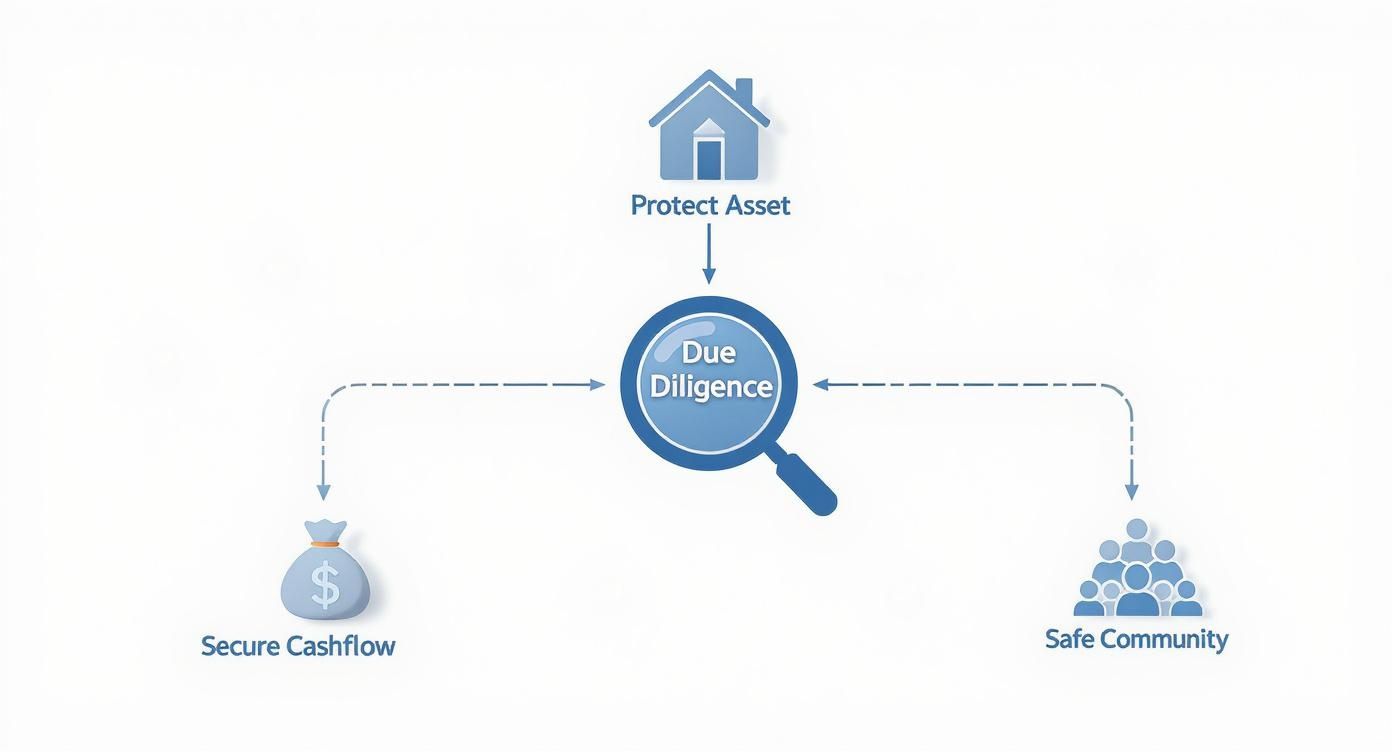
As you can see, the information from a good screening report is all about protecting your investment, keeping your cash flow steady, and making sure your property is a safe place for everyone.
To truly understand what you're looking at, it's helpful to break down the report into its core parts. Each piece tells a different part of the applicant's story.
Breaking Down the Tenant Screening Report
This table gives you a clear look at the main components of a standard tenant background check and what each one really means for you as a landlord.
Report Component | What It Reveals About an Applicant | Key Red Flags to Watch For |
|---|---|---|
Credit History & Score | Their track record of financial responsibility and ability to manage debt. | A pattern of late payments, high credit card balances, or accounts in collections (especially from past landlords or utilities). |
Criminal Record | Past behaviors that might indicate a risk to the property or other tenants. | Recent convictions related to violence, property damage, or financial crimes. |
Eviction History | Their history of fulfilling lease obligations and leaving properties on good terms. | Any completed evictions, especially recent ones, or multiple filings from different landlords. |
Income Verification | Confirmation that they have a stable and sufficient income to consistently afford the rent. | Inconsistent income, unverifiable employment, or a debt-to-income ratio that leaves no room for rent. |
By looking at how these pieces fit together, you move from just collecting data to making a genuinely well-informed decision.
Decoding the Credit History
An applicant's credit report is often the most telling chapter in their financial story. But you have to look past the three-digit score. It’s the patterns behind the number that matter most. For instance, a one-time hit from an unexpected medical emergency is a world away from a consistent habit of late payments on credit cards and car loans.
Keep an eye out for these key indicators:
Payment History: Are their payments generally on time? A couple of isolated late payments from years ago aren't nearly as concerning as recent and recurring delinquencies.
Debt-to-Income Ratio: While it’s not always spelled out, a high amount of debt compared to their stated income can be a signal of financial stress. If they're overleveraged, affording rent can quickly become a struggle.
Accounts in Collections: This is a big one. Unpaid bills that have been sent to collections, especially for utilities or a previous rental, are a significant red flag that you can't ignore.
A low credit score shouldn't be an automatic "no." Instead, see it as a prompt to dig a little deeper and look for context in the rest of their application.
Understanding Criminal and Eviction Records
The criminal and eviction history sections give you a window into an applicant's past behavior and their reliability as a tenant. But context is everything here. It’s crucial to assess these records thoughtfully and legally, especially since some screening tools can spit out outdated or even misleading information.
The Consumer Financial Protection Bureau has pointed out that tenant background checks can sometimes contain inaccurate or misleading details. Your job is to focus on information that is recent, relevant, and directly pertains to the safety of your property and other tenants.
When it comes to criminal records, you should be looking for convictions that could genuinely pose a risk—things like property damage, violence, or financial fraud. An old, minor offense probably has no bearing on their ability to be a great tenant today.
Likewise, an eviction filing is not the same thing as a completed eviction. The applicant might have a perfectly reasonable explanation, like a dispute with a former landlord that was ultimately resolved. Think of these records as the start of your evaluation, not the final word. By analyzing each piece of the report, you can see past the raw numbers and make a decision you feel confident about.
Staying Compliant with Screening Laws
Using professional background check services for tenants gives you a massive advantage, but it also comes with some serious legal responsibilities. Think of it like driving a high-performance car—you've got a lot of power under the hood, but you absolutely have to follow the rules of the road to keep everyone safe.
When it comes to tenant screening, the two main "rulebooks" you need to know are the Fair Housing Act (FHA) and the Fair Credit Reporting Act (FCRA).
The secret to navigating these laws isn't about becoming a lawyer overnight. It’s all about creating a fair, consistent, and well-documented screening process. Consistency is your single best defense against claims of discrimination. If you apply the exact same criteria to every applicant, every single time, you build a process that's both ethical and legally sound. This standardized system is the bedrock of compliance.
Understanding the Fair Housing Act
The Fair Housing Act (FHA) is the big one. This federal law is designed to stop discrimination in housing, ensuring everyone gets a fair shot at finding a place to live.
As a landlord, this means you are legally prohibited from making a rental decision based on an applicant's:
Race or color
Religion
National origin
Sex (this includes gender identity and sexual orientation)
Familial status (like having children)
Disability
This protection applies directly to how you screen tenants. To stay on the right side of the law, you have to steer clear of any practice that could be seen as discriminatory, even if you don't mean for it to be. Watch out for things like setting different credit score requirements for different people or using advertising language like "perfect for young professionals," which could discourage families with kids. The key is to decide on your rental criteria before you even start marketing the property and then apply those rules equally to everyone who walks through the door.
Following the Fair Credit Reporting Act
If the FHA is about what you can consider, the Fair Credit Reporting Act (FCRA) is about how you handle the information you get. This law governs the use of consumer reports—and yes, that includes the credit reports, criminal histories, and eviction records you get from a screening service.
When you use a third-party company to run these checks, the FCRA puts specific duties on your shoulders.
It's also worth noting that application fees are a big part of this process. In the U.S., a staggering 68% of renters pay application fees, which landlords use to cover these screening costs. As new regulations pop up to protect renters, it's crucial to know your local laws, as many now limit these fees. You can dig deeper into the latest background check statistics and trends at DataProt.
Under the FCRA, there are two non-negotiable steps you must take:
Get Written Consent: Before you run any kind of background check, you must have clear, written permission from the applicant. No exceptions.
Provide an Adverse Action Notice: If you decide to reject an applicant because of something in their report, you are required to formally notify them. This "adverse action" notice must tell them which screening company you used and explain their right to see the report and dispute any inaccuracies.
Skipping these steps can land you in serious legal hot water. A well-documented process isn't just about protecting yourself; it's about treating applicants with transparency and respect. That simple fairness goes a long way in preventing small misunderstandings from turning into major legal headaches. For more tips, check out our article on how to approach landlord-tenant dispute resolution.
How to Choose the Right Screening Service
With so many background check services for tenants out there, picking the right one can feel overwhelming. But this isn't a decision to take lightly—the quality of the service you choose directly shapes the quality of the tenants you place. Think of it like hiring a detective; you need someone who not only finds the facts but presents them clearly so you can make a sound judgment.
The first thing to look at is where they get their information. Some basic services might only pull from a single credit bureau, giving you just one piece of a much larger puzzle. The best, most reliable services cast a much wider net. They combine data from all three major credit bureaus (Equifax, Experian, and TransUnion) and cross-reference it with national criminal and eviction databases. This comprehensive approach is your best bet for catching any red flags you might otherwise miss.
Evaluate Report Clarity and Usability
Once you know a service is pulling from the right sources, the next question is: can you actually understand what it's telling you? A great screening service knows how to turn a mountain of raw data into a report that’s actually easy to read and use. A jumbled report full of industry jargon and cryptic codes is worse than useless—it can lead you to make the wrong call.
Here’s what a user-friendly report should have:
A Clear Summary: An at-a-glance dashboard that immediately highlights the most critical findings.
Logical Organization: Information should be broken down into clean, clearly labeled sections for credit, criminal history, and past evictions.
Actionable Insights: The report shouldn't just dump data on you. It should flag potential concerns and explain what they mean, guiding you toward an informed decision.
An intuitive report saves you time, but more importantly, it helps you assess every applicant fairly and accurately.
Compare Pricing Models
Tenant screening services generally fall into two pricing camps. The best fit for you really just depends on the size of your rental portfolio.
Pay-Per-Report: This is perfect for landlords with just a few properties. You pay a one-time fee whenever you need to screen someone. It's simple, straightforward, and you won't have any recurring fees to worry about when your units are occupied.
Subscription Model: If you manage a larger portfolio and find yourself screening applicants regularly, a monthly or annual subscription is almost always more cost-effective. These plans usually offer a certain number of reports or even unlimited screenings for a flat rate.
Technology has made this entire process faster and more transparent than ever. The online background check software market in North America was valued at USD 1,500 million in 2024, and it's on a serious growth trajectory, thanks in large part to these smarter platforms. You can dig deeper into this Proptech trend over at DataHorizzon Research.
Verify FCRA Compliance
This last point is the most important one. It's a deal-breaker. The service you choose must be fully compliant with the Fair Credit Reporting Act (FCRA). Companies that provide these reports are known as consumer reporting agencies (CRAs), and they have to follow strict federal rules.
The Consumer Financial Protection Bureau offers guidance on what defines a CRA.

As the screenshot suggests, a compliant service will have built-in processes for getting an applicant's consent and a clear system for letting them dispute any inaccurate information found in their report.
A service that is FCRA-compliant is more than just a data provider; they are a partner in helping you meet your legal obligations. They will have built-in workflows for consent and adverse action notices, protecting both you and the applicant.
Sticking with a compliant provider is your number one defense against legal headaches down the road. To see how these factors stack up with real-world providers, take a look at our guide on the 12 best tenant screening services for landlords in 2025.
Building Your Tenant Screening Process
A rock-solid tenant screening process isn't something you figure out on the fly. It's a system—a consistent, step-by-step method you apply to every single applicant, every single time. Weaving professional background check services for tenants into this workflow is what takes screening from a gut feeling to a smart business decision. This system is your single best defense for making fair, consistent, and legally sound choices.
The whole thing actually kicks off well before you even get a report. It starts the moment you create a standardized rental application. This form needs to clearly spell out your screening criteria while gathering all the necessary information and, crucially, the applicant's consent. This one document sets the stage, manages expectations, and gives you everything you need to move forward.
Initiating and Interpreting the Background Check
Once you have that completed application in hand, consent signed, you're ready to start the screening. Good services make this part a breeze, often letting the applicant securely enter their own details directly. This is great because it keeps their sensitive data safe and really speeds things up—most reports come back in just a few minutes or hours.

When the report lands in your inbox, your job is to review it objectively against the rental criteria you already established. This is where the rubber meets the road. Having those criteria written down—things like a minimum credit score, a specific income-to-rent ratio, and clear rules on relevant criminal history—is what keeps emotion and unconscious bias out of the picture.
It's all about the system. You aren't hunting for a "perfect" person. You're simply looking for an applicant who meets the specific, non-discriminatory standards you've set for your property. Sticking to this process every time is your best protection against Fair Housing complaints.
Sometimes, the standard check isn't quite enough. You might occasionally need extra verification as part of your process. For example, in certain situations, you may need to obtain a notarized letter for an apartment to confirm specific details. If you think you might need something like this, be sure to mention it in your initial application materials to keep everything transparent.
Communicating Your Final Decision
After you’ve sized up the screening report against your checklist, you’ll have your decision. The final, and arguably most important, step is communicating that decision in a professional and legally compliant way.
You'll generally land on one of three outcomes:
Approval: This is the easy one. The applicant checks all your boxes, and you can offer them the lease.
Conditional Approval: Maybe the applicant is a solid choice but falls just short on one metric, like a credit score that's a few points shy. You could approve them with a condition, like a larger security deposit (if your local laws allow) or requiring a co-signer.
Denial: If you turn down an applicant because of something in their screening report, the FCRA legally requires you to send an adverse action notice. This is a formal letter that tells them they were denied, names the screening company you used, and informs them of their right to see the report and dispute any errors.
By sticking to this framework, you build a process that’s not only fair and repeatable but also protects your investment while treating every single applicant with respect.
Got Questions About Tenant Background Checks? We've Got Answers.
Even when you have a solid system in place, running background checks on tenants always seems to bring up a few questions. From timing to tricky situations, most landlords run into the same uncertainties. Getting these common questions cleared up will give you the confidence to handle your screening process like a pro—fairly and smoothly.
Let's dive into the most frequent questions we hear and get you some straightforward answers.
How Long Does a Tenant Background Check Take?
Gone are the days of waiting around for days on end for critical information. One of the best things about modern screening services is their speed.
Most online platforms can turn around results almost instantly. You can typically get the credit report and a nationwide eviction history search back within minutes of the applicant hitting "submit." The criminal background check might take a bit longer, anywhere from a few hours to a couple of business days. This slight delay usually happens if a manual records search at a specific county courthouse is needed. The exact timing really just depends on the service you use and how deep they're digging.
Can I Run a Background Check Without the Applicant's Permission?
This one is an absolute, non-negotiable no. You must have clear, written consent from the applicant before you run any kind of background check. It's a cornerstone of the Fair Credit Reporting Act (FCRA), and there are no shortcuts.
Trying to run a check without permission isn't just a bad idea; it's illegal and can land you in serious legal and financial trouble. The good news is that any reputable tenant screening service builds the consent form right into their process. The applicant has to electronically sign off on the authorization before the screening can even start, keeping you compliant from the get-go.
What if a Great Applicant Has a Low Credit Score?
A low credit score can feel like a red flag, but it shouldn't be an automatic "no." Think of it as a signal to dig a little deeper and understand the story behind the number.
A credit report tells a story. A long history of missed rent or late utility payments is a much bigger deal than debt from a one-time medical emergency or old student loans. What if the applicant has a stable job with verifiable income that easily covers the rent? What if their previous landlord gives them a glowing reference? In that case, their financial situation is probably much stronger than the three-digit score suggests.
A credit score is a single data point, not the whole story. You have to look at it alongside income, job stability, and rental history to get a complete, fair picture of an applicant's financial reliability.
For these applicants, you could consider a conditional approval. You might ask for a co-signer to guarantee the lease or request a slightly larger security deposit to offset the risk. Just make sure you check your local and state laws first to see what's allowed.
Who Usually Pays for the Background Check?
In the vast majority of rental markets, the prospective tenant covers the cost of the background check. The fee is typically rolled into a non-refundable application fee.
This has become standard practice, and most screening services are set up for this "applicant-pays" model. The tenant simply pays the screening company directly through a secure portal when they fill out their application. It's simple and keeps things clean.
However, you absolutely need to know the rules in your specific area. Some cities and states have put caps on application fees or have strict rules about how you can use that money. A quick check of your local regulations will ensure your fee structure is totally above board.
At Keshman Property Management, we meticulously handle every detail of the tenant screening process. We make sure you land reliable tenants while staying 100% compliant with all regulations. With two decades of experience, we know exactly how to protect your investment. Learn more about our comprehensive property management services today!


Comments