
Rental Property Condition Checklist: 2025 Essentials
- Sarah Porter

- Nov 6, 2025
- 19 min read
Updated: Nov 9, 2025
Owning a rental property is a significant investment, but its long-term profitability hinges on meticulous maintenance and documentation. A comprehensive rental property condition checklist is not just a form to fill out; it's a strategic tool for asset protection, risk mitigation, and tenant satisfaction. For landlords, a detailed inspection process prevents disputes over security deposits, identifies maintenance needs before they become costly emergencies, and ensures the property remains safe and habitable for tenants.
This systematic approach transforms property management from a reactive, problem-solving task into a proactive, value-preserving strategy. By thoroughly documenting the state of your property before, during, and after a tenancy, you create an indisputable record that protects your financial interests and fosters a transparent, professional relationship with your tenants. It's the ultimate defense against "he said, she said" arguments regarding property damage versus normal wear and tear.
This guide breaks down the eight most critical inspection areas, providing a systematic approach that leaves no stone unturned. From the roof and gutters to the foundation's integrity, and covering essential systems like plumbing, electrical, and HVAC, you'll gain actionable insights for a complete evaluation. We will also cover the finer details, including the condition of interior walls, ceilings, paint, doors, windows, locks, and flooring. Mastering this checklist will empower you to manage your property proactively, safeguarding your valuable asset for years to come.
1. Roof and Gutters
The roof and gutter system is the first line of defense for your rental property, shielding it from the elements and preventing water intrusion. A compromised roof can lead to catastrophic, expensive damage that extends from the attic to the foundation, making its regular inspection a non-negotiable part of any comprehensive rental property condition checklist. This check involves a thorough assessment of all roofing components to catch minor issues before they escalate into major structural failures.
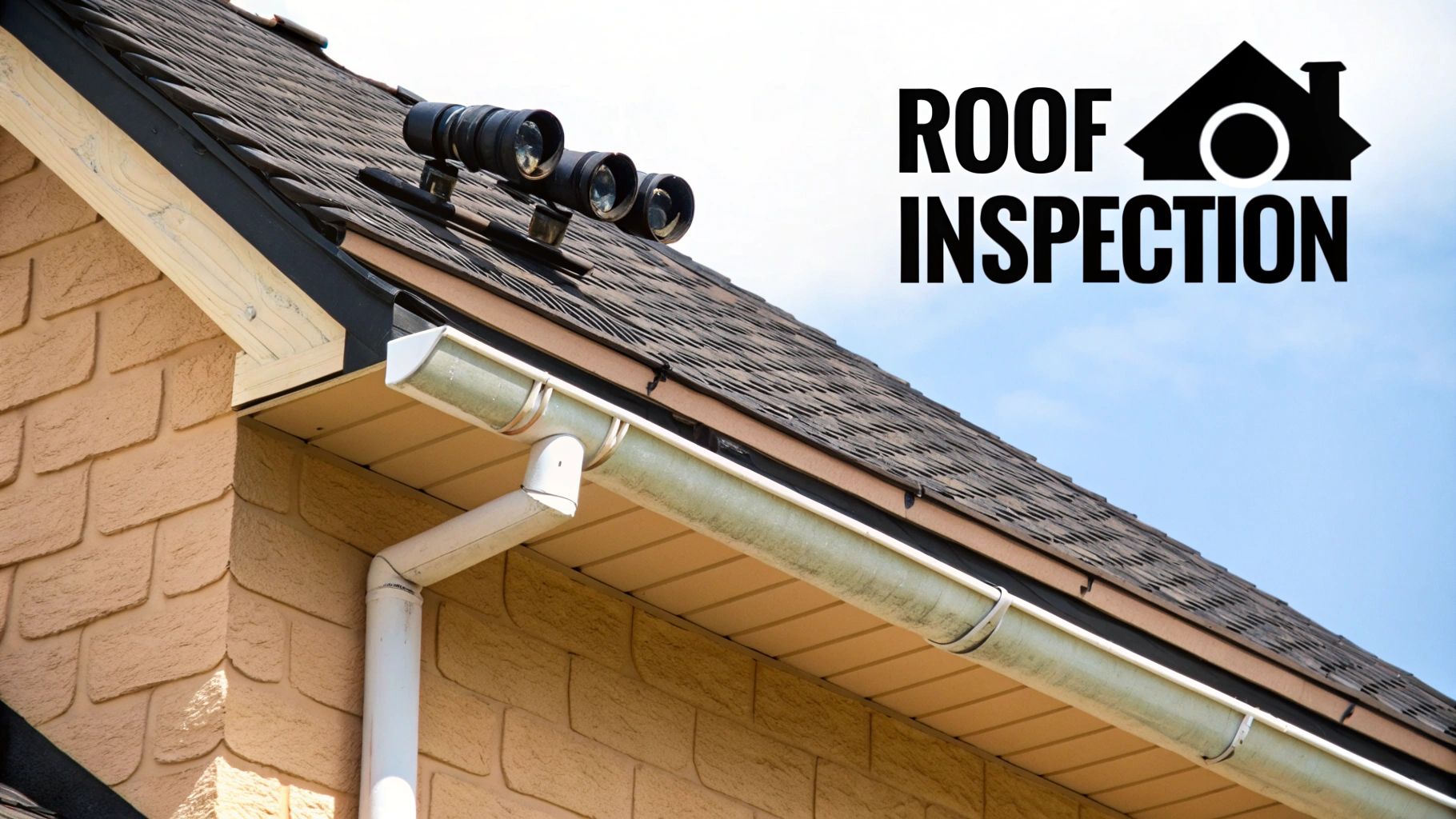
A proper evaluation goes beyond a quick glance. It means documenting the condition of shingles, tiles, or flat roofing material, checking flashing around chimneys and vents, and ensuring gutters and downspouts are clear and securely attached. Even small signs of wear can indicate bigger problems. When inspecting the roof and gutters, pay close attention to the 7 critical signs of roof damage that could indicate underlying issues.
Implementation in Practice
Effective roof management involves proactive, documented inspections, especially during tenant turnovers and after significant weather events.
Example 1: A property manager in a stormy region conducts a post-hailstorm inspection from the ground using binoculars. They spot several cracked and missing shingles, photograph the damage for insurance purposes, and schedule an immediate repair, preventing a future attic leak that could have damaged the ceiling of the master bedroom.
Example 2: During a routine annual inspection, a landlord notices the gutters are clogged with leaves and debris, causing water to spill over the sides near the foundation. They document this with photos, have the gutters professionally cleaned, and add "Gutter Cleaning" to their biannual maintenance schedule to prevent foundation damage.
Key Insight: Documenting the roof's age and all repairs creates a historical record. This timeline is invaluable for forecasting replacement needs, budgeting for capital expenditures, and providing evidence of diligent maintenance.
Actionable Inspection Tips
To incorporate this into your process without compromising safety or thoroughness, follow these best practices:
Safety First: Use high-resolution binoculars or a camera with a zoom lens to perform a detailed inspection from the ground. This minimizes the significant safety risks associated with walking on a roof.
Drone Technology: For multi-story properties or roofs with complex angles, consider using a drone. It provides a safe, detailed, and comprehensive view of the entire roof surface, flashing, and gutters.
Check the Interior: Look for signs of water stains, mold, or discoloration on ceilings and in the attic. These are often the first interior indicators of a roofing problem.
Systematic Documentation: Create a specific section in your inspection form for the roof, noting the material type, estimated age, and condition of each component (shingles, flashing, vents, gutters, downspouts). You can learn more about building a complete inspection form in this essential checklist for a rental home inspection.
2. Foundation and Structural Integrity
The foundation is the literal base upon which your entire rental property rests, making its stability paramount for safety, value, and long-term viability. A compromised foundation can lead to a cascade of expensive and dangerous structural failures, from uneven floors and cracked walls to major safety hazards. Regularly including a foundation check in your rental property condition checklist is crucial for identifying early warning signs like cracks, settling, or water damage before they threaten the building's core.
A thorough assessment means more than a casual walk-around. It involves a detailed inspection of both the exterior foundation walls and interior spaces like basements or crawl spaces. Documenting the size, direction, and location of any cracks is essential, as different types of cracks can indicate different problems, from normal settling to severe structural stress caused by hydrostatic pressure or soil movement.
Implementation in Practice
Proactive monitoring and documentation are key to managing foundation health, especially during tenant turnovers or after periods of extreme weather like droughts or heavy rains.
Example 1: During a move-out inspection, a property manager notices a new horizontal crack in the basement wall. Recognizing this as a potential sign of external water pressure, they photograph it, measure its width, and schedule an inspection with a structural engineer, who recommends improving the exterior grading and sealing the wall to prevent further damage.
Example 2: An owner of a 50-year-old duplex documents minor vertical hairline cracks in the foundation as part of their annual inspection. They create a "crack map" with dated photos and measurements to monitor for any changes, providing a clear history of the foundation's condition for future reference and insurance purposes.
Key Insight: Consistent, dated documentation of the foundation's condition creates an objective baseline. This record is invaluable for distinguishing between normal, long-term settling and new, developing issues that require immediate professional intervention.
Actionable Inspection Tips
To effectively integrate foundation checks into your process, focus on detailed and consistent observation:
Document All Cracks: Use a ruler and camera to document every crack. Note its location, length, width, and direction (vertical, horizontal, or stairstep).
Monitor Over Time: Place "crack monitors" over significant cracks or simply use dated photographs to track any changes between inspections. Growth in a crack is a clear red flag.
Inspect for Water: In basements and crawl spaces, look for water stains, efflorescence (a white, powdery residue), mold, or dampness, which all point to moisture intrusion issues.
Check the Grading: Walk the property's perimeter to ensure the ground slopes away from the foundation. Improper grading is a leading cause of foundation water problems.
Know When to Call a Pro: While you can monitor minor issues, significant or changing cracks warrant professional assessment. Understanding when to get help is detailed in this guide on hiring a rental property inspector.
3. Plumbing System and Fixtures
The plumbing system is the circulatory system of a rental property, essential for daily functionality and tenant satisfaction. A single undetected leak or failing fixture can lead to thousands of dollars in water damage, mold remediation, and tenant disputes. A proactive inspection of the entire plumbing network is a critical component of any rental property condition checklist, aimed at identifying potential failures before they flood your investment and your budget. This evaluation covers everything from pipe materials to fixture performance.
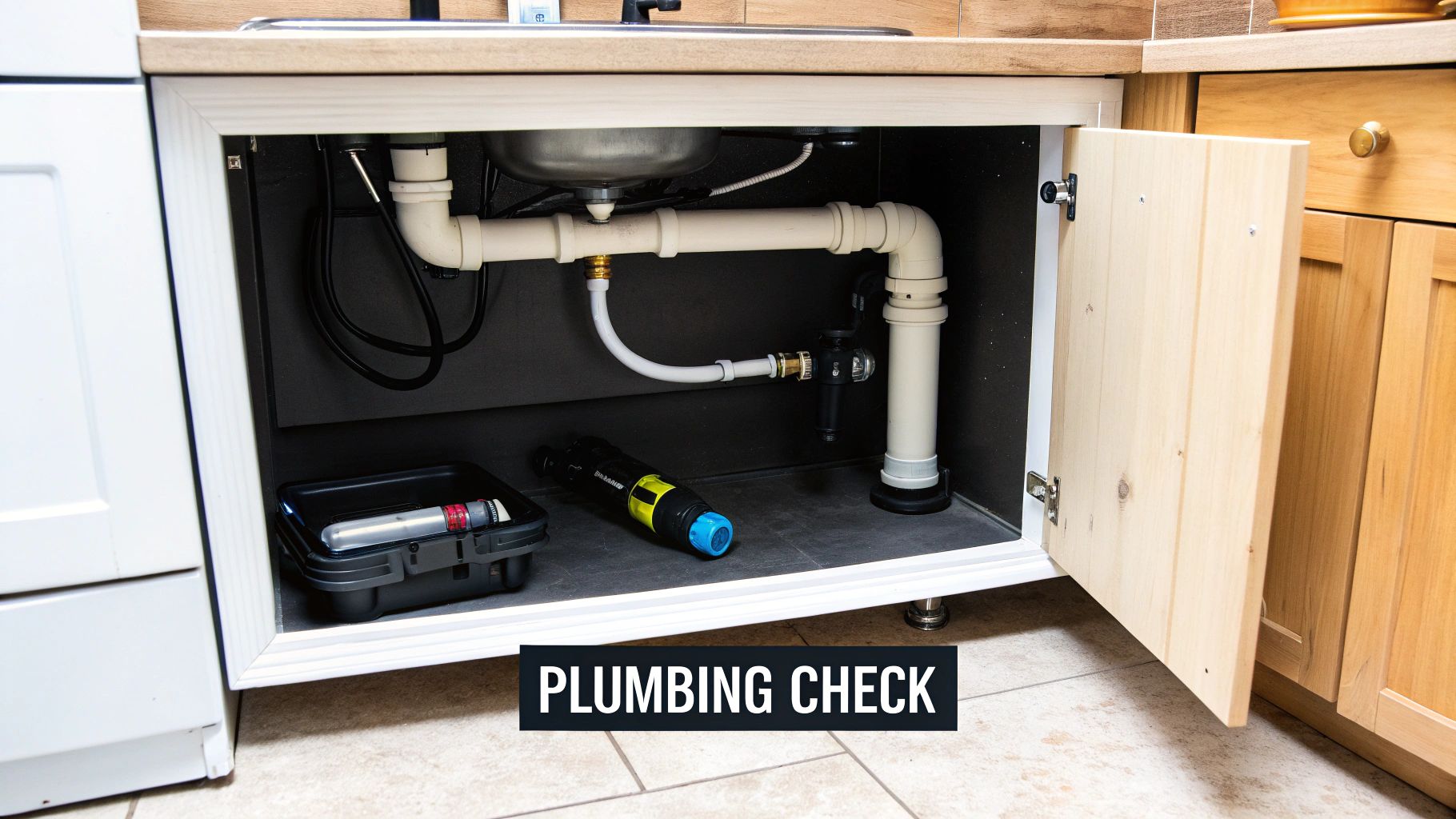
A comprehensive plumbing check involves more than just turning on a faucet. It requires documenting water pressure, drain speed, fixture functionality, and visible pipe conditions. You must also note the age and status of the water heater. Identifying issues like corroded pipes or slow drains early on can prevent emergency calls and protect the property’s structural integrity. This meticulous approach turns reactive repairs into proactive maintenance.
Implementation in Practice
Effective plumbing management means conducting detailed, hands-on tests and keeping meticulous records, especially during tenant turnovers and annual inspections.
Example 1: A property manager inspecting a house built in 1965 notices widespread galvanized steel pipes under the home. Recognizing these pipes are nearing their end of life and are prone to corrosion, they budget for a proactive repiping project, preventing an inevitable burst pipe and massive water damage claim.
Example 2: During a move-in inspection, a landlord tests all the drains and finds the master bathroom sink drains very slowly. They document this with a video, hire a plumber to clear a significant clog, and provide the new tenant with a fully functional plumbing system, preventing a future emergency maintenance request.
Key Insight: A detailed plumbing log, including the age of the water heater and a map of shut-off valves, is a powerful tool. It helps you anticipate major expenses and empowers tenants to mitigate damage quickly in an emergency.
Actionable Inspection Tips
Integrate these steps into your inspection process to build a complete picture of your property's plumbing health:
Test Every Fixture: Systematically run all faucets (hot and cold), flush every toilet, and test all showers and tubs. Note the water pressure and how quickly each one drains.
Look for Leaks: Use a flashlight to check under every sink and around the base of every toilet. Look for active drips, water stains, mold, or corrosion on the supply lines and drain pipes.
Document the Water Heater: Record the water heater's age, capacity, and last maintenance date. Check for any signs of rust or leaking around the base of the unit.
Check Water Pressure: Use an inexpensive water pressure gauge (available at any hardware store) on an exterior spigot to test the home's static pressure. Ideal pressure is typically between 40-60 PSI.
Simultaneous Use Test: Turn on multiple fixtures at once, such as a shower and a kitchen sink, to see if there is a significant drop in pressure, which could indicate undersized or clogged pipes.
4. Electrical System and Safety
A safe and functional electrical system is a non-negotiable cornerstone of a habitable rental property, essential for tenant safety and legal compliance. Faulty wiring, outdated panels, and improper grounding are significant fire and electrocution hazards. A comprehensive evaluation of the electrical system is a critical component of any rental property condition checklist, ensuring all components meet current safety standards and are in good working order.
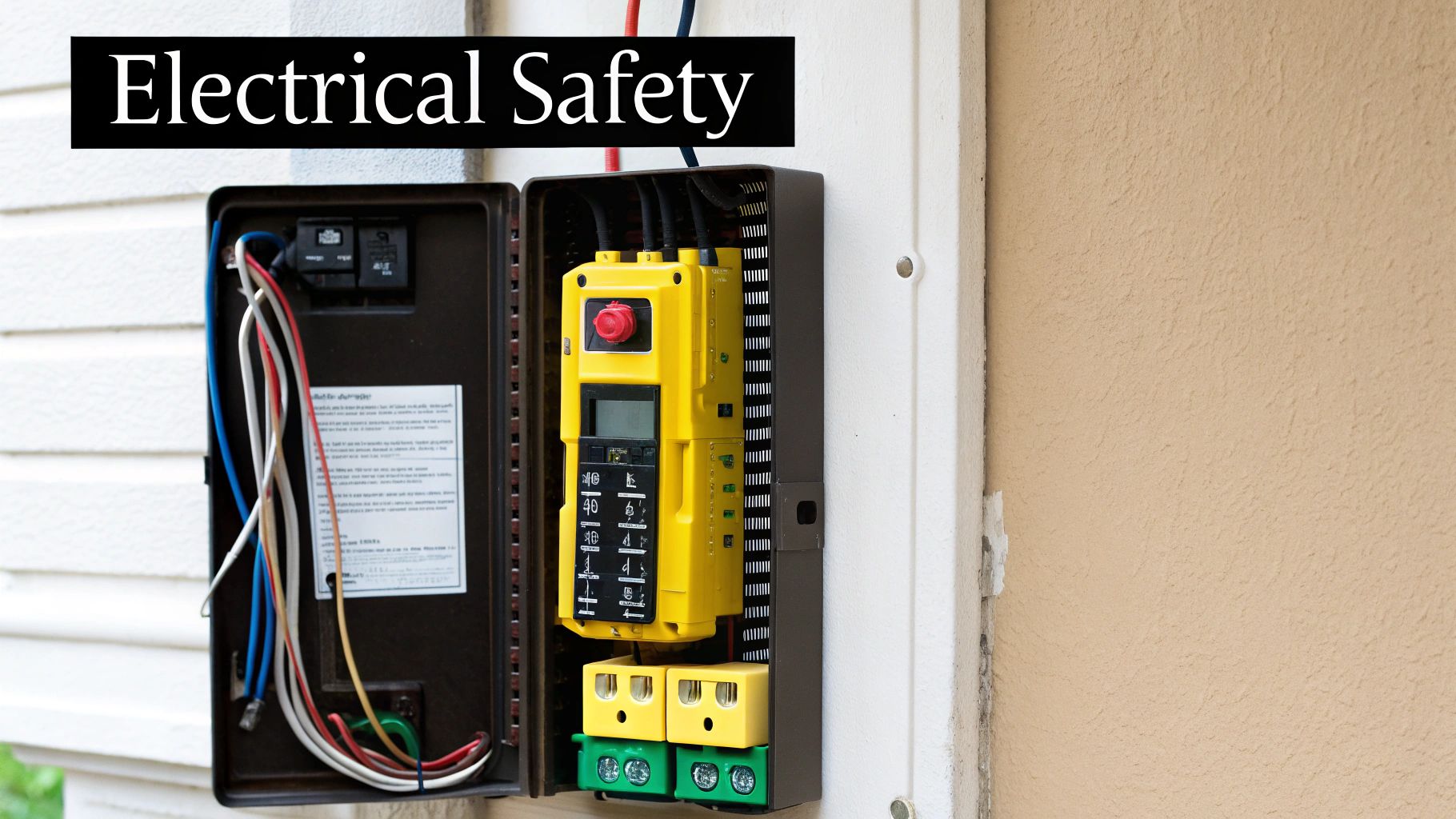
A proper inspection moves beyond simply flipping switches. It involves verifying the condition of the electrical panel, testing outlets for correct polarity and grounding, ensuring GFCI (Ground Fault Circuit Interrupter) outlets are installed in required areas like kitchens and bathrooms, and identifying any visible hazards such as frayed wires or overloaded circuits. Documenting the system's state protects both the landlord from liability and the tenant from harm.
Implementation in Practice
Proactive electrical assessments, especially for older properties or during tenant turnovers, can prevent dangerous and costly emergencies.
Example 1: A property manager inspecting a vacant unit notes the absence of GFCI outlets in the bathrooms. Recognizing the safety risk and code violation, they immediately hire an electrician to install them, documenting the upgrade with dated invoices and photos for the property file.
Example 2: A landlord purchasing a 1970s property discovers an outdated 60-amp electrical panel that is insufficient for modern tenant needs. They proactively schedule an upgrade to a 200-amp service, preventing future issues with tripped breakers and creating a safer, more marketable property.
Example 3: During a detailed inspection, an investor identifies active knob-and-tube wiring, a known fire hazard that can complicate obtaining insurance. They document this finding and incorporate the cost of a complete rewire into their renovation budget and long-term capital improvement plan.
Key Insight: The age and capacity of the electrical panel are crucial data points. Documenting this information helps forecast the need for major upgrades and provides a clear picture of the property's ability to safely handle modern electrical loads.
Actionable Inspection Tips
Integrate these steps into your inspection process to thoroughly and safely evaluate the electrical system:
Professional Assessment: For a comprehensive evaluation, especially in older homes, hire a licensed electrician. Their expertise is invaluable for identifying hidden issues that are not visible to the untrained eye.
Test Every Outlet: Use a simple and inexpensive outlet tester to check every outlet in the property. It will instantly tell you if the outlet is properly grounded and wired correctly.
Verify GFCI Functionality: Locate GFCI outlets (typically in kitchens, bathrooms, garages, and outdoor areas) and press the "TEST" button to ensure they trip, then "RESET" to confirm they work.
Systematic Documentation: In your checklist, create fields for the panel's brand, amperage, and any visible issues. Note the status of each outlet, switch, and light fixture in every room.
Label the Breaker Box: Ensure the circuit breaker panel is clearly and accurately labeled. This is a small detail that is immensely helpful for both you and your tenants during a power issue.
5. HVAC System (Heating, Ventilation, and Air Conditioning)
The HVAC system is the heart of a rental property's livability, providing essential climate control that directly impacts tenant comfort and satisfaction. As one of the most expensive and complex systems to repair or replace, its consistent and thorough evaluation is a cornerstone of any effective rental property condition checklist. A malfunctioning HVAC system can lead to tenant complaints, emergency repair costs, and potential habitability issues, making proactive management crucial.
A comprehensive HVAC assessment goes beyond simply turning the thermostat on and off. It requires documenting the system's type, age, and maintenance history, checking the condition of filters, and verifying full operational functionality. Even minor issues like reduced airflow or strange noises can signal impending failure, which, if caught early, can save thousands in replacement costs.
Implementation in Practice
Integrating professional HVAC checks into your property management routine prevents costly emergencies and extends the life of the equipment.
Example 1: A property manager schedules preventive maintenance with a licensed technician before the peak summer season. The technician cleans the coils and recharges the refrigerant on a struggling AC unit, restoring its efficiency and preventing a system failure during a heatwave.
Example 2: During a move-out inspection, a landlord discovers the furnace is 25 years old and shows signs of rust. They document this, get quotes for a replacement, and proactively budget for a new, more efficient unit, avoiding an emergency call in the middle of winter for the next tenant.
Key Insight: A well-maintained HVAC system not only ensures tenant comfort but also operates more efficiently, potentially lowering utility costs. This can be a significant selling point for attracting and retaining quality tenants.
Actionable Inspection Tips
To properly assess and maintain the HVAC system, incorporate these steps into your inspection and maintenance protocols:
Professional Assessment: Hire a licensed HVAC technician for an annual or semi-annual inspection. They can identify technical issues, clean internal components, and provide a professional condition report.
Document Everything: Record the make, model, and serial numbers of the furnace, air conditioner, and water heater. Note the age of each unit to forecast its end-of-life and plan for replacement.
Filter First: Check the air filter during every inspection and plan to replace it quarterly. A clogged filter is a leading cause of reduced efficiency and system strain.
Operational Test: Regardless of the season, test both the heating and cooling functions during the inspection. Verify that the thermostat is accurate and functioning correctly.
Visual and Auditory Checks: Photograph the outdoor condenser unit to document its condition. Listen for any unusual sounds like rattling, grinding, or squealing when the system is running, as these can indicate mechanical problems. You can explore a detailed guide to handling these and other issues in this overview of rental property maintenance and repairs.
6. Interior Walls, Ceilings, and Paint
The condition of the interior walls and ceilings sets the first impression for a prospective tenant and reflects the overall upkeep of the home. These surfaces are more than just cosmetic; they can reveal hidden problems like leaks, structural shifts, or pest infestations. A meticulous evaluation of paint, drywall, and ceilings is a crucial component of any rental property condition checklist, as it protects property value and ensures a safe, appealing living environment.
A thorough assessment involves more than just looking for scuffs. It requires documenting the paint's condition, identifying any holes or structural cracks, and carefully checking for signs of water damage or mold, especially in high-moisture areas. Addressing these issues promptly not only improves tenant satisfaction but also prevents minor blemishes from turning into costly, widespread repairs.
Implementation in Practice
Integrating this check into your tenant turnover and periodic inspection process is key to maintaining the property's interior integrity and appeal.
Example 1: During a move-out inspection, a landlord notices a fresh, discolored stain on the ceiling of a second-floor bedroom. Instead of just painting over it, they investigate further and discover a slow leak from an upstairs bathroom fixture. They document the stain with photos, repair the plumbing, and then fix the ceiling, preventing significant water damage and a potential mold outbreak.
Example 2: A property manager schedules a painter for touch-ups between tenancies. Using a pre-documented list of paint codes for each room, the painter efficiently covers scuffs and fills nail holes, ensuring a fresh, consistent appearance. This small investment helps the property rent faster and justifies the security deposit deductions for any excessive damage left by the outgoing tenant.
Key Insight: Maintaining a detailed paint log, including brand, color name, and code for each room and surface (walls, trim, ceiling), is a simple practice that saves immense time and money. It ensures seamless, perfectly matched touch-ups and repairs, preserving the property's aesthetic consistency.
Actionable Inspection Tips
To effectively evaluate interior surfaces, use a systematic and detailed approach during every inspection:
Systematic Photography: Take clear, well-lit, and dated photos of every wall and ceiling during move-in and move-out inspections. This creates an undeniable visual record of the property's condition.
Moisture Meter: For suspicious stains, especially on ceilings or near baseboards, use a moisture meter. This tool can definitively tell you if the area is currently damp, differentiating old, resolved issues from active leaks that need immediate attention.
Check High-Risk Areas: Pay extra close attention to ceilings in bathrooms, kitchens, and laundry rooms. Look for peeling paint, bubbling, or dark spots, which are classic signs of poor ventilation or moisture problems.
Detailed Documentation: In your rental property condition checklist, create specific line items for each room. Note any scuffs, holes, cracks, stains, or areas needing a full repaint. Be specific, for example, "Three small nail holes and a 2-inch scuff mark on the wall left of the primary bedroom window."
7. Doors, Windows, and Locks
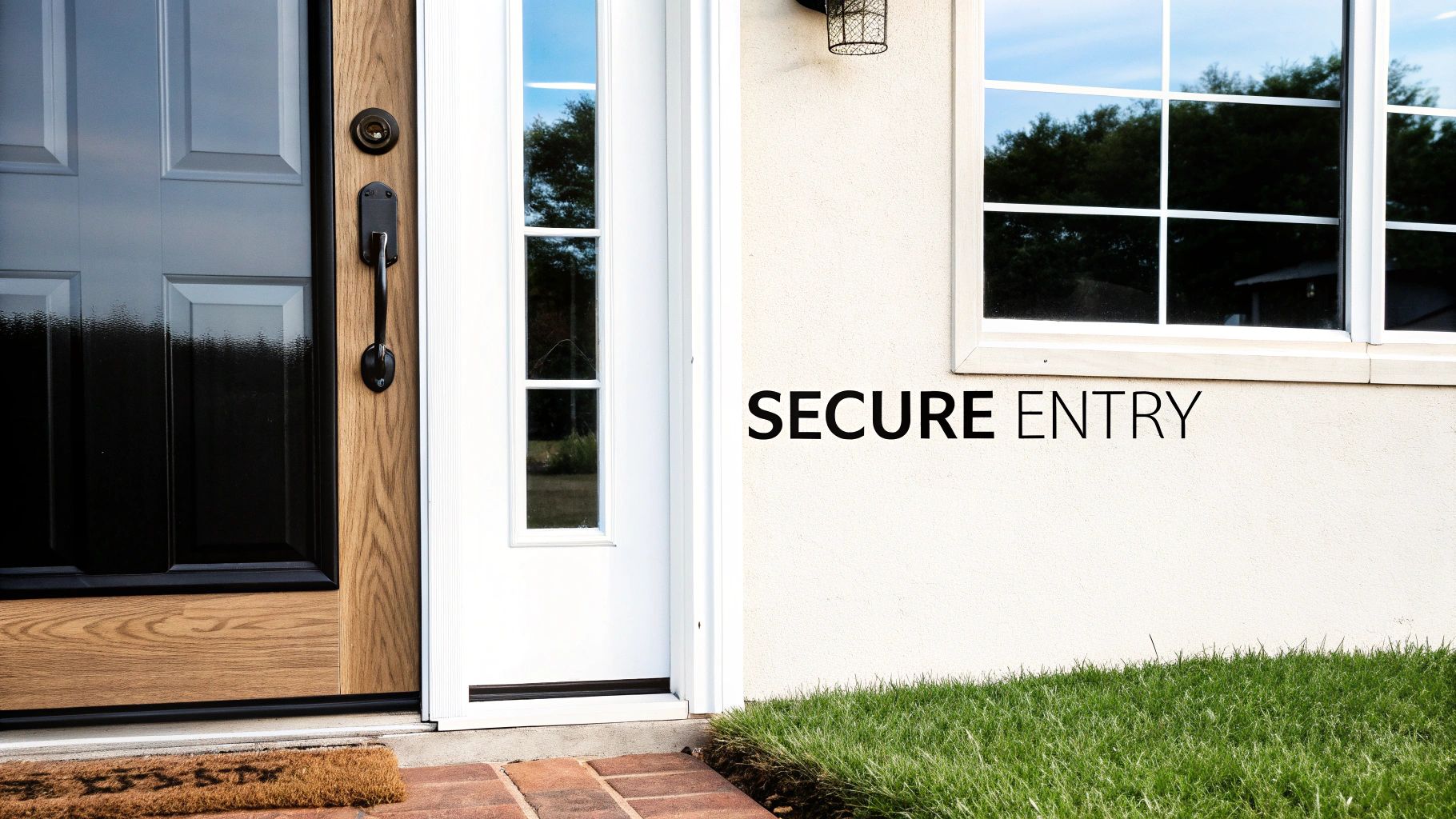
As the primary points of entry and egress, doors, windows, and their associated locks are fundamental to a property's security, energy efficiency, and overall habitability. A thorough check of these components is a vital part of any rental property condition checklist, as failures can lead to security vulnerabilities, higher utility bills, and potential water damage. This inspection involves verifying that every door and window operates correctly, seals tightly, and locks securely.
A comprehensive evaluation moves beyond simply opening and closing a door. It requires documenting the integrity of frames, the condition of weatherstripping, the clarity and security of glass panes, and the smooth function of all locking mechanisms. Minor issues like a sticking window or a loose doorknob can frustrate tenants and may signal larger, underlying problems such as foundation settling or frame rot.
Implementation in Practice
Proactive management of doors, windows, and locks involves scheduled checks, especially during tenant turnovers and seasonal maintenance routines, to ensure they remain functional and secure.
Example 1: A property manager conducting a move-out inspection discovers a sliding glass door is difficult to open and the lock doesn't engage properly. They document this with photos, find the track is full of dirt, and have the rollers cleaned and adjusted, restoring smooth operation and security before the next tenant moves in.
Example 2: During a pre-winter check, a landlord notices a draft coming from the front door. Upon inspection, they find the weatherstripping is compressed and cracked. They replace the stripping, an inexpensive fix that immediately improves the unit's energy efficiency and tenant comfort.
Example 3: A rental company follows a strict policy of rekeying all locks between tenants. This documented process, performed by a professional locksmith, provides new tenants with peace of mind and limits the landlord's liability.
Key Insight: Maintaining a detailed log of all lock changes, key assignments, and window or door repairs is crucial. This record serves as proof of due diligence in providing a secure living environment and helps track the lifespan of these essential components.
Actionable Inspection Tips
To integrate a thorough check of doors, windows, and locks into your rental property condition checklist, apply these best practices:
Test Every Component: Systematically open, close, and lock every single door and window on the property. This includes interior doors, closet doors, and all windows, even those that seem inaccessible.
Inspect Seals and Frames: Check all weatherstripping for gaps, cracks, or brittleness. Look for signs of water stains, rot, or mold on and around door and window frames, as this can indicate a leak.
Check Glass Integrity: Examine all window panes for cracks, chips, or condensation between double panes, which signifies a broken seal and loss of insulating properties.
Document Security Features: In your inspection report, note the type and condition of all locks (e.g., deadbolt, knob lock, keyless entry). Photograph any damaged or non-functional locks to prioritize immediate repair for tenant safety.
8. Flooring and Basement/Crawl Space Condition
The condition of the flooring directly impacts a rental's aesthetic appeal and tenant satisfaction, while the state of the basement or crawl space is fundamental to the property's structural health and air quality. A compromised subfloor area can lead to moisture, mold, and pest issues that affect the entire home, making a combined inspection of these areas a critical part of any rental property condition checklist. This check involves a detailed assessment of all flooring surfaces and the often-overlooked spaces beneath them.
A thorough evaluation requires more than a casual walkthrough. It means documenting the specific type and condition of all flooring, noting any scratches, stains, or significant wear. Simultaneously, inspecting the basement or crawl space for signs of moisture, such as musty odors, water stains, or efflorescence on concrete walls, is crucial to catch problems before they cause widespread damage. For landlords focusing on the longevity and appeal of their rental units, maintaining the flooring is crucial, and it's often beneficial to understand available hardwood floor refinishing services tailored for property managers and realtors.
Implementation in Practice
Effective management of flooring and sub-spaces relies on creating a detailed baseline during tenant turnovers and conducting periodic checks, especially after heavy rains.
Example 1: During a move-out inspection, a property manager references their move-in photos, which clearly show a pristine carpet. They discover new, significant staining and wear patterns not attributable to normal use. They document the new damage with photos, allowing them to justifiably deduct the cost of professional cleaning from the security deposit.
Example 2: A landlord investigating a tenant's complaint of a musty smell enters the crawl space and discovers damp soil and condensation on the ductwork. They photograph the conditions, install a vapor barrier, and seal foundation vents to prevent moisture from entering the living space, heading off a potential mold problem.
Key Insight: A detailed flooring condition report from move-in, complete with photos and notes on existing wear, is your strongest tool for differentiating between normal wear and tear and tenant-caused damage.
Actionable Inspection Tips
To integrate this check into your process effectively, focus on both visible surfaces and the hidden areas beneath the home.
Systematic Walk-Through: Walk every square foot of the property, specifically looking down. Note any soft spots, loose tiles, or squeaky floorboards that could indicate subfloor issues.
Photo Documentation: Take wide shots of each room's flooring and close-ups of any existing imperfections like scratches, chips, or minor stains before a tenant moves in.
Sub-Space Inspection: In basements or crawl spaces, use a flashlight to check for standing water, dampness, and efflorescence (a white, powdery residue) on foundation walls. Note any musty or earthy smells.
Use a Moisture Meter: For a more scientific approach, use a moisture meter on basement walls or subflooring in a crawl space to get a quantitative reading of moisture levels. This provides concrete data for your records.
8-Point Rental Property Condition Comparison
Item | Implementation Complexity (🔄) | Resource Requirements (⚡) | Expected Outcomes (📊) | Ideal Use Cases (💡) | Key Advantages (⭐) |
|---|---|---|---|---|---|
Roof and Gutters | Medium 🔄🔄 — visual + selective specialist access | Moderate ⚡ — ladder/binoculars, drone, roofer for repairs | Prevents water intrusion; protects interiors 📊 ⭐⭐⭐ | Post-storm checks, seasonal maintenance, pre-rainy season | Early leak detection; preserves value; insurance evidence ⭐ |
Foundation and Structural Integrity | High 🔄🔄🔄 — may require engineer assessment | High ⚡ — structural engineer, monitoring tools, costly repairs | Ensures structural safety; prevents progressive failure 📊 ⭐⭐⭐⭐ | Older homes, visible cracks/settling, pre-purchase inspections 💡 | Identifies major safety hazards; required for financing/insurance ⭐ |
Plumbing System and Fixtures | Medium-High 🔄🔄🔄 — functional tests + invasive checks possible | Moderate ⚡ — plumber, pressure gauges, possible pipe replacement | Reduces water damage/mold; improves sanitation 📊 ⭐⭐⭐ | Prevents leaks/emergencies; documents baseline for claims ⭐ | |
Electrical System and Safety | High 🔄🔄🔄 — code checks and live testing by licensed pros | High ⚡ — licensed electrician, testers, possible panel upgrades | Mitigates fire/electrocution risk; ensures code compliance 📊 ⭐⭐⭐⭐ | Older wiring, renovations, insurance/code compliance inspections 💡 | Protects tenant safety; prevents legal/code issues ⭐ |
HVAC System (Heating, Ventilation, AC) | Medium-High 🔄🔄🔄 — operational testing + tech diagnostics | High ⚡ — HVAC technician, filters, refrigerant checks, servicing | Maintains comfort and efficiency; reduces breakdowns 📊 ⭐⭐⭐ | Seasonal tune-ups, aging systems, tenant comfort issues 💡 | Extends lifespan; improves energy efficiency and retention ⭐ |
Interior Walls, Ceilings, and Paint | Low 🔄 — visual inspection and simple testing | Low ⚡ — cosmetic supplies; mold remediation can be costly | Improves appearance; detects moisture issues early 📊 ⭐⭐ | Tenant turnover, staging, routine condition reports 💡 | Low-cost upgrades; early moisture detection; improves appeal ⭐ |
Doors, Windows, and Locks | Low-Medium 🔄🔄 — function and seal checks | Low-Moderate ⚡ — weatherstripping, lock rekeying, window replacement | Enhances security and energy efficiency 📊 ⭐⭐⭐ | Security upgrades, energy-efficiency projects, tenant turnover 💡 | Easy to inspect/repair; immediate security benefits ⭐ |
Flooring and Basement/Crawl Space Condition | Medium 🔄🔄 — surface inspection + moisture testing | Moderate-High ⚡ — moisture meters, vapor barriers, flooring replacement | Prevents mold/structural damage; informs replacement timing 📊 ⭐⭐⭐ | Properties with moisture signs, older basements/crawl spaces 💡 | Identifies moisture sources; informs remediation & budgeting ⭐ |
Turning Your Checklist into Action for a More Profitable Rental
Navigating the extensive details of a rental property inspection can feel overwhelming. From the peak of the roof down to the foundation, and encompassing every system in between, the sheer volume of checkpoints highlights the complexity of diligent property management. We've journeyed through the critical components: the roof and gutters, the structural integrity, the intricacies of the plumbing and electrical systems, the essential functionality of the HVAC, and the aesthetic yet crucial condition of walls, floors, doors, and windows.
This comprehensive rental property condition checklist is more than just a list; it is a strategic blueprint. Its true power isn't unlocked by simply ticking boxes, but by transforming your findings into a concrete, prioritized action plan. Each item, whether it's a minor paint scuff or a significant plumbing leak, represents an opportunity to protect your investment, enhance tenant satisfaction, and ultimately, bolster your profitability.
From Passive Landlord to Proactive Asset Manager
The fundamental shift in mindset is moving from reactive to proactive. A reactive landlord waits for a tenant to report a broken furnace in the middle of winter or a leaking pipe that has already caused water damage. This approach is not only stressful but also significantly more expensive due to emergency repair costs and potential property damage.
In contrast, a proactive asset manager uses the rental property condition checklist to anticipate problems before they escalate. You become the master of your property's lifecycle, scheduling preventative maintenance, budgeting for future capital expenditures, and ensuring every aspect of your investment is performing optimally. This strategic oversight minimizes vacancies, reduces costly surprises, and builds a reputation for quality that attracts and retains high-caliber tenants.
Key Takeaway: A detailed checklist isn't about finding fault; it's about creating a roadmap for preventative maintenance and strategic capital improvements. This foresight is the dividing line between amateur landlording and professional asset management.
Actionable Next Steps: Prioritizing for Impact
With your completed checklist in hand, the next step is to organize and act. Not every issue carries the same weight. Implementing a prioritization framework is essential to using your time and resources effectively.
Urgent Safety Hazards: Anything that poses an immediate risk to your tenants' health or safety must be addressed first. This includes faulty wiring, non-functional smoke detectors, broken locks on exterior doors, or significant structural concerns. These are non-negotiable and demand immediate action.
Critical System Failures: Issues that impact the habitability of the property come next. A non-working HVAC system, a major plumbing blockage, or a significant roof leak fall into this category. Swift repairs prevent further damage and are essential for maintaining a good landlord-tenant relationship.
Preventative Maintenance: This category includes items that, if ignored, will become larger, more expensive problems later. Think small gutter clogs, minor faucet drips, or caulking that is beginning to fail around windows. Addressing these proactively is the most cost-effective way to manage your property.
Cosmetic and Value-Add Improvements: Finally, consider items that enhance the property's appeal and rental value. Fresh paint, updated fixtures, or refinished flooring can increase your ROI and attract better tenants, justifying the investment.
By categorizing your findings this way, you create a clear, manageable plan. This structured approach ensures that your efforts are always focused on the most impactful tasks, protecting both your tenants and your bottom line. Embracing this disciplined application of your rental property condition checklist is the single most effective step you can take toward building a resilient, profitable, and stress-free rental business.
Feeling overwhelmed by the sheer detail required for a thorough inspection and action plan? Let the experts handle it for you. Keshman Property Management utilizes exhaustive checklists and two decades of experience to proactively manage your property, ensuring every detail is addressed to maximize your earnings and protect your asset. Discover the peace of mind that comes with professional management by visiting Keshman Property Management today.


Comments