
Hiring Property Manager: Your Essential Guide

Deciding to hire a property manager is a major step. It’s the moment you choose to shift your real estate from a hands-on, often demanding, business into a more passive investment. This is a strategic move, not just an expense, aimed at boosting your rental income, keeping vacancies low, and sidestepping the legal landmines that can come with being a landlord.
It's a particularly smart play if you're short on time or don't have the deep expertise needed for the day-to-day grind.
So, Is Hiring a Property Manager Really Worth It?
Let's be real for a minute. Managing a property on your own can feel like a second job you can never clock out of. You're the one getting late-night calls about a burst pipe, the one chasing down late rent payments, and the one navigating the tricky process of finding tenants you can actually trust. It's draining. This is precisely where a good property manager proves their worth.
A great manager is more than just a time-saver; they're a strategic partner for your investment. They bring a level of professional know-how that most DIY landlords simply can't match, turning potential catastrophes into well-managed processes. Think back to the last time you had to handle a tough tenant issue. A pro manager knows the local eviction laws cold, making sure you stay compliant and avoid a costly legal blunder.
The True Return on Your Investment
Viewing the manager's fee as just another cost is the wrong way to look at it. It's an investment in the long-term health and profitability of your property. The sheer size of the property management industry backs this up. In the United States alone, the market has ballooned to an estimated $134.2 billion. That number reflects a consistent upward trend, showing just how many owners have decided to rely on professional services. You can explore more data on the industry's steady expansion to see how it's evolving.
This growth points to one simple truth: effective management is a cornerstone of a successful rental property. A skilled manager can actually increase your net income in a few key ways:
Less Downtime: They know how to market your property and screen applicants efficiently, getting qualified tenants in the door faster.
Better Rent Rates: With a deep understanding of the local market, they can set a competitive rent that maximizes your income without scaring away potential tenants.
Smarter Maintenance Spending: They already have a network of trusted, affordable vendors, so you're not getting overcharged every time something breaks.
The right professional isn't just a helper; they are a shield against liability and an engine for growth. They take on the complexities, letting you enjoy the benefits of ownership without all the burdens.
Ultimately, bringing on a property manager is about fundamentally changing your relationship with your investment. It’s how you transition from being a stressed-out, hands-on landlord to a confident, hands-off investor.
Figure Out What You Actually Need in a Manager
Before you even think about looking at candidates, you need to get crystal clear on what you’re hiring someone to do. The title "property manager" is incredibly broad, and if you don't define your own expectations first, you're setting yourself up for a classic case of mismatched goals and a whole lot of frustration down the road.
Are you looking for a true partner to run the entire show, or do you just need a specialist to get a great tenant in the door?
It all boils down to how involved you want to be. An owner living on the other side of the country has completely different requirements than someone who lives a few blocks away and doesn't mind fixing a leaky faucet. You have to be brutally honest with yourself: how much time, energy, and stress are you willing to pour into this property?
This self-assessment is the bedrock of a successful search. It informs every single decision you'll make from here on out.
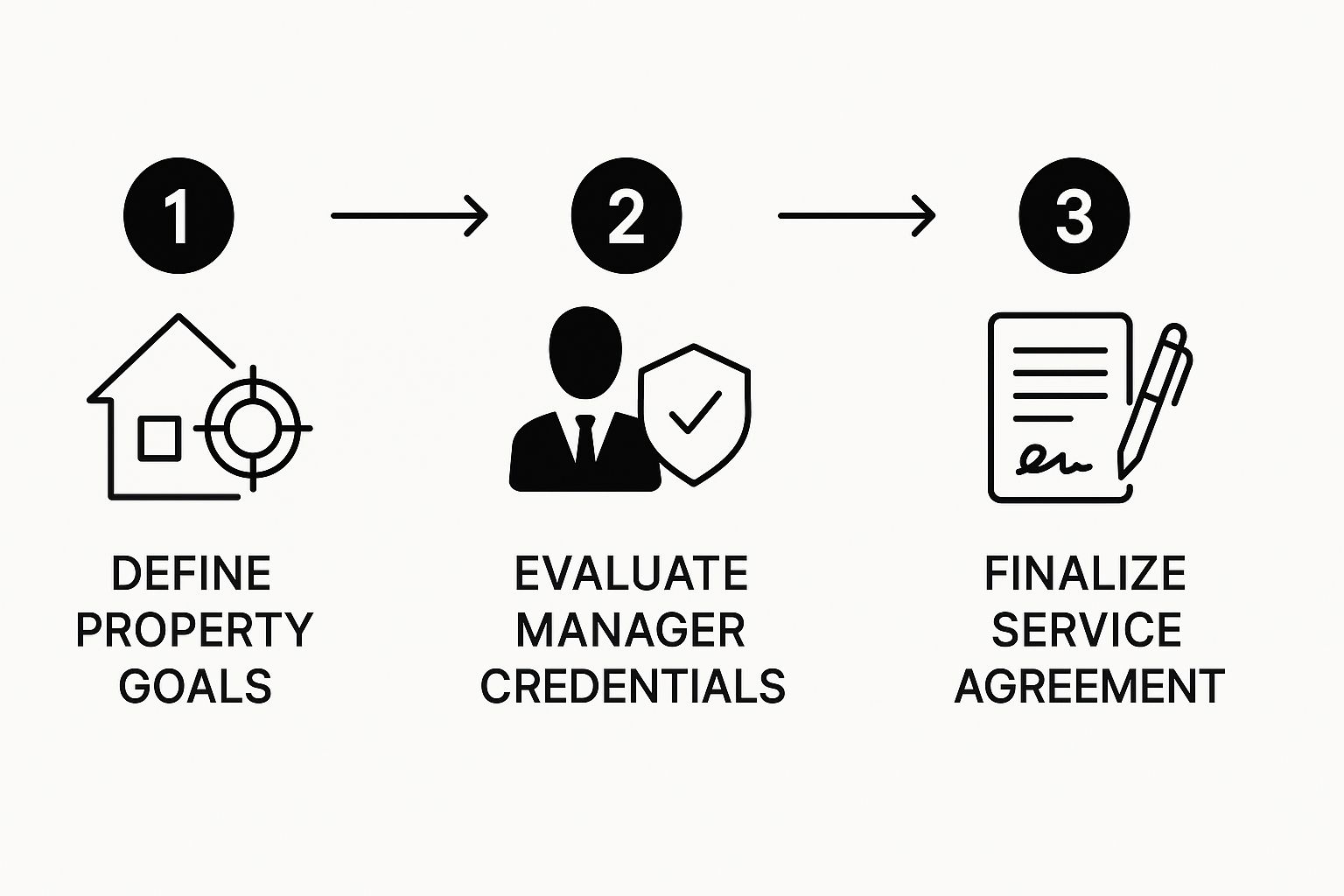
As you can see, figuring out what you need isn't just a step—it's the starting point that shapes the entire hiring journey.
Full-Service Partner or A La Carte Help?
Most property management services fall into a few common buckets. Knowing the difference is critical before you start interviewing people. Generally, you’ll find that most companies offer some variation of these packages.
The table below breaks down what you can typically expect from the most common service levels. This can help you pinpoint which model aligns best with your goals and how much you're willing to delegate.
Property Management Service Levels Comparison
Service Task | Full-Service Management | Lease-Only Service | Custom/Hybrid Service |
|---|---|---|---|
Marketing & Advertising | Included | Included | Can be included |
Tenant Screening | Included | Included | Can be included |
Lease Signing | Included | Included | Usually included |
Rent Collection | Included | No (Owner's job) | Varies by agreement |
Maintenance Coordination | Included | No (Owner's job) | Varies by agreement |
Property Inspections | Included | No (Owner's job) | Varies by agreement |
Financial Reporting | Included | No (Owner's job) | Can be included |
Eviction Handling | Included | No (Owner's job) | Can be included |
As you can see, the differences are significant. Full-service is a completely hands-off experience, while lease-only is for owners who just want help with the initial heavy lifting of finding a tenant. Custom packages can be a great middle ground if you have unique needs.
Defining your management needs isn't just a suggestion—it’s the blueprint for your entire search. Without it, you're evaluating candidates against a vague standard, making it impossible to find the perfect fit for your specific property and goals.
To get more clarity, ask yourself these questions:
How often do I need to hear from my manager? Weekly updates? Monthly reports only?
What's my budget? Can I afford 8-10% of monthly rent for full service, or does a one-time leasing fee make more sense?
Am I truly okay with getting a call about a broken water heater on a Saturday night? Or do I want someone else to handle that?
What level of financial detail do I need? A simple P&L, or itemized receipts for every expense?
Answering these questions gives you a solid "job description" for your ideal manager. This clarity is what turns the overwhelming process of hiring a property manager into a targeted search for a partner who perfectly aligns with your investment strategy.
How to Find and Vet Potential Candidates
Alright, you've mapped out what you need. Now, let's get into the hunt for the right property manager. Finding a truly great one means looking in places beyond a quick Google search. While the internet is a fine starting point, the best people are almost always found through word-of-mouth and trusted industry circles.
Your first stop should be local real estate investor associations (REIAs) and landlord meetups. These groups are absolute goldmines for honest referrals. Fellow investors won't sugarcoat their experiences, and they'll quickly point you toward managers who actually get the job done.

Your real estate agent is another fantastic resource. They're in the trenches every day and have a clear view of who's who in the local property management scene. They’ll know which companies have a rock-solid reputation and which ones to avoid.
Where to Look for Qualified Managers
Once you have a few names from your immediate network, it's time to cast a wider net to build a solid shortlist. You want options so you can compare management styles, communication, and, of course, fee structures.
Industry Directories: Check out websites like the National Association of Residential Property Managers (NARPM). Their directories list certified professionals, which is a good sign that a manager is serious about their craft and adheres to a code of ethics.
Your Professional Circle: Don't forget to ask other professionals you work with. Your real estate attorney, accountant, or even your go-to contractor probably has a few names. They see the operational side of things and know who is organized, responsive, and pays their bills on time.
Online Reviews: Dig into reviews on Google, Yelp, and the Better Business Bureau. The key here is to look for patterns. One disgruntled tenant review might be a fluke, but a dozen complaints about poor communication or unaddressed maintenance is a massive red flag.
The industry is also changing fast, mostly thanks to technology. The best managers are leaning into new tools to become more efficient. For instance, AI adoption among property managers shot up from 21% to 34% in just a single year. They're using tech for everything from tenant screening to coordinating maintenance. You can discover more insights about this technological shift in property management and see why a tech-forward manager can be a huge asset.
The Vetting Process Unpacked
Finding candidates is one thing; vetting them properly is where you protect your investment. This is the due diligence phase, and you absolutely cannot skip it. This is how you weed out the pros from the pretenders.
First, cover the basics. Confirm that they have the required state real estate broker's license. Ask for proof of general liability and errors and omissions insurance. Don't just take their word for it—get copies. Any true professional will have these documents ready and will be happy to share them.
Next, get a look under the hood of their operations. Ask to see a sample owner statement. This is one of the most revealing documents they can provide. It tells you everything about their financial reporting. Is it clean, detailed, and easy to follow? Or is it a confusing jumble of fees and figures?
A convoluted or vague owner statement is often a sign of disorganized bookkeeping or a lack of transparency. The best managers provide reports that give you a crystal-clear snapshot of your property's financial health every month.
Finally, just pay attention to how they communicate with you right now. Are they quick to respond to your emails? Do they answer your questions directly, or do they dance around them? Their behavior during this early stage is a preview of what's to come. If they're slow to get back to you now, imagine how they'll handle a tenant's emergency maintenance request later.
Asking the Right Questions in the Interview
The interview is where you move past the marketing materials and fee sheets to see how a potential manager really operates. Anyone can talk a good game. Your job is to see if they can back it up.
Think of this less like a formal Q&A and more like a strategic conversation. You're not just hiring a rent collector; you're trusting someone with a massive asset. You need to understand how they think, especially when things inevitably go wrong.

Finding the right partner becomes even more critical as your portfolio grows. It’s no surprise that for the seventh year in a row, portfolio growth has been the top priority for property management firms. While the pace might be slowing with market shifts, the focus on scale remains. Discover more insights about property management growth trends to see why finding a manager who can grow with you is a smart move.
Questions That Reveal True Expertise
Let’s get past the softball questions. Generic questions get you generic, rehearsed answers. To gauge true competence, you need to dive into real-world scenarios and see how they think on their feet.
Their answers here will tell you far more than any resume ever could.
"Walk me through your exact process when a tenant stops paying rent on day five of the month." You're listening for a systematic approach that respects local eviction laws. Do they have a clear, step-by-step plan?
"Describe the worst after-hours emergency you've ever handled. What happened, and what did you do?" This is a stress test. You want to hear about their problem-solving skills under pressure, not just a simple fix.
"How do you handle a tenant who is constantly submitting minor, non-emergency maintenance requests?" This shows their ability to manage tenant relationships while protecting your bottom line. It’s a delicate balance.
Evaluating Their Operational Knowledge
A great property manager knows the local laws, market trends, and the technology that makes it all run smoothly. An unprepared candidate will stumble here, but a real pro will have confident, specific answers. You need to be certain they can keep you out of legal hot water and run your property efficiently.
Don't hesitate to ask for detailed examples.
A candidate's ability to provide detailed, real-life examples is a direct reflection of their experience. Vague answers are a significant red flag that they may lack the hands-on expertise you need when hiring a property manager.
To see if they’re operationally fit, try asking these:
"What specific property management software do you use, and what are its best features for an owner like me?" This tells you how tech-savvy they are and if they use tools that offer you transparency and efficiency. I want to see an owner portal and clear financial reporting.
"How do you determine the ideal rental price for a new vacancy, and how often do you re-evaluate it?" Their answer reveals their grasp of the local market and their strategy for maximizing your income, not just filling a unit quickly.
"Can you explain the key points of our local landlord-tenant laws regarding security deposits and property access?" This is non-negotiable. A wrong answer here could cost you thousands in legal fees down the road. They need to know this stuff cold.
You’ve interviewed a handful of candidates and finally found someone who seems like a great fit. It's tempting to breathe a sigh of relief and just sign whatever they put in front of you, but hold on. The most critical part is next: diving into the property management agreement.
Don't just skim it. Seriously, this document is where the rubber meets the road. It lays out every single detail of your relationship, from fees and responsibilities to how you’ll part ways if things go south. A solid, transparent agreement is the bedrock of a good partnership. Let’s break down what you need to look for.

Breaking Down The Common Fee Structures
Property management fees can feel a bit all over the place if you're not used to them. It's not a one-size-fits-all situation, so knowing the common models helps you figure out what you’re actually paying for and avoid any nasty surprises down the line.
Here’s a quick reference guide to get you started on understanding how most property managers charge for their services.
Common Property Management Fee Structures
Fee Type | Typical Cost | What It Covers |
|---|---|---|
Percentage of Monthly Rent | 8% to 12% of collected rent | The day-to-day management of the property: collecting rent, tenant communication, and coordinating minor maintenance. |
Flat-Fee Model | A fixed monthly amount (e.g., $100-$200) | The same core management services, but the cost is predictable and doesn't change with the rent amount. |
A La Carte Services | Varies by service | Specific, one-off tasks. This is common for owners who self-manage but need help with things like tenant placement or evictions. |
This table covers the basics, but it's important to dig deeper. The most common is the percentage model, but a key detail to confirm is whether that percentage is based on rent collected or rent due. You want a manager paid on collected rent—it gives them a powerful incentive to make sure your tenants pay on time.
Watch Out For Hidden Costs And Add-On Fees
The monthly management fee is just the starting point. The real cost is often hidden in the fine print, where a bunch of other fees can pop up. You need to ask about these directly so you’re not caught off guard when you get your first owner statement.
Be on the lookout for things like:
Leasing Fee: A one-time charge for the work of finding and placing a new tenant. This is pretty standard and usually costs between 50% to 100% of the first month's rent.
Lease Renewal Fee: A much smaller fee charged when a good tenant decides to stay. It covers the paperwork for renewing their lease.
Maintenance Markup: Some companies add a surcharge, often around 10%, to vendor invoices. This is their fee for the time and hassle of coordinating repairs.
Setup Fee: A one-time fee to get your property loaded into their management system.
Eviction Fee: If the worst happens, they’ll charge an hourly or flat fee to handle the eviction process.
Always ask for a complete fee schedule before you sign anything. A trustworthy manager won’t hesitate to give you a full breakdown of every single potential charge. Transparency is everything here.
Key Clauses To Negotiate In Your Agreement
Don't fall into the trap of thinking the management agreement is set in stone. Many parts of it are, but there are always a few key areas where you have some wiggle room. You’re not being difficult by asking; you’re being a smart business owner.
Here are a few things you should be ready to discuss:
Termination ClauseHow do you get out of this contract if it’s not working? Look for a clause that lets you terminate with reasonable notice, like 30-60 days, ideally without a massive penalty. Be wary of contracts that lock you in for a full year with a steep early termination fee.
Reserve Fund RequirementsMost managers will require you to keep a certain amount of money in a reserve fund for unexpected repairs. That's normal. Just make sure the amount is reasonable and that the contract is crystal clear on how and when those funds can be used.
Owner Approval ThresholdThis is a big one. The agreement needs to state a specific dollar amount that the manager can spend on a repair without getting your permission first. A common threshold is around $300. If you’re not comfortable with their proposed number, negotiate it. This is your best tool for keeping control over your biggest expenses.
Common Questions About Hiring a Manager
Even after you’ve done your homework, interviewed candidates, and compared contracts, it’s completely normal to have some last-minute questions. Handing over the keys to your investment is a huge step, so let's walk through some of the final hurdles and common concerns property owners have right before they sign.
Think of this as your final gut check. Getting these practical questions answered ensures you're moving forward with total confidence and helps you avoid any "gotchas" down the road.
How Much Does a Property Manager Typically Cost?
This is almost always the first question, and for good reason. The truth is, the answer isn't just one number. Most property managers charge a monthly management fee that falls somewhere between 8% and 12% of the collected rent. For larger, multi-unit properties, some companies might offer a flat monthly fee instead, which can be a great deal.
But that monthly fee is just one piece of the puzzle. You’ll want to get a complete picture of their fee structure, which usually includes a few other common charges:
Leasing Fee: Think of this as a finder's fee for a great tenant. It covers everything from marketing the vacancy and showing the unit to screening applicants and handling the lease signing. This is almost always a one-time charge, typically running between 50% to 100% of the first month's rent.
Lease Renewal Fee: When a great tenant decides to stay, there's still a bit of paperwork involved. This is a much smaller, often flat fee for getting that lease renewal signed.
Maintenance Markups: This is a big one to ask about. Some management companies will add a small percentage—often around 10%—to the invoices from plumbers, electricians, and other vendors. This covers their time for coordinating the repair, but you need to know about it upfront.
What Are the Biggest Red Flags to Watch Out For?
Your intuition is a powerful tool, but there are also some very concrete warning signs you should never ignore. The biggest red flag, in my experience, is a lack of transparency. If a candidate gets cagey about their fee schedule or won't put all the costs in writing, it's time to move on.
Pay close attention to how they communicate with you during the interview process. Are they slow to return your calls or emails? If so, that's a pretty clear preview of how they'll respond when a tenant's A/C goes out in the middle of July.
A consistent pattern of negative online reviews from both owners and tenants is a serious red flag. While a single bad review can be a fluke, multiple complaints about the same issues—like unreturned calls or neglected maintenance—suggest a systemic problem.
Finally, don't just take their word for it when it comes to credentials. A legitimate, professional manager will have their state license and insurance documentation ready to go and will be happy you asked. If they can't produce them, that’s a deal-breaker.
What Happens If I Want to Terminate the Contract?
It’s not fun to plan for a breakup before the relationship even starts, but it’s absolutely necessary. Every solid management agreement will have a clear termination clause that spells out exactly how you or the manager can end the partnership.
Most contracts require a 30- to 90-day written notice, but you need to read the fine print. Look for any penalties or fees associated with ending the contract early. If the terms feel overly restrictive, that’s a point for negotiation. A great manager is confident they'll earn your business every month; they don't need to trap you in an ironclad contract.
At Keshman Property Management, we believe in complete transparency and building long-term partnerships that make owning rental properties a rewarding experience. Our 20 years of hands-on experience means we understand your challenges and are dedicated to maximizing your returns with no hidden fees. Learn more about how we can help manage your property.


Comments