
apartment maintenance services: Boost Value & Satisfaction

Updated: Dec 7, 2025
Apartment maintenance is everything you do to keep a rental property safe, running smoothly, and looking good for your tenants. It’s way more than just a handyman service for when things break. Think of it as a complete strategy for protecting your investment and keeping residents happy, which ultimately drives your profitability and builds a solid reputation.
What Exactly Are Apartment Maintenance Services
You can look at apartment maintenance in two ways. One is like an emergency room visit—you wait for a crisis like a burst pipe or a dead A/C unit and then scramble to fix it. The other approach is like a wellness plan for your building, focusing on regular check-ups and preventative care to stop those disasters from happening in the first place.
Adopting this proactive mindset turns maintenance from a frustrating expense into a genuine value-add. Instead of constantly putting out fires, you’re investing in the long-term health of your property. This keeps the building operating efficiently, looking its best, and ensures it remains a place people are happy to call home.
The Core Purpose of Maintenance
A truly effective maintenance program really boils down to three key goals that all work together to make a rental property successful.
Safety and Compliance: This is the absolute baseline. It means making sure everything from the wiring and fire alarms to the building's structure is up to code and, most importantly, keeps your residents safe. Meeting your legal obligations isn't optional, and it's worth digging into your specific landlord responsibilities for repairs to stay compliant.
Functionality and Operations: This is all about making sure everything just works. We're talking about the essentials tenants depend on every single day—plumbing, heating, cooling, and appliances. A functional apartment is a huge part of what keeps tenants satisfied and renewing their leases.
Aesthetics and Appeal: First impressions matter. This covers everything that contributes to the property’s curb appeal and the condition of its interiors. Simple things like well-kept landscaping, fresh paint in the hallways, and overall cleanliness make for a much better living experience and help attract high-quality applicants.
A well-maintained property doesn't just hold its value—it actively helps build a stronger community and leads to much higher tenant retention. Ignoring maintenance is like ignoring a tiny drip; sooner or later, it’s going to cause a whole lot of expensive damage.
Ultimately, great apartment maintenance is about preserving and enhancing the value of your asset. When property owners start seeing it this way, they move beyond simple fixes and begin building a smart operational system that fuels long-term growth. For more ideas on building out a solid strategy, these 10 facility management best practices offer some great, high-level insights.
What Do Apartment Maintenance Services Actually Cover?
When you think about apartment maintenance, fixing a leaky faucet or a broken appliance is probably the first thing that comes to mind. But that’s just scratching the surface. A truly comprehensive maintenance plan is more like a total wellness program for your property, designed to keep it safe, functional, and attractive for years to come.
Think of it as a pyramid of needs. At the base, you have the absolute essentials—safety and function. On top of that, you build appeal. Get all three right, and you create real, lasting value for your investment.
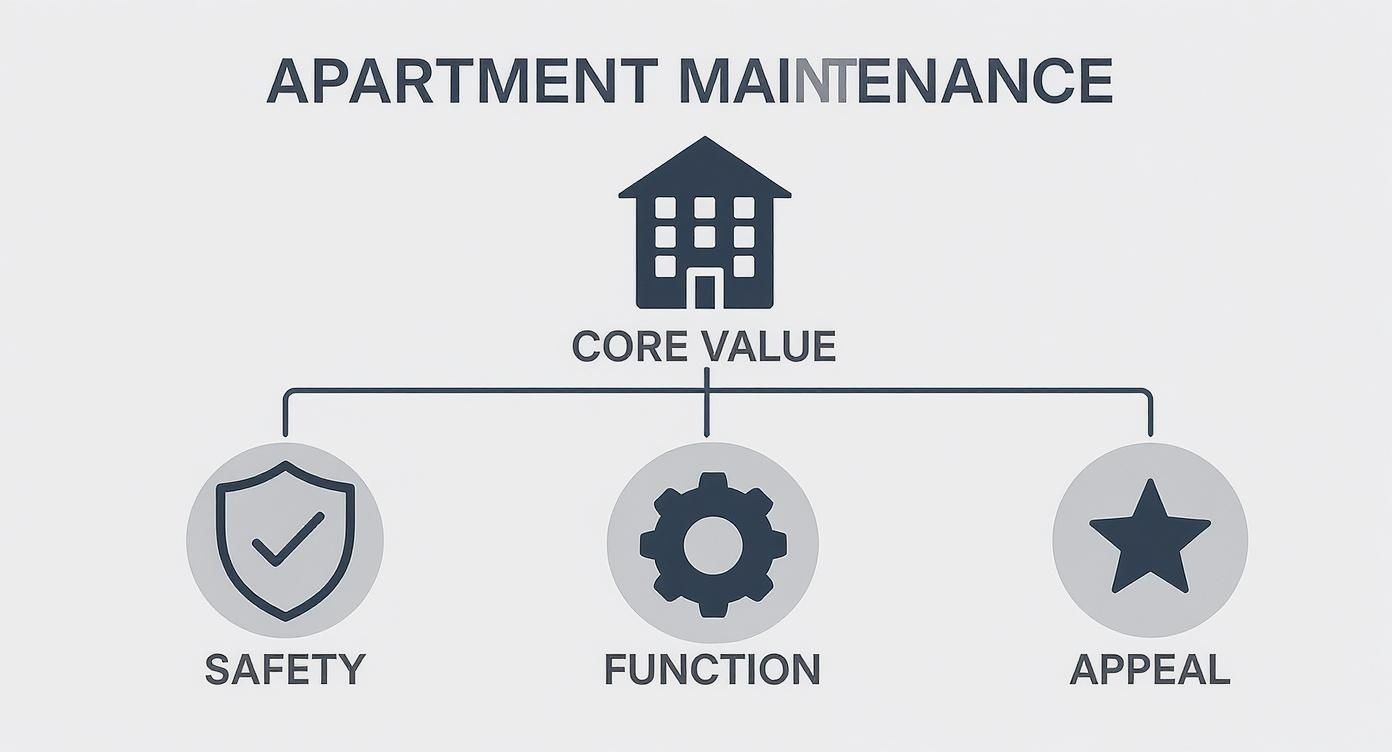
This simple hierarchy shows how everything builds on a solid foundation. Without safety, nothing else matters. Without functionality, the property is a headache. But when you combine them with aesthetic appeal, you get a property that’s truly valuable.
To help you understand what this looks like in practice, here’s a breakdown of the typical services offered by professional maintenance providers.
Common Apartment Maintenance Service Categories
Service Category | Common Tasks | Primary Goal |
|---|---|---|
Routine & Preventative | HVAC servicing, plumbing inspections, fire safety checks, pest control. | Catch small issues early to prevent costly breakdowns and extend asset life. |
Emergency Repairs | 24/7 response for burst pipes, furnace failures, electrical outages. | Minimize property damage and restore essential services for resident safety and comfort. |
Common Area Upkeep | Landscaping, janitorial services, hallway lighting, pool maintenance. | Enhance curb appeal, attract high-quality tenants, and improve resident satisfaction. |
Turnover & Make-Ready | Painting, deep cleaning, minor repairs, lock changes between tenants. | Prepare vacant units for new residents quickly to minimize vacancy loss. |
Specialized Services | Elevator maintenance, smart-home tech support, fitness equipment repair. | Manage complex systems and high-value amenities that require expert knowledge. |
As you can see, a full-service maintenance plan covers everything from proactive check-ups to urgent fixes, ensuring every corner of your property is well-cared for.
The Bedrock: Routine and Preventative Tasks
This is where the real magic happens. Routine and preventative maintenance is all about scheduled check-ups designed to catch small issues before they spiral into big, expensive headaches. It’s the same logic as getting a regular oil change for your car—it keeps the engine healthy and helps you avoid a total breakdown on the highway.
These proactive measures are your first line of defense against unexpected repairs and are absolutely critical for protecting your most valuable assets.
HVAC Servicing: This means semi-annual inspections to clean coils, swap out filters, and check refrigerant levels. A well-maintained HVAC system runs more efficiently, saving you money and keeping tenants happy.
Plumbing Inspections: Technicians will regularly check for tiny leaks under sinks, clear slow drains, and inspect water heaters. This simple step can prevent catastrophic water damage down the line.
Fire Safety Checks: This involves scheduled tests of all smoke detectors, carbon monoxide monitors, and fire extinguishers to ensure you’re compliant with regulations and, more importantly, that your residents are safe.
Ready for Anything: Emergency Repairs and Response
Even with the best preventative plan, things will eventually go wrong. A pipe bursts in the middle of a January night. The A/C unit for a top-floor apartment gives out during a heatwave. These situations demand an immediate, professional response.
A top-tier maintenance provider offers 24/7 availability with clearly defined response times. Their ability to act fast is what minimizes property damage, addresses critical safety risks, and gets life back to normal for your tenants. This is often the biggest difference between a local handyman and a true property management partner.
Making a Great First Impression: Common Area Upkeep
The shared spaces—your lobby, hallways, laundry facilities, and grounds—are the first thing a prospective tenant sees. For current residents, it’s a daily reflection of how much you care about the property. Keeping these areas spotless isn’t just about cleanliness; it’s about protecting your property’s reputation and value.
A well-kept common area speaks volumes about the quality of management. It creates an environment that not only attracts better tenants but also makes current residents proud to call your building home, boosting retention rates.
This category covers all the essentials:
Landscaping and Groundskeeping: Regular mowing, trimming hedges, and seasonal planting to keep the exterior looking sharp.
Janitorial Services: Consistent cleaning of high-traffic areas like hallways, elevators, and lobbies.
Lighting and Fixture Maintenance: Ensuring every light in a common area is working, which is crucial for both aesthetics and safety.
Beyond the Basics: Specialized Services and Amenity Management
Today’s apartment buildings are more than just four walls and a roof. They often come with amenities like swimming pools, high-tech fitness centers, and even smart-home features. These require specialized expertise that goes far beyond a standard toolbox.
Managing these complex systems is a growing challenge. In fact, 39% of property managers now spend over 20 hours a month just dealing with maintenance requests, many of which involve these specialized assets. You can dig into more industry trends like this over at resimpli.com. A great maintenance partner will either have in-house experts for these systems or maintain a trusted network of vetted vendors, ensuring your valuable amenities remain a selling point, not a source of frustration.
Why Proactive Maintenance Wins Every Time
Let’s talk about two different car owners. One waits for the engine to start smoking on the side of the highway before calling a mechanic. That means a tow truck, a surprise bill that costs a fortune, and a major disruption to their life. The other owner gets regular oil changes and tune-ups, letting their mechanic spot a worn belt or a low fluid level long before it becomes a roadside disaster.
Apartment maintenance works the same way. The “wait until it breaks” approach is a constant cycle of chaos, angry tenants, and budget-busting emergency repairs. Proactive maintenance, on the other hand, is a game plan. It’s about keeping your property in top shape, which saves you a headache and a whole lot of money down the road.
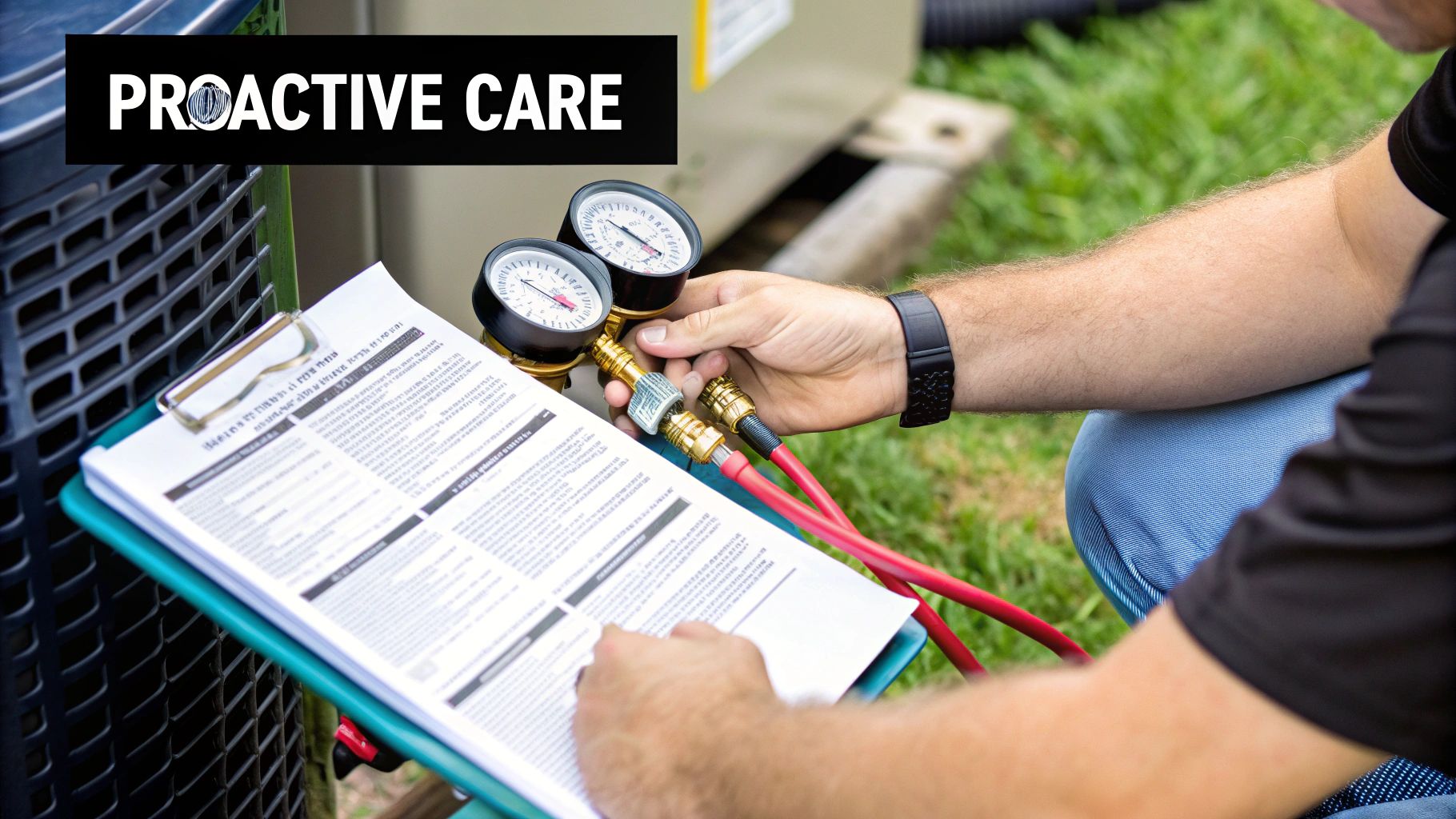
This forward-thinking strategy puts you in the driver's seat. Instead of letting emergencies dictate your schedule and your spending, you get ahead of problems before they ever have a chance to blow up.
The True Cost of Waiting
The reactive, "run-to-failure" model feels cheaper at first glance. After all, you’re not spending anything until something is obviously broken. But that thinking is a trap—it almost always costs you more in the long run.
Think about a slow drip under a kitchen sink. Left alone, it’s not just about replacing a worn-out gasket. Soon you're dealing with rotted-out cabinets, warped flooring, and maybe even a mold problem. That little drip just turned a $150 plumbing fix into a $3,000 restoration nightmare. And that's before you even factor in the cost of a seriously unhappy tenant. Understanding emergency water damage prevention and restoration insights for property managers is critical for avoiding these exact kinds of costly surprises.
Proactive maintenance is an investment in predictability. It transforms your maintenance budget from a source of random, expensive surprises into a planned, manageable operating cost that protects your asset's value.
By scheduling regular inspections and routine service, you’re basically buying peace of mind. You get more life out of your big-ticket systems like HVAC units and water heaters, pushing back those huge replacement costs. Plus, when they run efficiently, they keep utility bills down. It’s a win-win.
Building Tenant Loyalty Through Reliability
Trust me, tenants can tell when a building is well-cared for versus one that’s just being held together with duct tape. When they see that you’re actively maintaining the property, it fosters a deep sense of trust and makes them feel secure in their home.
Imagine these two scenarios from a resident's perspective:
The Reactive Experience: The A/C dies in the middle of a July heatwave. The tenant calls, waits anxiously for someone to show up, and then sweats it out for days while you scramble to find an available (and expensive) emergency technician. The whole experience is stressful and leaves them wondering if they can rely on management.
The Proactive Experience: That same A/C unit was already serviced back in the spring as part of a routine check. A technician cleaned the coils and topped off the refrigerant, ensuring it runs flawlessly all summer. The tenant enjoys uninterrupted comfort and sees management as competent and professional.
Reliability is everything when it comes to keeping good tenants. A proactive maintenance plan shows them you’re committed to providing a quality living experience, which is a huge factor in their decision to renew a lease. This stability slashes your turnover costs—one of the biggest expenses for any landlord—and builds a great reputation that helps attract the best applicants.
At the end of the day, proactive apartment maintenance services don’t just fix things; they prevent problems from happening in the first place, creating a more stable, profitable, and desirable property for everyone.
The Real ROI of Professional Maintenance
It’s easy to look at apartment maintenance as just another expense on the balance sheet. I see it all the time. But that’s a rookie mistake, and a costly one at that. Professional maintenance isn't a cost center; it's the engine that drives your property's profitability and keeps the whole operation running smoothly.
Once you shift your perspective, you start to see the powerful return on investment (ROI) that a smart maintenance strategy delivers. This isn’t just about fixing what’s broken. It's about proactively building value, heading off major risks, and turning your property into a stable, high-performing asset. When you invest in professional upkeep, you're directly investing in your property's long-term financial health.
Boost Your Property Value and Curb Appeal
A well-kept property is simply worth more. Period. Consistent, professional maintenance stops the slow, creeping decay that can quietly eat away at your asset’s value over time. Fresh paint in the hallways, clean common areas, and systems that just work send a clear signal to appraisers, potential buyers, and new tenants: this is a premium property.
This goes way beyond cosmetics; we’re talking about genuine asset preservation. Regular preventative care dramatically extends the life of big-ticket items like HVAC units, roofing, and plumbing. That means you can delay massive capital expenditures for years, all while preserving the building's structural integrity. Think of it like compounding interest for your property's value—small, consistent investments grow into significant long-term gains.
The market backs this up. The global building maintenance services market is expected to jump from USD 4.35 billion in 2024 to an estimated USD 9.7 billion by 2034. Why? More and more residential complexes are outsourcing maintenance to focus on their core business. You can dive deeper into these building maintenance services market trends to see just how big this shift is.
Dramatically Improve Tenant Retention Rates
High tenant turnover is one of the biggest silent killers of profit in the rental game. Every time a unit turns over, you're hit with a wave of costs: marketing the vacancy, screening applicants, cleaning and prep work, and—the big one—lost rent while it sits empty.
Good maintenance is one of your most powerful weapons against turnover. When residents know their requests will be handled quickly and competently, it builds a massive amount of trust and satisfaction. A fast fix for a leaky faucet or a broken AC unit isn't just a repair; it’s a message that you care about their comfort and well-being. That feeling makes them far more likely to sign another lease.
A reliable maintenance program is a direct reflection of management's commitment to the resident experience. It transforms your property from just a space to live into a place they are proud to call home, directly impacting their decision to stay.
Manage Risk and Ensure Compliance
Let’s be honest, owning and operating a rental property is full of risks, both legal and financial. The compliance landscape is a minefield of local building codes, state habitability laws, and federal safety regulations. A professional maintenance partner lives and breathes these rules, ensuring your property stays on the right side of the law.
This means they handle the critical tasks that protect you and your tenants:
Fire Safety: Regularly checking and certifying smoke detectors, fire extinguishers, and sprinkler systems.
Habitability Standards: Making sure essential services like heat, water, and electricity are always up and running.
Structural Safety: Spotting and fixing potential hazards like a loose handrail on a staircase or an uneven sidewalk before someone gets hurt.
By bringing in experts, you're also offloading a significant amount of risk. Professional firms carry their own insurance and are accountable for the quality and safety of their work. That provides a vital layer of protection against liability claims that could otherwise be devastating.
Achieve Long-Term Cost Savings
This might sound backward, but spending money on planned maintenance saves you a fortune in the long run. The alternative is living in a constant state of reaction, always paying top dollar for emergency calls. A busted HVAC unit on a holiday weekend will always cost you more than a scheduled service call a month earlier.
A proactive approach lets you plan and budget for repairs. A technician can spot a failing part during a routine inspection and replace it during business hours for a standard fee. This strategy also prevents the collateral damage—like the water damage from a burst pipe or the lost rent from an uninhabitable unit—that turns a small problem into a financial disaster. It's the key to predictable, manageable operating costs.
How to Choose the Right Maintenance Partner

Picking a maintenance provider for your apartment building isn't just about finding someone to fix things. It's about finding a true partner. The right choice feels like an extension of your own team—someone who protects your assets and keeps tenants happy. The wrong one? It can be a source of constant headaches and budget overruns.
Think of it like hiring a key employee, not just a contractor. You wouldn't hire a building manager based on the lowest salary quote alone. You'd dig into their experience, check their references, and see if they're a good fit for your community. Applying that same level of scrutiny here is critical. A cheap vendor who botches a midnight plumbing emergency will cost you far more in water damage and tenant turnover than a seasoned pro ever would.
Vet Their Multifamily Experience
First things first: does this company get apartment buildings? Maintaining a single-family home is one thing. Managing the complexities of a 50-unit building with shared plumbing, central HVAC, and dozens of residents is a completely different ballgame.
An experienced multifamily partner understands the rhythm of apartment life. They know how to communicate with tenants, schedule repairs to cause minimal disruption, and anticipate the kind of wear and tear unique to high-traffic residential properties.
When you're talking to potential providers, ask direct questions about their background:
How many apartment units are in their current portfolio?
Can they give you references from other property managers in the area?
What's their standard procedure for working with on-site staff and residents?
A solid track record in the apartment sector isn't a "nice-to-have"—it's a must.
Evaluate Emergency Response Protocols
A maintenance partner's real worth shines through when things go sideways. A burst pipe on a holiday weekend or a dead furnace in January can't wait for Monday morning. You need to know, with certainty, how they'll react. A vague promise of "24/7 service" on a website is not a plan.
A detailed emergency protocol is the difference between controlled resolution and costly chaos. When evaluating a provider, their plan for after-hours crises should be as clear and well-defined as their plan for routine tasks.
Get into the nitty-gritty. Ask them to walk you through a scenario: what happens, step-by-step, when an urgent call comes in at 2 a.m.? Who fields that call? What's their guaranteed on-site response time? Are their own techs on call, or are you getting an answering service that pages a subcontractor? This kind of operational clarity is a fundamental part of what a property manager does to safeguard an owner's investment.
Assess Their Technology and Communication
In this day and age, efficiency runs on good technology. A maintenance provider still relying on sticky notes and phone tag is a major red flag. This old-school approach inevitably leads to missed requests, poor tracking, and frustrated tenants.
Look for a partner who uses a modern system—like an online portal or a dedicated app—to manage the entire work order process. This creates a transparent, digital paper trail for every single job. It gives tenants an easy way to submit requests, allows you to track progress in real-time, and ensures nothing ever slips through the cracks. A company that has invested in its tech is a company that has invested in professionalism and accountability.
To put this into practice, here’s a simple checklist you can use when comparing potential partners. It helps you look beyond the price tag and focus on what truly matters.
Provider Evaluation Checklist
Evaluation Criteria | What to Look For (Provider A) | What to Look For (Provider B) |
|---|---|---|
Multifamily Experience | Ask for the number of units they service and for at least three references from similar properties. | Check their website for case studies or testimonials specifically from apartment communities. |
Emergency Response | What is their guaranteed response time for critical issues (e.g., major leaks, no heat)? | Do they have in-house technicians on call 24/7, or do they subcontract after-hours work? |
Insurance & Licensing | Request a copy of their Certificate of Insurance (COI) and verify their contractor licenses. | Confirm their liability coverage meets or exceeds your building's requirements. |
Technology Stack | Do they offer an online portal for work order submission and tracking? Ask for a demo. | How do they provide reports? Can you see a history of all work completed on your property? |
Communication Plan | Who is your single point of contact? How often will you receive updates on open work orders? | What is their process for communicating with tenants before, during, and after a repair? |
Using a structured approach like this ensures you're making a decision based on a complete picture, setting you up for a successful and stress-free partnership.
Decoding Maintenance Costs and Service Models
Trying to pin down the price for apartment maintenance services can feel a lot like trying to hit a moving target. There's no one-size-fits-all number; the final cost is really a reflection of your property's specific needs, its age, and its size. To make sense of proposals and build a budget that actually works, you need to get familiar with the common service models and what's really driving the price.
The goal here isn't just about paying bills. It’s about making a smart, strategic investment in the long-term health of your property. Once you understand how these services are priced, you can choose a plan that protects your asset without draining your bank account with unexpected costs.
Common Pricing Structures
When you start getting quotes from maintenance providers, you'll likely see a few standard ways they structure their fees. Each model is built for different types of properties and owner preferences, whether you're a hands-off investor or someone who likes to keep a closer eye on every dollar spent.
On-Demand Hourly Rates: Think of this as the classic "pay-as-you-go" approach. You pay a set hourly rate for labor, plus the cost of any parts or materials needed for a specific job. This can work just fine for smaller buildings with few issues, but it can get pricey and unpredictable when emergencies pop up.
Monthly Retainer or Contract: This is probably the most popular model you'll see. You pay a fixed fee each month that covers a clearly defined list of services. This usually includes all the routine preventative tasks and might even bundle in a certain number of hours for small, everyday repairs. The big win here is predictability—it makes budgeting so much easier.
All-Inclusive or Full-Service: This is the most comprehensive option. For a flat monthly fee, pretty much all of your maintenance needs are covered. It’s the most expensive option upfront, but it offers total peace of mind and budget certainty. It's often the best fit for large, complex properties or for investors who live out of state.
So, which one is right for you? It really comes down to your property’s profile. An older building with quirky, aging systems will probably get the most value out of an all-inclusive plan. On the other hand, a brand-new building might only need a simple retainer for preventative check-ups.
Key Factors That Influence Your Final Cost
Beyond the service model you choose, a handful of other variables will directly shape your final bill. It’s also worth noting that recent economic shifts, like soaring construction and insurance costs, are pushing property owners to be smarter than ever with their maintenance spending. If you want to dive deeper into this, our guide on mastering rental property maintenance costs is a great resource.
This new reality puts a spotlight on the importance of having a tech-savvy, efficient maintenance team. As recent apartment market predictions show, skilled staff are no longer a luxury—they're essential for protecting a property's value in a tightening market.
Here are the biggest cost drivers to watch out for:
Property Age and Condition: It’s simple, really. Older buildings just need more love. They'll require more frequent and often more complex maintenance, which naturally leads to higher costs.
Number of Units: The more doors you have, the greater the workload. More units mean more inspections, more potential repairs, and more common areas to keep in top shape.
Included Services: A bare-bones plan covering just the essentials like plumbing and electrical will obviously be cheaper than a full-service agreement that also includes landscaping, pool maintenance, and HVAC servicing.
Emergency Response Guarantee: If you want a contract that promises a technician on-site at 3 a.m. on a holiday, you’ll pay a premium for that 24/7 availability and peace of mind.
A Few Common Questions About Apartment Maintenance
Even with a great plan, a lot of property owners get stuck on the practical details of apartment maintenance. Let's walk through some of the most common questions we hear from clients. Getting clear on these points can help you budget smarter, set the right priorities, and just feel more confident in your decisions.
How Much Should I Realistically Budget for Maintenance?
This is the million-dollar question, isn't it? While there's no single magic number, a couple of rules of thumb can get you in the right ballpark.
A classic guideline is the "1% rule," which suggests you set aside 1% of your property's value every year for upkeep. So, for a $1 million building, you're looking at about $10,000 annually. It's a simple, effective starting point.
For a more granular approach, many owners budget on a per-unit basis, often somewhere between $500 to $1,500 per unit per year. Where you fall in that range really depends on the building's age, its location, and the condition of major systems like plumbing and HVAC. On top of that, I always recommend keeping a separate "rainy day" fund—at least 10-15% of your maintenance budget—for those nasty surprises like a boiler giving out mid-winter or a major roof leak.
A well-thought-out budget isn't just about money. It's an operational tool that shifts you from just reacting to problems to proactively investing in and protecting your asset's long-term value.
Which Preventative Tasks Should I Never, Ever Skip?
All preventative maintenance is good, but some tasks give you way more bang for your buck by stopping the most expensive and destructive problems before they start. If you have to triage, always focus on water, fire, and air.
Here are the absolute non-negotiables:
Semi-Annual HVAC Servicing: Get a pro to clean the coils, swap the filters, and check the system's performance before summer and winter hit. This simple check-up prevents most emergency calls and can add years to the life of a very expensive appliance.
Regular Plumbing and Roof Inspections: You have to actively hunt for small problems. Look under sinks, around toilets, and in attics for any sign of a leak. A tiny drip you catch today can save you from a catastrophic water damage and mold nightmare down the road.
Annual Fire Safety System Checks: This means professionally testing every smoke alarm, carbon monoxide detector, sprinkler system, and fire extinguisher. It’s about more than just compliance; it's about safety.
Gutter and Downspout Cleaning: Don't underestimate this one. Clogged gutters are one of the top causes of roof leaks and even foundation damage. Clean them at least twice a year, especially after the leaves fall.
How Does Technology Actually Help with Maintenance?
Technology in property management isn't just a shiny new toy anymore; it’s a fundamental part of running an efficient operation. Modern software creates a clean, digital paper trail for every single work order, which is a game-changer for transparency.
Think about it: instead of playing phone tag, a tenant can submit a maintenance request online with photos. That ticket is automatically sent to the right technician. No more lost notes or missed calls. We're also seeing more IoT (Internet of Things) sensors that can predict an HVAC failure before it happens or detect a tiny leak inside a wall. It turns a potential disaster into a routine fix. Plus, giving your team mobile access to a unit's history and their daily assignments just makes everything happen faster.
What Is an SLA and Why Does It Matter So Much?
An SLA, or Service Level Agreement, is a non-negotiable part of any contract you sign with a maintenance provider. It's the document that puts your expectations in black and white and sets clear, measurable standards for the work.
In short, an SLA is your accountability tool. It should spell out exactly what to expect, defining response times for different problems. For example, it might guarantee a 1-hour response for an emergency like a burst pipe, a 24-hour response for something urgent like a broken fridge, and a 48-hour response for a routine repair. It takes all the guesswork out of the equation so everyone knows exactly what their role is.
Navigating the day-to-day challenges of property upkeep is what we've been doing for over 20 years. At Keshman Property Management, we handle the details so owning rental properties is less stressful and more profitable for you. Find out how our transparent, hands-on approach can protect your investment and boost your bottom line at https://mypropertymanaged.com.


Comments